Artisan Loaves · intermediate
Seeded Ancient-Grain Boule
Key takeaway
A seeded gluten-free boule needs 6% whole psyllium, 105% hydration to feed the flax, and seeds treated as inclusions rather than flour.
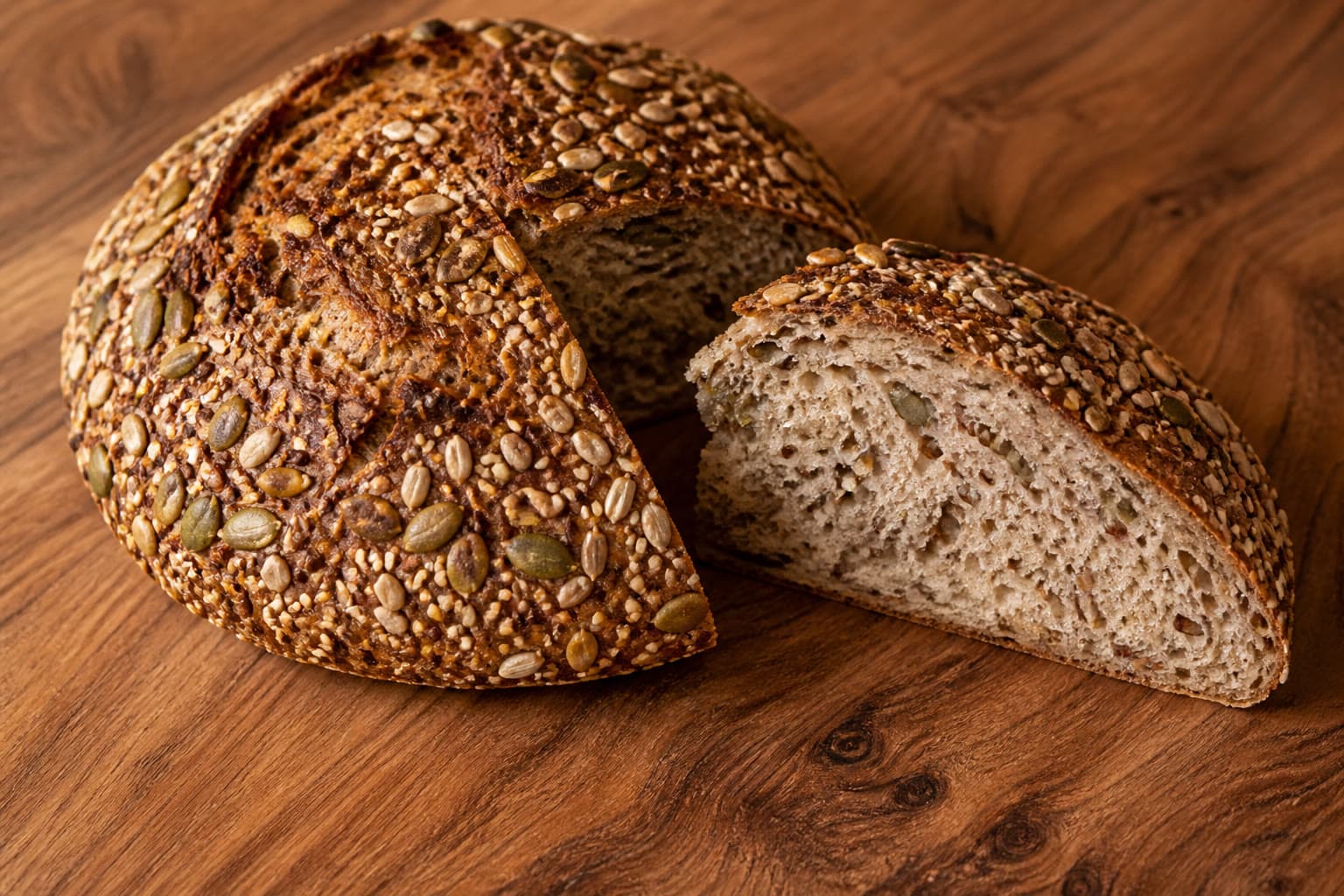
Sorghum, millet, teff, and brown rice packed with pumpkin, sunflower, flax, and sesame seeds.
Prep
35m
Seed cool + psyllium rest
Toast 6 minutes, rest dough 15 minutes
Bake
56m
Servings
12
Difficulty
intermediate
The short answer
This is the loaf we put on the table when we want something that looks abundant. The flour is an ancient-grain mix — sorghum, millet, teff, brown rice, plus tapioca for chew — and the inclusions are pumpkin, sunflower, flax, and sesame. Seeds are not flour; they sit on top of baker’s percentages as an 18 percent add-in. Flax drinks, so hydration is 105 percent of flour weight. Whole psyllium husk at 6 percent is mixed into the dry flours so the extra water has somewhere to go. Salt stays at 2 percent; the seed mix is unsalted except for a pinch on the crust. Twenty percent brown-rice starter keeps the fermentation even. Toast the seeds until they smell like a bakery, not until they scorch, then cool them so they do not melt the gel. The dough will feel studded and slightly gritty from flax. Dutch-oven bake at 500F, lid on then off, cool at least two hours. Sliced, it should show a mosaic of seeds without tunnels of dry flax. Eat it with sharp cheddar if you use dairy, or with hummus if you do not.
For the method behind gluten-free structure, read the gluten-free sourdough guide and keep a lively culture with the starter guide.
Why it works
- A mixed ancient-grain blend gives the seeds something flavorful to sit in, not a bland starch sponge.
- 105% hydration offsets flax absorption so the crumb does not go dry around each seed.
- Toasted seeds contribute fat and aroma without dairy.
- Psyllium at 6% still has to suspend 90g of inclusions; skipping husk drops seeds to the bottom.
Ingredients
- 150g (1 1/4 cups)sorghum flour
- 100g (3/4 cup plus 2 Tbsp)millet flour
- 75g (1/2 cup)whole-grain teff flour
- 75g (1/2 cup minus 1 Tbsp)brown rice flour
- 100g (3/4 cup plus 2 Tbsp)tapioca starch
- 30g (6 Tbsp)whole psyllium husk6% of flour weight
- 10g (1 3/4 tsp)fine sea salt2% of flour weight
- 100g (1/3 cup plus 1 Tbsp)active brown-rice starter (100% hydration)20% of flour
- 525g (2 cups plus 3 Tbsp)lukewarm water (80F)105% hydration; flax will take some of this
- 30g (3 Tbsp)raw pumpkin seeds
- 25g (3 Tbsp)raw sunflower seeds
- 20g (2 Tbsp)whole flax seedsnot flax meal, which drinks even more
- 15g (2 Tbsp)sesame seedswhite or a mix of white and black
- 5g (1 tsp)extra seed mix, for the crust
Equipment
- Digital kitchen scale
- Large mixing bowl
- Stiff spatula
- Banneton or towel-lined bowl
- Parchment paper sling
- 5–6 quart Dutch oven with lid
- Bread lame or sharp knife
- Wire cooling rack
- Instant-read thermometer
- Dry skillet for toasting seeds
Instructions
- 1
Toast pumpkin, sunflower, flax, and sesame in a dry skillet over medium heat until the pumpkin seeds pop and the kitchen smells nutty, 4–6 minutes. Cool completely on a plate. Hot seeds will tighten the psyllium gel into rubber.
8 minutes
- 2
Whisk sorghum, millet, teff, brown rice, tapioca, whole psyllium husk, and salt until the husk is coated. The mix should look speckled tan and cocoa from the teff.
3 minutes
- 3
Stir starter into the 525g water. Pour over the flours and beat to a thick, shiny batter. Fold in the cooled seeds, holding back 5g for the crust. You should see even seed distribution, not a clump at the bottom.
5 minutes
- 4
Rest 15 minutes. The dough will stiffen as flax and husk hydrate. It should feel studded, like a wet granola, and still mound. If it is soup, wait 5 minutes more.
15 minutes
- 5
Shape a round with wet hands. Roll the top in the reserved seeds so they stick. Place seed-side down in a floured banneton if you want a seeded crust after inverting, or seed-side up if you are baking in a lined pot without flipping.
5 minutes
- 6
Proof at 75–78F until risen about 45–50 percent. Seeds weigh the dough down; do not wait for a dramatic dome. It should smell toasty and lightly sour.
4 hours
- 7
Preheat Dutch oven at 500F for 45 minutes. Invert onto parchment. Seeds should stud the top. If some fell off, press them back on.
45 minutes
- 8
Score a shallow slash between seed patches. A deep cut through pumpkin seeds just drags. You want the interior to peek, not a ripped crust.
2 minutes
- 9
Bake covered 40 minutes, lid-off 14–16 minutes until the seeds are toasted and the crust is deep gold, center 208–210F. If seeds scorch, tent with foil for the last 8 minutes.
56 minutes
- 10
Cool at least 2 hours. Slice with a serrated knife using a sawing motion so seeds do not compress the crumb. The slice should hold a mosaic of seeds without wet flax streaks.
2 hours
Nutrition
Approximate values per serving. Always verify labels if you bake for celiac safety.
| Nutrient | Amount |
|---|---|
| Calories | 205 kcal |
| Protein | 6 g |
| Carbs | 34 g |
| Fat | 6 g |
| Fiber | 5 g |
| Sodium | 328 mg |
Substitutions
- Teff flour (75g)
- 75g additional sorghum for a paler, milder boule.
- Flax seeds (20g)
- 20g additional sunflower seeds if you dislike flax’s texture.
- Whole psyllium husk (30g)
- 26g psyllium powder mixed into the dry flours.
Storage
The seeds help the loaf keep 3 days in a towel. Freeze slices up to 2 months. Toast to re-crisp the crust and wake the nut oils.
Notes
- Toast and cool seeds. Raw flax in a wet dough can taste grassy and steal water unpredictably.
- Do not substitute flax meal for whole flax here; meal turns the crumb pasty at this hydration.
- If pumpkin seeds are salted, reduce dough salt to 8g (1.6%) so the loaf does not taste briny.
- Seeds can shield the crust from color; trust the thermometer more than the shade of the top.
- Cool fully. Seeded crumb tears if you rush the knife.
FAQ
Do seeds count as flour in gluten-free baker’s percentages?
No. Pumpkin, sunflower, flax, and sesame are inclusions. Hydration, salt, starter, and psyllium are calculated on the 500g flour only. We still raise water to 105% because flax absorbs.
Why toast seeds before mixing them into sourdough?
Toasting dries the surface, deepens flavor, and keeps seeds from tasting raw. Cooling them protects the psyllium gel. Hot seeds make a rubbery dough.
Can I add chia instead of flax?
Chia gels even more aggressively. If you swap, keep chia at 10g and add 20g extra water, or the loaf turns into a seed brick.
How do I keep seeds from burning in a 500F Dutch oven?
Bake the full covered time first; steam protects them. If they darken too fast lid-off, tent with foil and finish to 208–210F internal.
Is sesame safe for people with sesame allergy?
No. Omit sesame and add extra pumpkin or sunflower. Label the loaf clearly if you bake for others.
Bake next
Related recipes
Artisan Loaves
INTERMEDIATE
TEFF
DEC 18, 2025
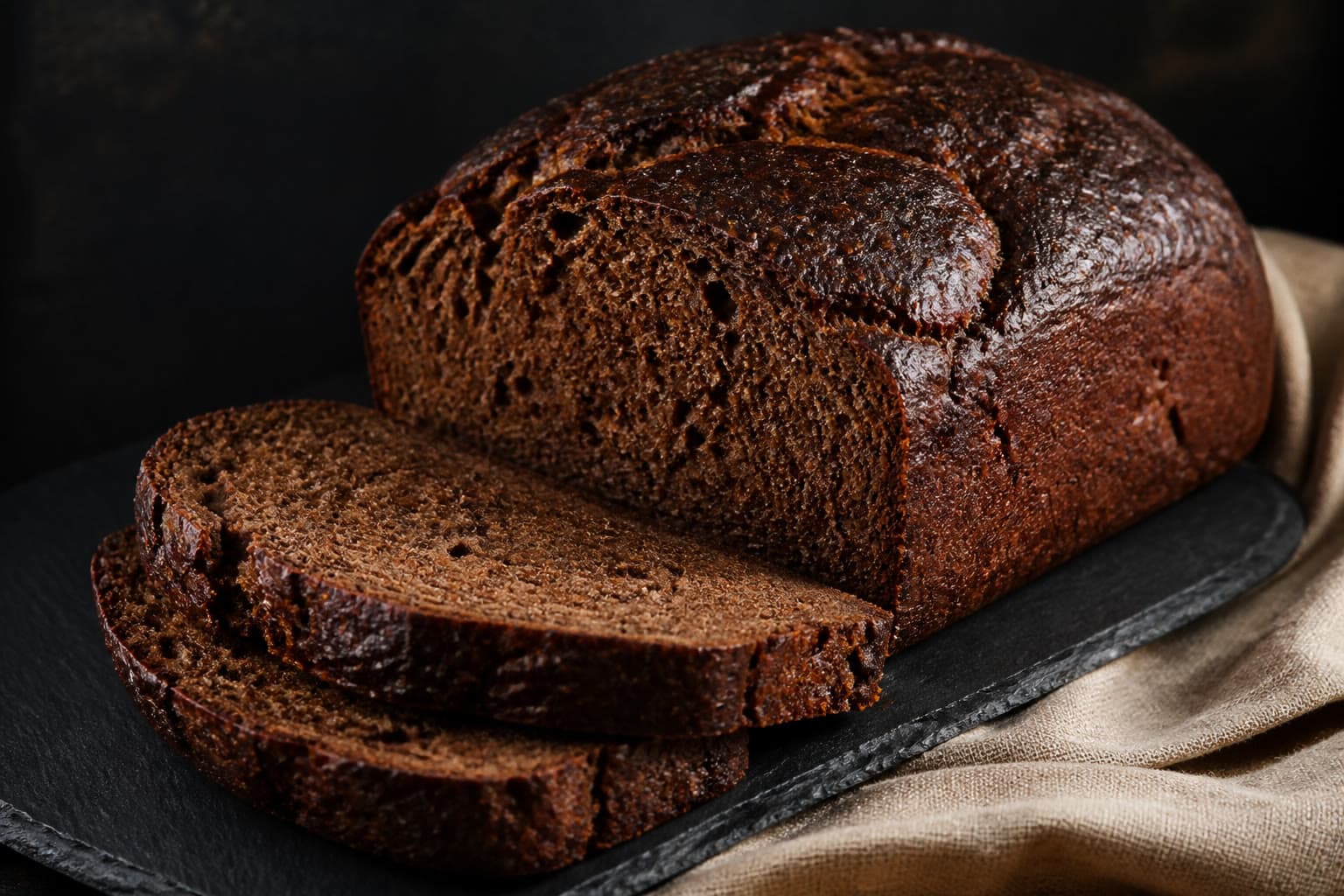
Teff Buckwheat Dark Loaf
A molasses-optional dark loaf with teff and buckwheat for rye-like depth — no rye, wheat, or barley in the formula.
Artisan Loaves
BEGINNER
EVERYTHING BAGEL
MAR 20, 2026
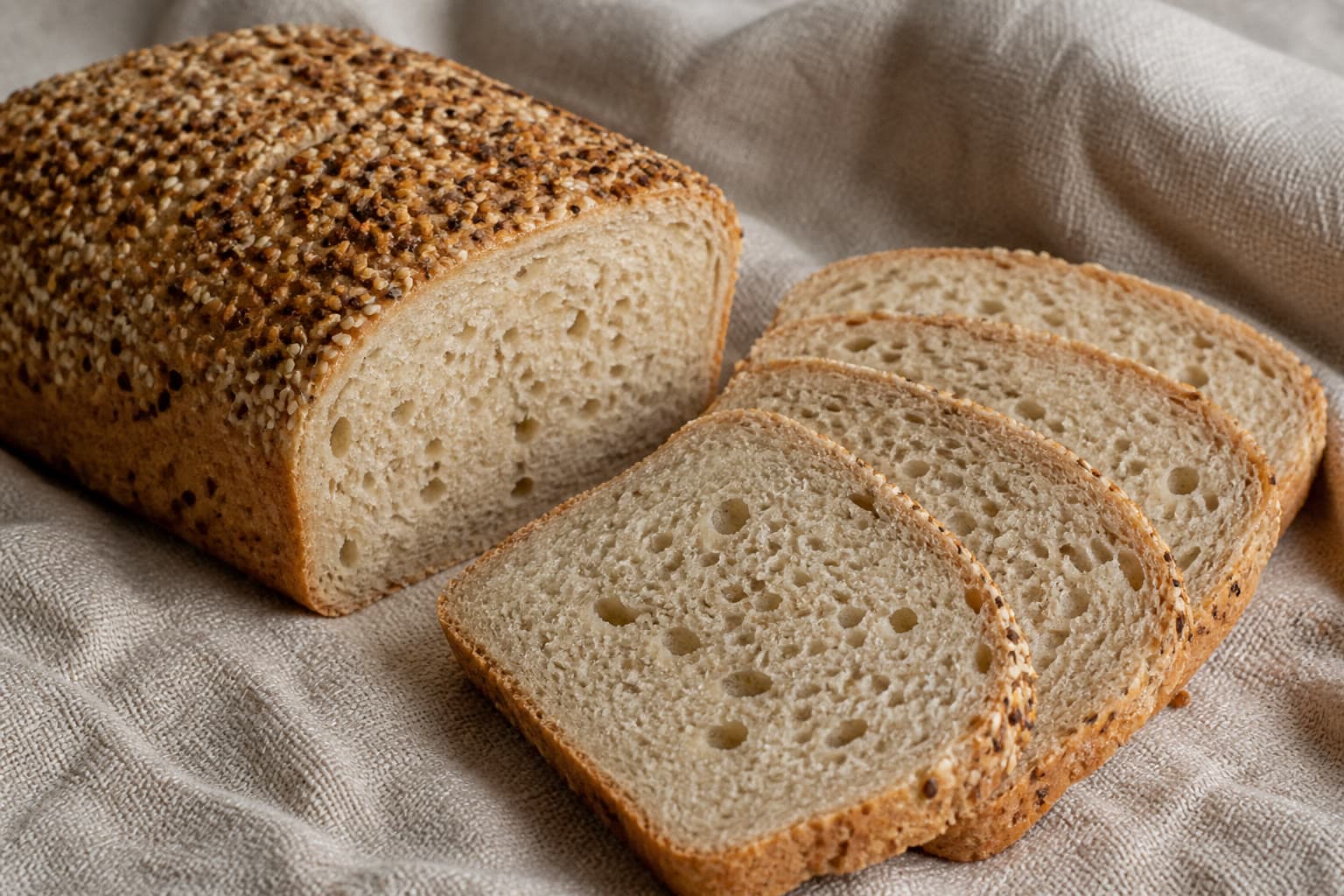
Everything Bagel Crumb Loaf
A pan-friendly sourdough loaf with everything-bagel seasoning in the crumb and on the crust — not a boiled bagel.
Artisan Loaves
INTERMEDIATE
OLIVE BREAD
FEB 5, 2026
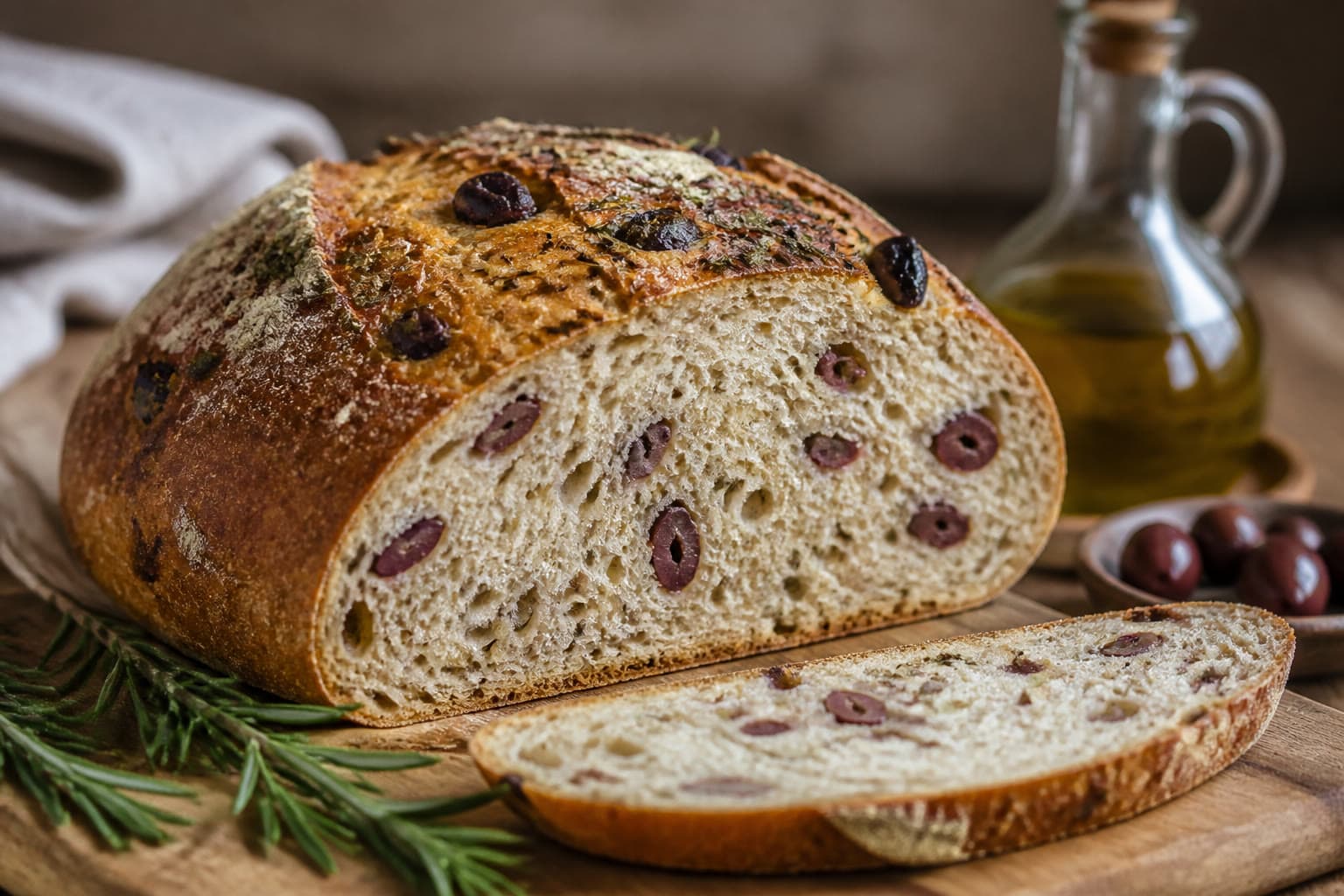
Olive Rosemary Country Loaf
A savory country loaf with brined olives and fresh rosemary folded through a sorghum-rice dough.
Technique
Keep the method close
Psyllium, fermentation temperature, and a celiac-safe starter matter as much as the formula.
About Andrew Kittridge
Home baker in Indianapolis documenting gluten-free sourdough: psyllium structure, whole-grain blends, and loaves that actually taste like bread.
More about the kitchen