Artisan Loaves · intermediate
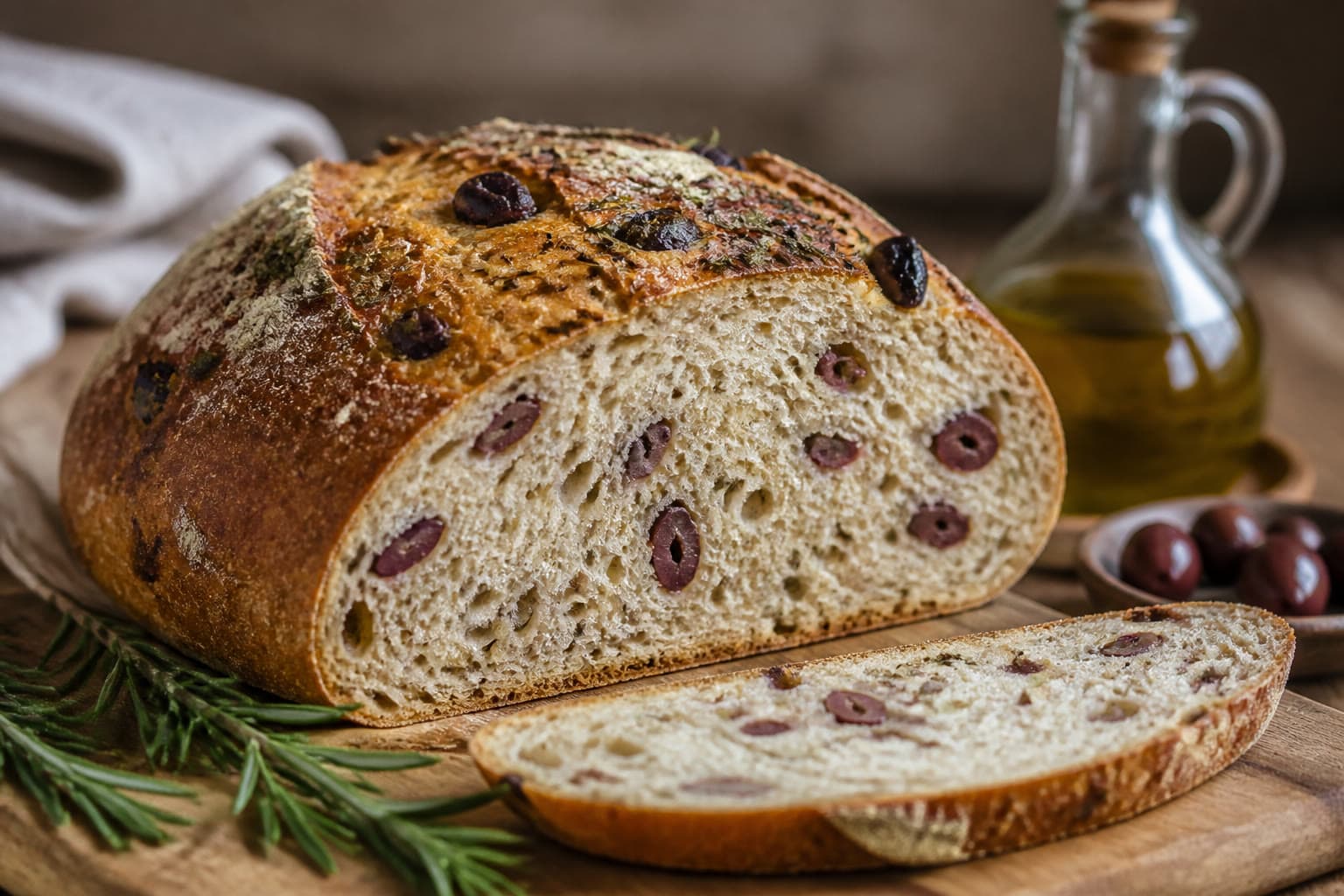
Olive Rosemary Country Loaf
Key takeaway
Olive rosemary gluten-free sourdough works when olives are dry, dough salt is 1.8%, hydration is 98%, and the loaf still gets a 500F Dutch-oven bake plus a two-hour cool.
A savory country loaf with brined olives and fresh rosemary folded through a sorghum-rice dough.
Prep
35m
Psyllium rest
15 minutes
Bake
55m
Servings
12
Difficulty
intermediate
The short answer
Olives and rosemary are how we make a gluten-free loaf that belongs next to a salad, not just a toaster. The dough is a sorghum-forward country blend with brown rice and tapioca, whole psyllium husk at 6 percent mixed dry, 2 percent salt, and 20 percent sorghum starter. Hydration is 98 percent — a touch drier than the artisan boule — because olives bring brine even after you pat them dry. Use pitted mixed olives, chopped, not a watery tapenade. Fresh rosemary is minced until it smells like a garden, not left in woody twigs that stab the crumb. A little olive oil (3 percent) is enrichment, not a license to skip the Dutch oven. The dough should smell herbal and briny before it ever sees heat. Bake at 500F covered, then lid-off until the olives at the surface look roasted, not burnt. Cool at least two hours; warm olive bread smears. This is the loaf we tear apart with olive oil and more rosemary when friends come over, and it still slices clean for a tomato sandwich the next day.
For the method behind gluten-free structure, read the gluten-free sourdough guide and keep a lively culture with the starter guide.
Why it works
- 98% hydration leaves headroom for olive moisture so the crumb does not go gluey around each piece.
- Lower dough salt respects the brine while staying inside 1.8–2.2% on the flour itself.
- Sorghum’s sweetness balances olive bitterness.
- Psyllium still has to suspend chunks; oil alone will not hold a gluten-free loaf together.
Ingredients
- 200g (1 2/3 cups)sorghum flour
- 175g (1 cup plus 1 Tbsp)brown rice flour
- 125g (1 cup plus 1 Tbsp)tapioca starch
- 30g (6 Tbsp)whole psyllium husk6% of flour weight
- 9g (1 1/2 tsp)fine sea salt1.8% of flour; olives add sodium
- 100g (1/3 cup plus 1 Tbsp)active sorghum starter (100% hydration)20% of flour
- 490g (2 cups plus 1 Tbsp)lukewarm water (80F)98% hydration
- 15g (1 Tbsp)extra-virgin olive oil
- 80g (1/2 cup chopped)pitted mixed olives, drained and patted dryKalamata and green; inclusions, not flour
- 4g (1 Tbsp minced)fresh rosemarystrip the woody stems
- 2g (1 tsp)coarsely ground black pepperoptional
Equipment
- Digital kitchen scale
- Large mixing bowl
- Stiff spatula
- Banneton or towel-lined bowl
- Parchment paper sling
- 5–6 quart Dutch oven with lid
- Bread lame or sharp knife
- Wire cooling rack
- Instant-read thermometer
- Kitchen towel for drying olives
Instructions
- 1
Chop olives into raisin-sized pieces. Spread on a towel and press until the towel barely stains. Wet olives tunnel the crumb. Mince rosemary until it is sticky and fragrant, no stem pieces.
5 minutes
- 2
Whisk sorghum, brown rice, tapioca, whole psyllium husk, salt, and pepper. The bowl should smell faintly herbal once the rosemary goes in at the next step, not yet.
3 minutes
- 3
Stir starter into the 490g water, then the olive oil. Pour over the flours and beat to a thick batter. Fold in olives and rosemary until they are evenly studded. You should see dark and green pieces, not a gray paste from overmixing.
5 minutes
- 4
Rest 15 minutes. The dough should feel slightly oily, moundable, and smell like a pizza shop in the best way. If brine pools on top, you did not dry the olives; fold once more to reincorporate.
15 minutes
- 5
Shape a round with wet or lightly oiled hands. Olives near the surface are fine; they will roast. Set in a floured banneton seam-side up.
5 minutes
- 6
Proof at 75–78F until risen about 50 percent. The dough should smell lactic, olive, and piney. A poke fills slowly. If rosemary is the only smell, the starter was weak — bake anyway and expect less oven spring.
3.5–4.5 hours
- 7
Preheat Dutch oven at 500F for 45 minutes. Invert onto parchment. Tuck in any olives that look likely to burn on a high point.
45 minutes
- 8
Score a shallow slash, avoiding a line of olives if you can. A cut through a large olive tears a hole.
2 minutes
- 9
Bake covered 40 minutes, lid-off 15 minutes until the crust is russet, exposed olives look roasted, and the center is 208–210F. It should smell like rosemary and toasted sorghum, not acrid burnt oil.
55 minutes
- 10
Cool at least 2 hours. Slice with a serrated knife. The crumb should be ivory with olive jewels, not gray or wet around each piece.
2 hours
Nutrition
Approximate values per serving. Always verify labels if you bake for celiac safety.
| Nutrient | Amount |
|---|---|
| Calories | 186 kcal |
| Protein | 3 g |
| Carbs | 35 g |
| Fat | 4 g |
| Fiber | 4 g |
| Sodium | 410 mg |
Substitutions
- Mixed olives (80g)
- 80g pitted Kalamata only for a stronger flavor, still patted dry. Avoid canned black olives in water; they taste metallic.
- Fresh rosemary (4g)
- 2g dried rosemary, crumbled, or 3g fresh thyme.
- Whole psyllium husk (30g)
- 26g psyllium powder mixed into the dry flours.
Storage
Wrap in a towel 2 days. Olives keep the crumb moist. Freeze slices 2 months. The rosemary aroma fades after day two, so eat the first half fresh.
Notes
- Pat olives dry. Brine is extra salt and extra water you did not formula for.
- Salt is 1.8% on purpose. If your olives are very mild, you can go to 10g (2%).
- Dried rosemary is harsher; if that is what you have, use 2g and crumble it fine.
- Do not use stuffed olives; the stuffing weeps and burns.
- Cool fully or the olive oil in the crumb will smear on the knife.
FAQ
Should I rinse olives before folding them into gluten-free sourdough?
Drain, chop, and pat dry. A quick rinse is fine if they are extremely salty, but drying matters more. Extra brine throws off both salt and hydration.
Can I use olive tapenade instead of chopped olives?
No. Tapenade is a paste with extra oil and salt. It turns the dough grey and tight. Chopped, dried olives stay in pieces.
Why is the salt lower in this loaf than the artisan boule?
Olives contribute sodium. We drop dough salt to 1.8% of flour so the loaf is seasoned, not briny. Nutrition sodium is still higher than a plain loaf.
Can I add garlic with the rosemary?
Yes, but roasted garlic belongs in the roasted-garlic herb loaf. Raw minced garlic can slow fermentation. If you add it here, keep it to one small clove.
Do I still need a Dutch oven for olive sourdough?
Yes for this formula. The 500F covered bake sets the crust around wet inclusions. A sheet pan without steam makes a squat loaf.
Bake next
Related recipes
Artisan Loaves
INTERMEDIATE
ROASTED GARLIC
MAR 6, 2026
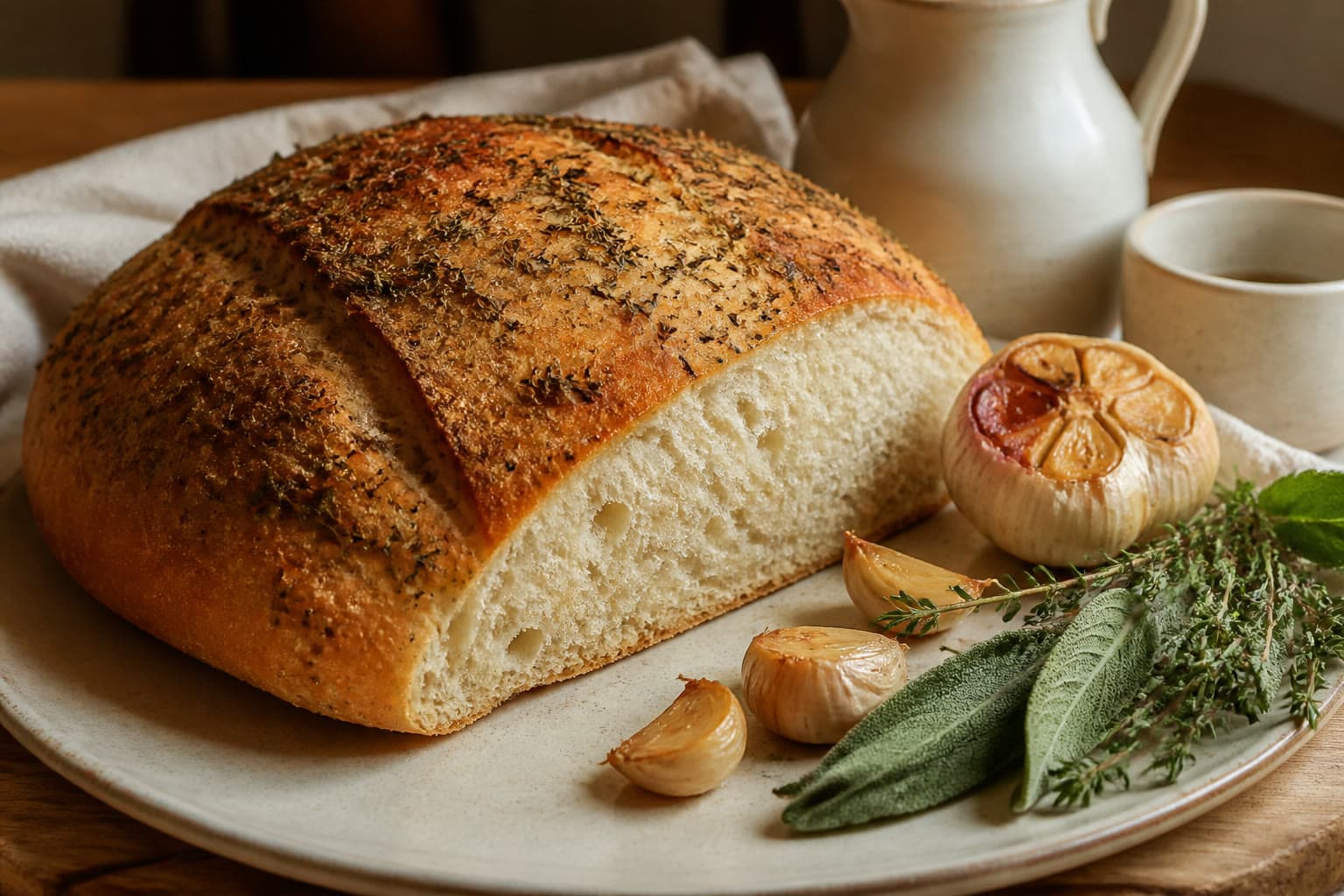
Roasted Garlic Herb Loaf
Sweet roasted garlic mashed into a sorghum-rice dough with thyme, parsley, and a little olive oil.
Artisan Loaves
INTERMEDIATE
SEEDED BREAD
JAN 22, 2026
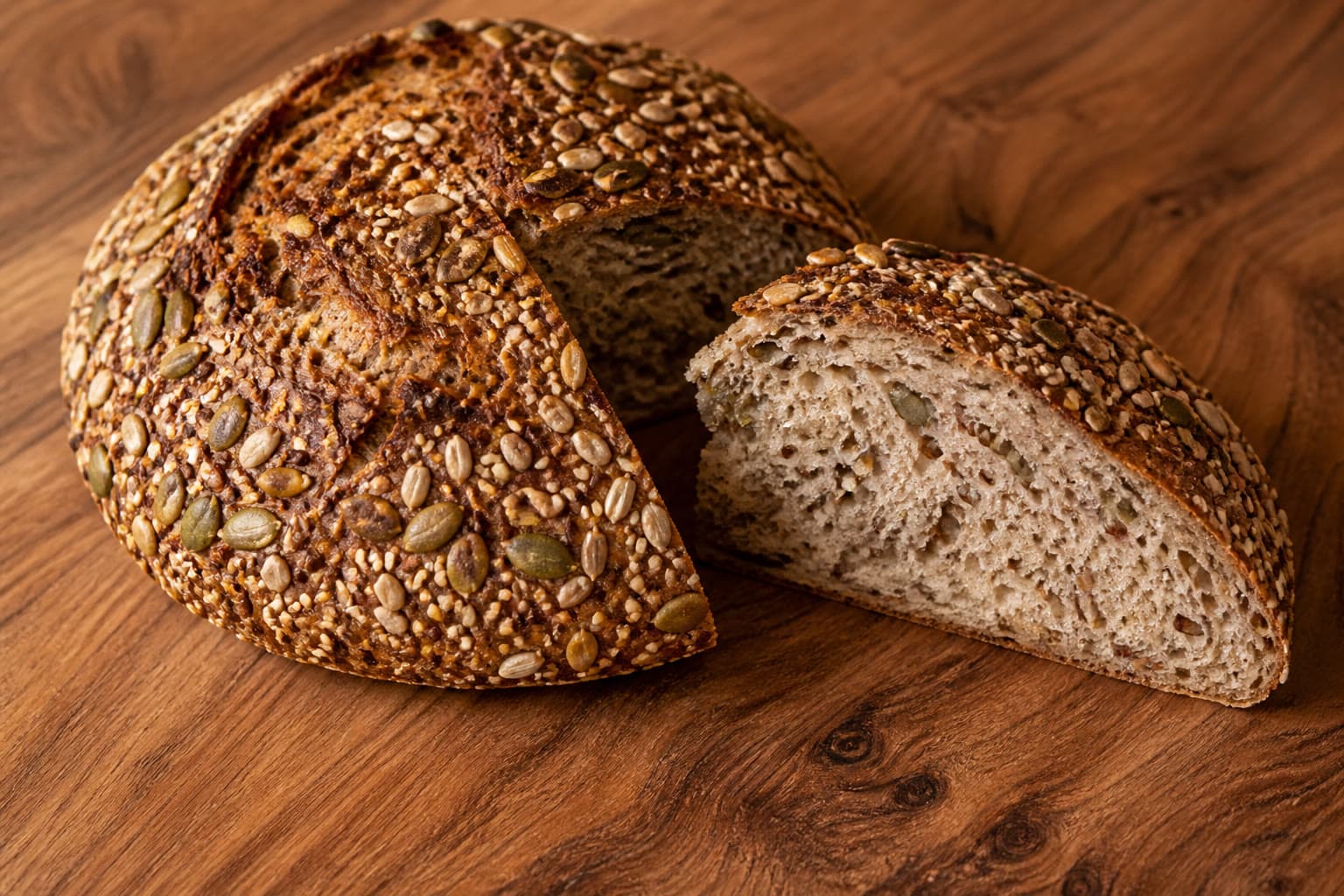
Seeded Ancient-Grain Boule
Sorghum, millet, teff, and brown rice packed with pumpkin, sunflower, flax, and sesame seeds.
Artisan Loaves
BEGINNER
BEGINNER
NOV 14, 2025
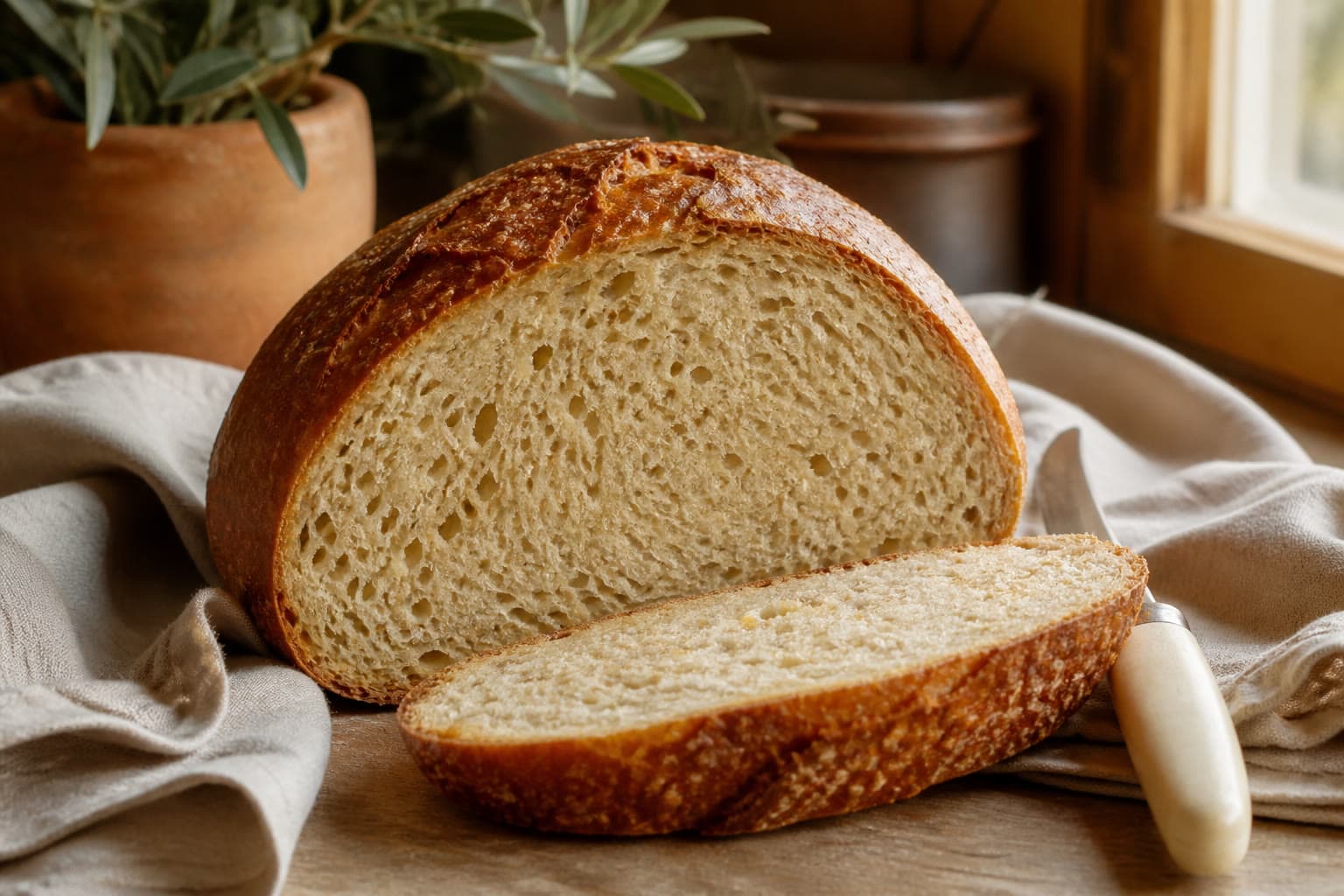
Classic Gluten-Free Sourdough
The beginner country loaf linked from our starter guide: brown rice, sorghum, tapioca, and psyllium powder at 5%.
Technique
Keep the method close
Psyllium, fermentation temperature, and a celiac-safe starter matter as much as the formula.
About Andrew Kittridge
Home baker in Indianapolis documenting gluten-free sourdough: psyllium structure, whole-grain blends, and loaves that actually taste like bread.
More about the kitchen