Artisan Loaves · advanced
Rustic Gluten-Free Baguettes
Key takeaway
Rustic gluten-free baguettes hold their shape at 95% hydration with 6.6% whole psyllium, baked as two logs on a steel with steam, then cooled two hours before slicing.
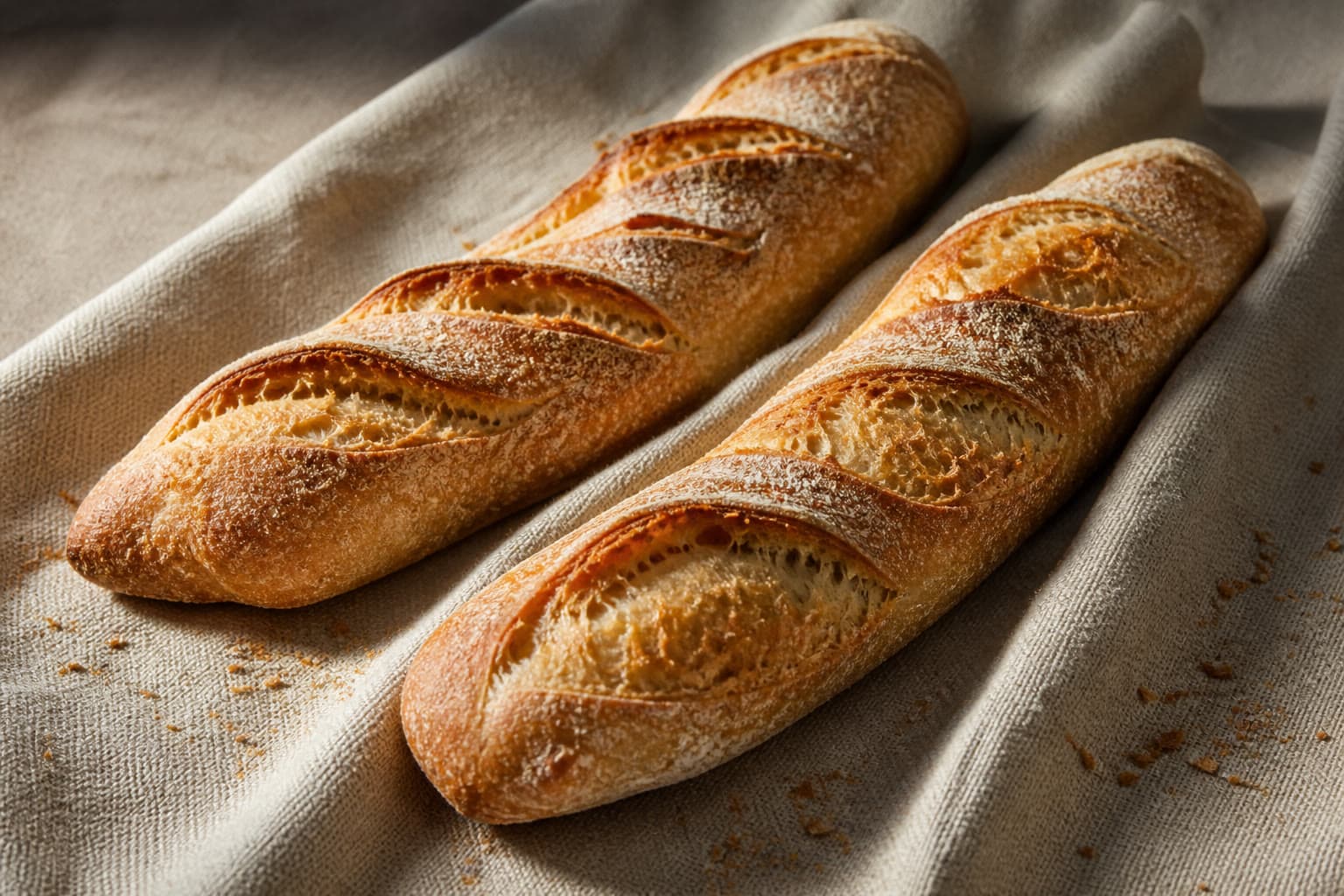
Two steam-baked baguettes from a 95% hydration dough with extra psyllium for a shape that holds a slash.
Prep
40m
Psyllium rest
15 minutes
Bake
32m
Servings
8
Difficulty
advanced
The short answer
Baguettes are the shape that makes gluten-free bakers nervous, because a long loaf wants to flow. We counter that with 95 percent hydration — still a thick batter, not wheat dough — and whole psyllium husk at 6.6 percent, high in the 5–7 percent band, so the logs hold a score. Flour is sorghum, brown rice, millet, and tapioca. Salt is 2 percent. Starter is 25 percent for oven spring in a skinny loaf that otherwise cools too fast. Divide into two, roll gently on a wet counter into 12–14 inch logs, and proof on a floured towel or parchment with a fold between them so they do not fuse. Bake at 500F on a steel with a steam pan, not in a Dutch oven, which cannot fit two baguettes well and would give too much crust relative to crumb. Cool at least two hours; baguette crumb is thin and still gummy if you tear into it hot. The crust should shatter more than a boule, the interior ivory and small-holed, good for sandwiches, garlic bread, or tearing alongside soup. They will never have wheat’s extreme ear, and chasing that with extra flour only makes breadsticks.
For the method behind gluten-free structure, read the gluten-free sourdough guide and keep a lively culture with the starter guide.
Why it works
- 95% hydration is wet enough to gelatinize but dry enough to roll two logs.
- 6.6% whole husk is the high end of the lean range, which a long shape needs.
- 25% starter supplies gas for a loaf with lots of crust relative to crumb.
- Steam then dry heat copies bakery baguette logic without a deck oven.
Ingredients
- 175g (1 1/2 cups minus 1 Tbsp)sorghum flour
- 150g (1 cup minus 1 Tbsp)brown rice flour
- 75g (2/3 cup)millet flour
- 100g (3/4 cup plus 2 Tbsp)tapioca starch
- 33g (about 7 Tbsp)whole psyllium husk6.6% of flour weight, for long-shape structure
- 10g (1 3/4 tsp)fine sea salt2% of flour weight
- 125g (about 1/2 cup)active sorghum starter (100% hydration)25% of flour
- 475g (2 cups)lukewarm water (80F)95% hydration
- as neededrice flour, for the couche or towel
Equipment
- Digital kitchen scale
- Large mixing bowl
- Bench scraper
- Couche, tea towel, or parchment with a center fold
- Baking steel or stone
- Metal steam pan
- Kettle
- Lame
- Wire rack
- Instant-read thermometer
Instructions
- 1
Whisk sorghum, brown rice, millet, tapioca, whole psyllium husk, and salt until the husk is evenly coated. Extra husk is doing the work a gluten network would do in a long shape.
3 minutes
- 2
Stir 125g starter into 475g water. Mix into the flours to a thick, scoopable batter. It should look stiffer than ciabatta, looser than a wheat baguette dough, and smell like cereal and sorghum.
5 minutes
- 3
Rest 15 minutes. The dough should mound and feel like wet clay you can roll. If it still pours, wait 5 minutes more. If it is already rubbery, you over-measured husk; wet your hands and continue.
15 minutes
- 4
Turn onto a wet counter. Divide into two 500g-ish pieces with a wet bench scraper. Roll each into a 12–14 inch log, tapering the ends slightly. They will look rustic, not bakery-perfect. Cracks can be pinched closed.
8 minutes
- 5
Set the logs on a well rice-floured towel or parchment, pulling a fold of cloth up between them as a couche. The sides should be supported so they proof up, not out.
3 minutes
- 6
Proof at 75–78F until the logs look puffy, have gained about 40–50 percent width, and a gentle poke fills slowly. They should smell tangy. If they flatten into ribbons, they overproofed; bake anyway for a thinner baguette.
3.5–4.5 hours
- 7
Preheat a steel or stone at 500F for 45 minutes with a metal pan on the oven floor. Boil a kettle. Have a parchment sling or peel ready.
45 minutes
- 8
Roll or lift the logs onto parchment. Dust and score 3–4 diagonal slashes per baguette, 1/3 inch deep, overlapping slightly along the length. You should see the interior along each cut. Load onto the steel and pour boiling water into the floor pan.
3 minutes
- 9
Bake with steam 18 minutes. The scores should open and the crust turn pale gold. The loaves will not leap like wheat; look for modest lift and a matte surface replacing wet shine.
18 minutes
- 10
Remove the steam pan. Bake 12–14 minutes more until russet, the bottoms firm, and the centers 208–210F. They should sound hollow and smell toasty, not wet-millet.
12–14 minutes
- 11
Cool on a rack at least 2 hours. Baguettes dry as they cool; that is crust, not staleness yet. Slice on a bias when just warm. The crumb should be ivory, small-holed, and dry enough to sandwich without compressing into paste.
2 hours
Nutrition
Approximate values per serving. Always verify labels if you bake for celiac safety.
| Nutrient | Amount |
|---|---|
| Calories | 258 kcal |
| Protein | 5 g |
| Carbs | 54 g |
| Fat | 2 g |
| Fiber | 5 g |
| Sodium | 488 mg |
Substitutions
- Millet flour (75g)
- 75g additional sorghum for a less corn-like flavor.
- Baking steel
- Stone or inverted heavy sheet pan, fully preheated. A baguette pan is optional if it is perforated and uncoated; still use steam.
- Whole psyllium husk (33g)
- 28g psyllium powder mixed into the dry flours. Logs may spread a little more.
Storage
Best the day they are baked. Freeze extras whole or halved the first afternoon. Reheat from frozen at 375F until the crust crackles again. Plastic bags turn the crust leathery.
Notes
- Two baguettes, not one long loaf. A single mega-baguette underbakes in the middle.
- 95% hydration plus 6.6% husk is what lets you roll a log. 110% water belongs to ciabatta.
- Support the sides during proof with a towel fold so they do not pancake.
- Steam first, then dry heat. Steam the whole time and the crust stays pale and thick.
- Cool 2 hours. A hot baguette always feels underdone in gluten-free baking.
FAQ
Can gluten-free sourdough be shaped into baguettes?
Yes, if hydration stays around 95% and whole psyllium husk is near 6.6% of flour weight. Wetter doughs spread into ribbons. You still will not get a wheat-style ear, and that is fine.
Why not bake baguettes in a Dutch oven?
Two long loaves do not fit, and a pot makes a thicker boule crust. A steel plus steam pan gives a thinner, shatterier baguette crust.
How do I score gluten-free baguettes without deflating them?
Use a wet lame, 3–4 overlapping diagonal cuts, about 1/3 inch deep. Hesitation drags. Cold-proofed logs (see the overnight loaf method) score even more cleanly if you want to combine techniques.
Why bake two smaller baguettes instead of one?
Skinny loaves need to bake through before the crust burns. Two 12–14 inch logs from 500g flour cook evenly at 500F.
How should I store gluten-free baguettes?
They stale faster than boules. Freeze extra the first day, then reheat at 375F for 8–10 minutes from frozen after a light water spritz.
Bake next
Related recipes
Artisan Loaves
ADVANCED
CIABATTA
JUN 18, 2026
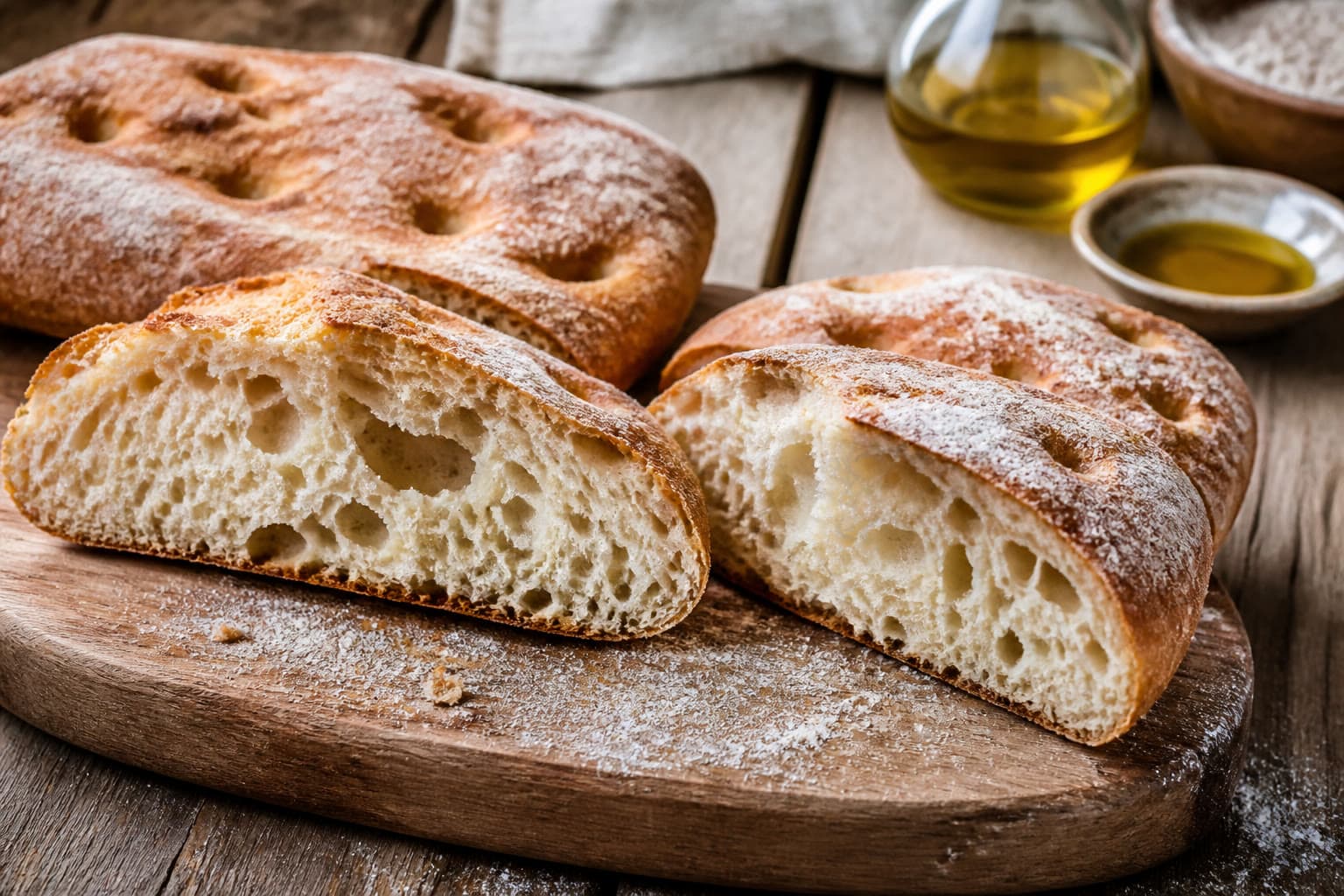
High-Hydration Ciabatta
A 110% hydration gluten-free ciabatta dimpled with olive oil and baked on a steel with steam — no Dutch oven required.
Artisan Loaves
INTERMEDIATE
GLUTEN FREE SOURDOUGH
NOV 7, 2025
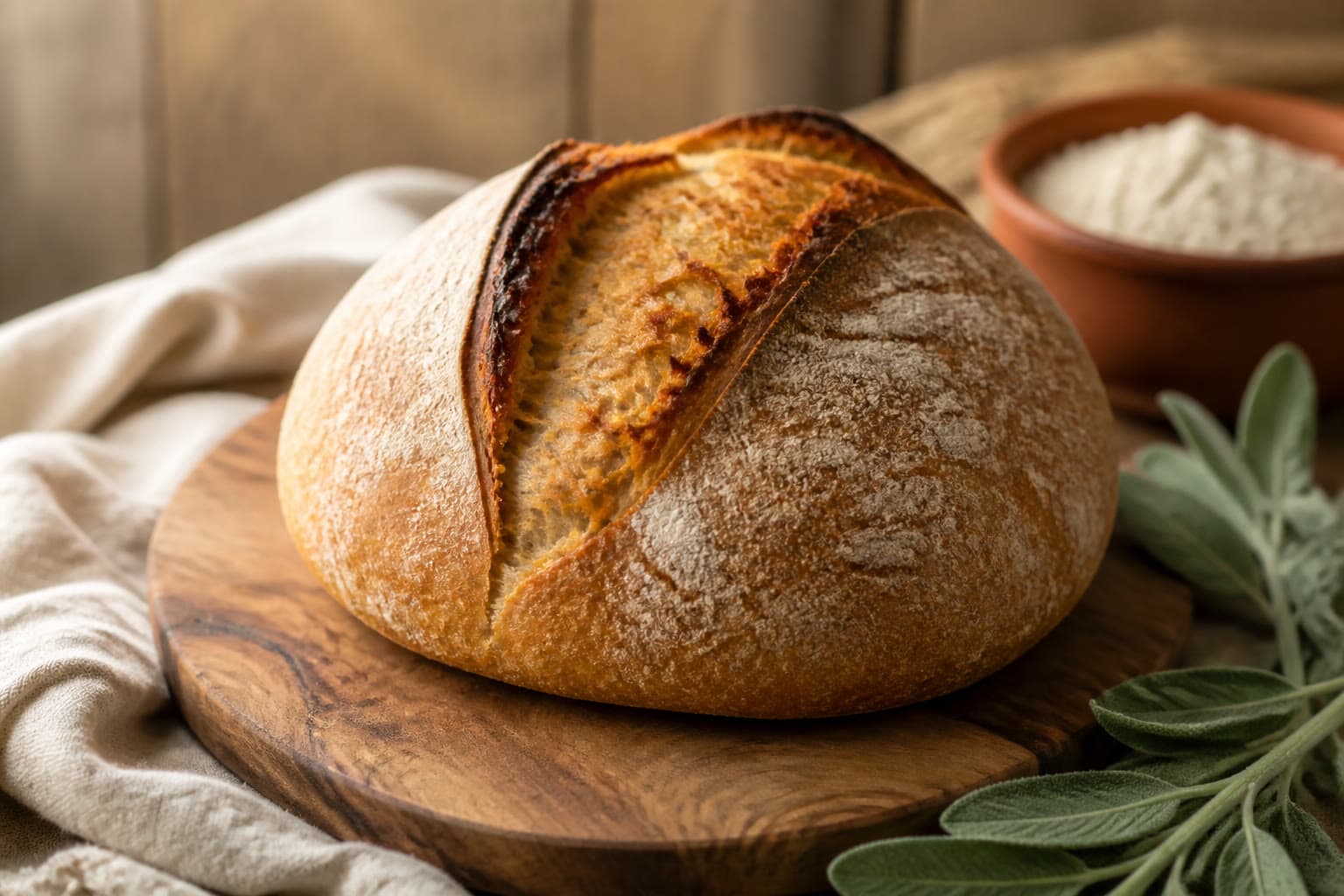
Artisan Gluten-Free Sourdough Bread
Our upgraded house boule: King Arthur gluten-free bread flour, whole psyllium husk, and a 500F Dutch oven for a blistered crust.
Artisan Loaves
BEGINNER
BEGINNER
NOV 14, 2025
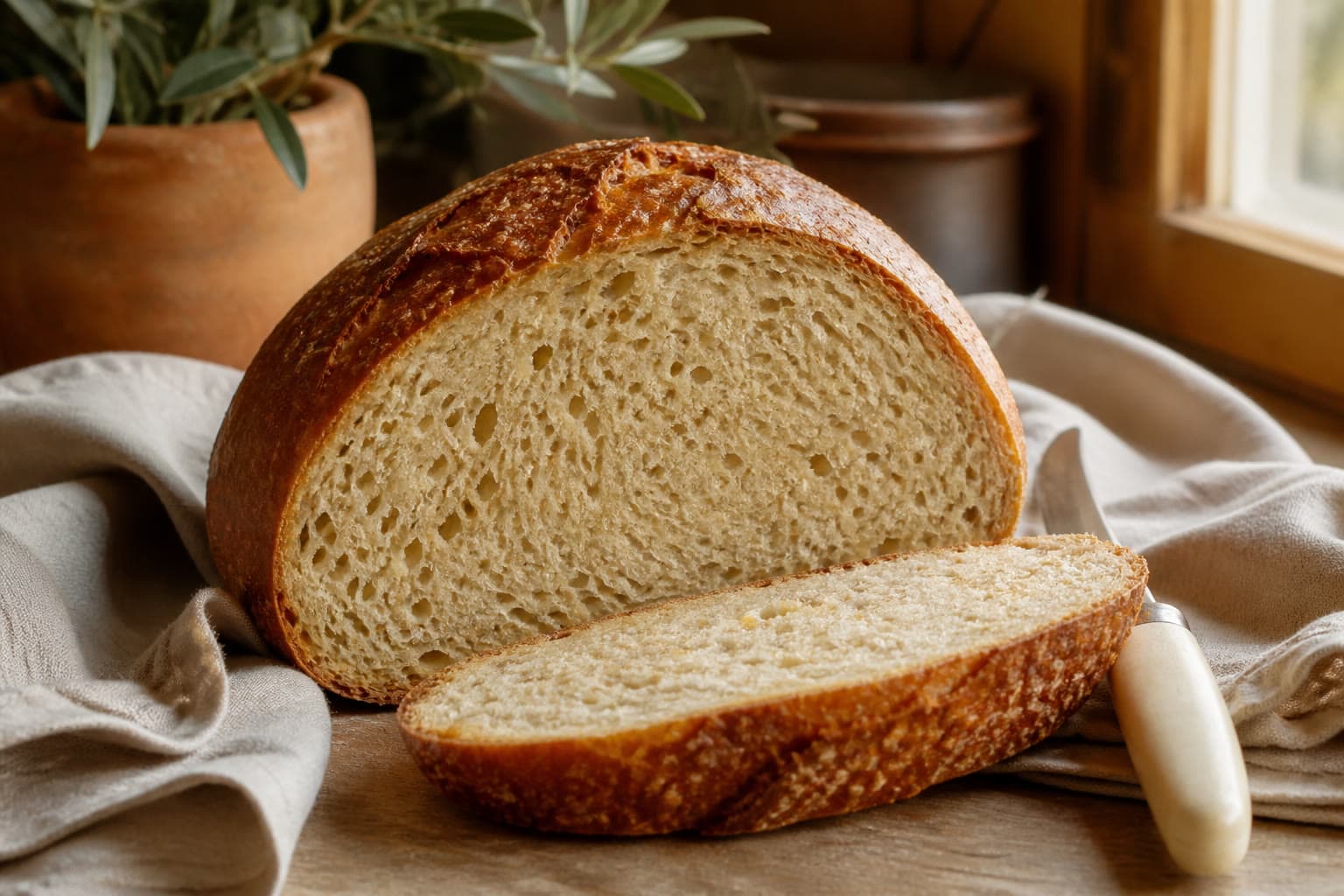
Classic Gluten-Free Sourdough
The beginner country loaf linked from our starter guide: brown rice, sorghum, tapioca, and psyllium powder at 5%.
Technique
Keep the method close
Psyllium, fermentation temperature, and a celiac-safe starter matter as much as the formula.
About Andrew Kittridge
Home baker in Indianapolis documenting gluten-free sourdough: psyllium structure, whole-grain blends, and loaves that actually taste like bread.
More about the kitchen