Artisan Loaves · intermediate
Artisan Gluten-Free Sourdough Bread
Key takeaway
A crusty gluten-free artisan boule needs a bread-flour-strength blend, 6% whole psyllium husk, 100% hydration, a 500F Dutch oven, and a two-hour cool before you slice.
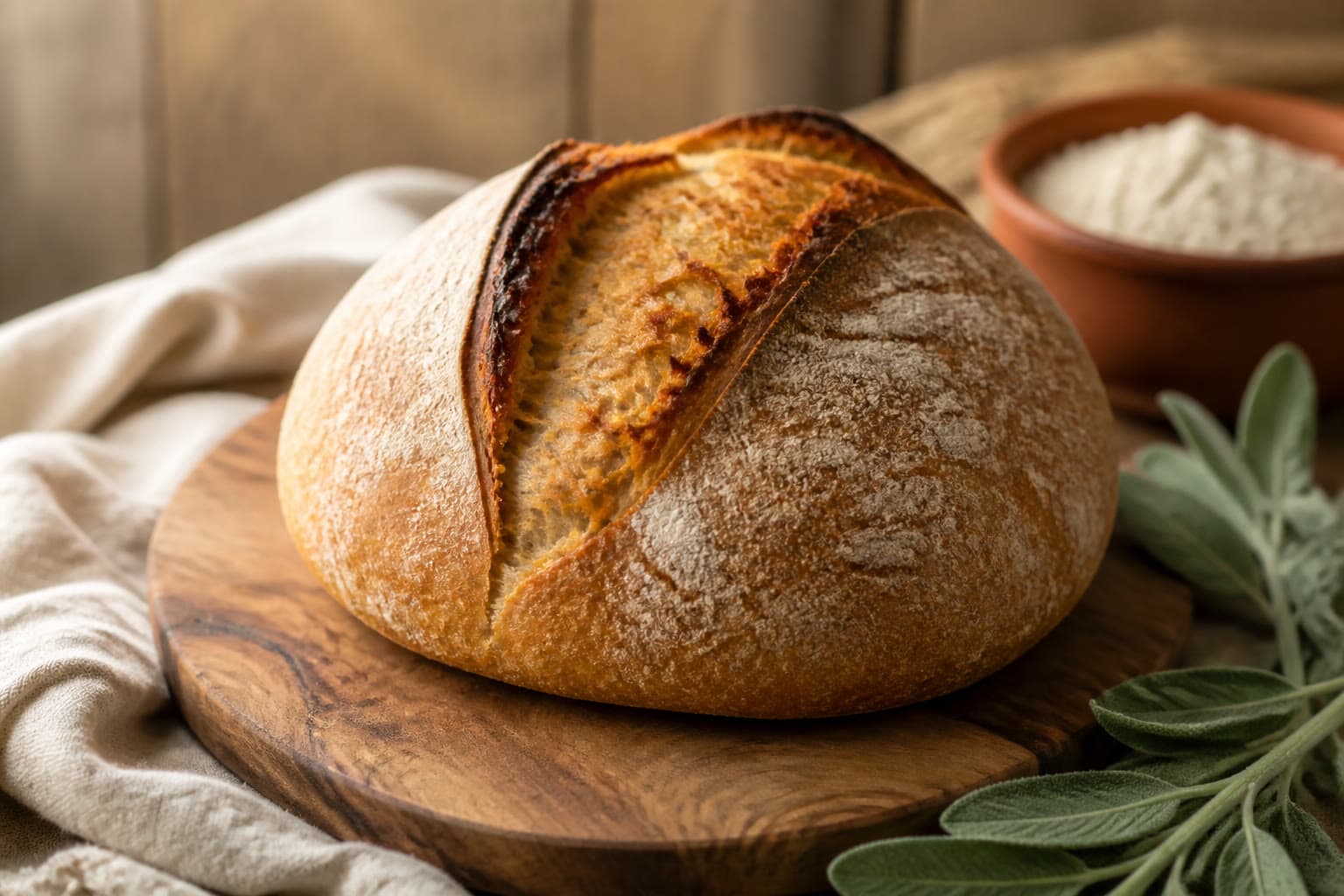
Our upgraded house boule: King Arthur gluten-free bread flour, whole psyllium husk, and a 500F Dutch oven for a blistered crust.
Prep
30m
Psyllium rest
15–20 minutes
Bake
55m
Servings
12
Difficulty
intermediate
The short answer
This is the loaf we bake when we want a real crust and a slice that can stand up to soup. The formula upgrades our house gluten-free sourdough with King Arthur Gluten-Free Bread Flour, or an equivalent high-protein gluten-free bread blend, plus whole psyllium husk for a gel network that wheat gluten would otherwise provide. Hydration sits at 100 percent of flour weight, so the mix looks like a thick batter that firms as the husk hydrates, not a kneadable wheat dough. We use 20 percent active brown-rice starter at 100 percent hydration and 2 percent salt. Instant yeast appears only as an optional note for sluggish winter kitchens in Indianapolis; the loaf does not require it. Bake in a screaming-hot Dutch oven at 500F with the lid on, then finish lid-off for color. Cool at least two hours so the crumb sets. The result is a blistered boule with a nutty, gently tangy crumb and a crackling crust you can hear from across the counter. Score deep enough to open, and trust the steam trapped under the lid more than any extra handling.
For the method behind gluten-free structure, read the gluten-free sourdough guide and keep a lively culture with the starter guide.
Why it works
- Whole psyllium husk at 6% of flour weight forms a flexible gel that traps fermentation gas the way gluten would.
- 100% hydration gives enough water for rice-based bread flour to fully gelatinize in the oven without collapsing into paste.
- A covered 500F bake traps steam so the loaf can expand; lid-off drying sets a thick crust.
- A long cool lets starch retrogradation finish; that is structure, not patience for its own sake.
Ingredients
- 500g (about 3 1/4 cups)King Arthur Gluten-Free Bread Flouror a comparable certified gluten-free bread-flour blend with rice, sorghum, and starch
- 30g (6 Tbsp)whole psyllium husk6% of flour weight; not powder
- 10g (1 3/4 tsp)fine sea salt2% of flour weight
- 100g (about 1/3 cup plus 1 Tbsp)active gluten-free sourdough starter (100% hydration)20% of flour; brown rice starter, doubled and domed
- 500g (2 cups plus 2 Tbsp)lukewarm water (80F)100% hydration relative to flour; includes water used if you gel the psyllium
- as neededrice flour or sorghum flour, for dusting
Equipment
- Digital kitchen scale
- Large mixing bowl
- Stiff spatula
- Banneton or towel-lined bowl
- Parchment paper sling
- 5–6 quart Dutch oven with lid
- Bread lame or sharp knife
- Wire cooling rack
- Instant-read thermometer
Instructions
- 1
Feed your brown-rice starter 4–6 hours before mixing so it is peaked: doubled, domed, and smelling like yogurt and cooked rice rather than nail polish. A spoonful should look webbed with bubbles. If it looks sluggish, wait; do not compensate with extra water.
4–6 hours
- 2
Weigh the bread flour, whole psyllium husk, and salt into a large bowl and whisk until the husk is evenly distributed and no rust-colored clumps remain. Mixing the husk into the dry flours now lets it hydrate uniformly instead of forming gel pockets.
3 minutes
- 3
Stir the 100g starter into the 500g water until the liquid looks milky and faintly foamy. Pour it into the dry mix. With a stiff spatula or wet hand, beat for 60–90 seconds until you have a glossy, thick batter that sheets off the spatula, then slowly thickens. It will not pull like wheat dough.
5 minutes
- 4
Cover and rest 15 minutes. The batter should shift toward a soft dough: tacky, not pouring, with a faint gelled bounce when you press it. If it still slumps like cake batter, rest 5 minutes more. This autolyse is when the 6% whole husk builds the loaf’s structure.
15–20 minutes
- 5
With wet hands, coil-fold the dough in the bowl 8–10 times, turning the bowl as you go, until the surface looks smoother and it holds a rounder shape for a few seconds. Scoop into a generously rice-floured banneton, seam-side up for a rustic bloom or down for a tighter round.
5 minutes
- 6
Cover and proof at 75–78F until the loaf looks pillowy, has risen about 50 percent, and a wet finger leaves a dent that fills back slowly. In our Indianapolis kitchen that is usually 3.5–4.5 hours. It should smell tangy and a little sweet, not sharply acidic.
3.5–4.5 hours
- 7
At least 45 minutes before baking, set a lidded 5–6 quart Dutch oven on the middle rack and heat the oven to 500F. The pot should be ripping hot; a drop of water on the lid should skitter and vanish.
45 minutes
- 8
Turn the loaf onto a parchment sling. Dust the top, then score 1/2 inch deep with a lame or sharp knife — a single angled slash or a cross. You should see the interior just peeking, creamy and slightly shiny, not dry.
2 minutes
- 9
Lower the loaf into the Dutch oven, cover, and bake 40 minutes. Uncover: the crust should be pale gold and the score opened. Bake lid-off 12–15 minutes more until deep amber, the loaf sounds hollow, and an instant-read thermometer in the center reads 208–210F.
52–55 minutes
- 10
Move to a wire rack. The crust will crackle as it cools. Wait at least 2 hours, preferably 3, before slicing. Cutting sooner compresses a still-gelling crumb into gumminess. The crumb should look moist and even, with small irregular holes, not shiny wet streaks.
2–3 hours
Nutrition
Approximate values per serving. Always verify labels if you bake for celiac safety.
| Nutrient | Amount |
|---|---|
| Calories | 178 kcal |
| Protein | 4 g |
| Carbs | 38 g |
| Fat | 1 g |
| Fiber | 4 g |
| Sodium | 325 mg |
Substitutions
- King Arthur Gluten-Free Bread Flour
- 500g of a similar certified gluten-free bread blend (brown rice, sorghum, tapioca or potato starch, and a little millet). Avoid 1:1 cake-style blends; they bake up cakey.
- Whole psyllium husk (30g)
- 26g psyllium powder (about 85% of husk weight). Do not swap xanthan 1:1; xanthan at this hydration makes a sticky, tight crumb.
- Brown-rice starter (100g)
- 100g active sorghum starter at 100% hydration. Keep the inoculation at 15–30% of flour weight.
- Dutch oven
- A lidded roasting pan or a baking steel plus a preheated pan of water for steam. The 500F lid-on then lid-off sequence is what builds the crust.
Storage
Cool completely, then keep cut-side down on a board for 24 hours, or wrap in a clean towel for up to 2 days at room temperature. Slice and freeze up to 2 months; toast from frozen. Refrigeration stales the crumb faster than the counter.
Notes
- Whole psyllium husk at 6% is the structure. If you only have powder, use about 26g (85% of the husk weight) and expect a slightly tighter crumb.
- Instant yeast is optional and not required: 1/8 tsp mixed into the dry flours can lift a weak starter in a cold house. It will taste a little less lactic.
- The mix should look like thick batter that gels, not wheat dough. Adding extra flour to make it kneadable dries the crumb.
- Preheat the Dutch oven a full 45 minutes at 500F. A shy preheat gives a dull crust and a tight score.
- Cool at least 2 hours. Gluten-free crumb finishes setting as starches retrograde; slicing early is the most common cause of gumminess.
FAQ
Do I need instant yeast in gluten-free artisan sourdough?
No. This loaf is leavened by 20% active gluten-free starter. A pinch of instant yeast is only an optional insurance policy if your starter is slow or your kitchen is below 70F. Leave it out for a fuller sour and a slightly longer proof.
Why is gluten-free sourdough so wet compared with wheat dough?
Lean gluten-free loaves typically hydrate at 90–110% of flour weight. Without gluten, the mix starts as a thick batter. Whole psyllium husk at 5–7% absorbs water and builds a sliceable gel. If you stiffen it to look like wheat dough, the baked crumb turns dense.
What internal temperature is a gluten-free sourdough loaf done?
We bake until the center reads 208–210F and the crust is deep amber. Underbaked gluten-free bread tastes gummy even after a long cool because the starches never fully set.
Can I use psyllium powder instead of whole husk in this artisan loaf?
Yes, at about 85% of the husk weight: 26g powder for this 500g-flour formula. Whisk it thoroughly through the flour so it does not clump. Whole husk gives a slightly more open, rustic crumb, which is why we prefer it here.
How long should I cool gluten-free sourdough before slicing?
At least 2 hours, 3 if you can wait. The crumb is still steaming and fragile when it leaves the pot. Cooling lets the psyllium gel and gelatinized starches set so slices hold together.
Bake next
Related recipes
Artisan Loaves
BEGINNER
BEGINNER
NOV 14, 2025
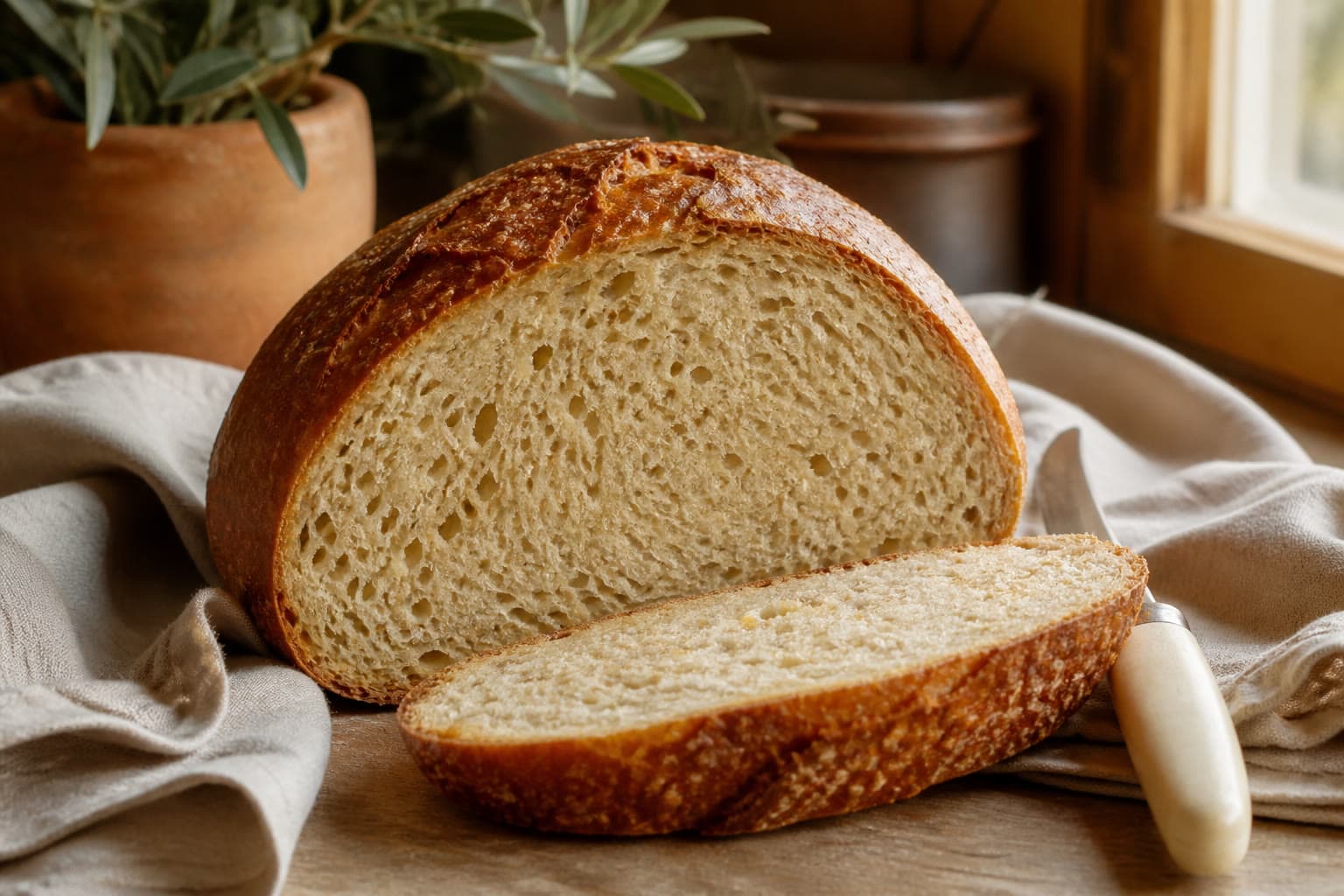
Classic Gluten-Free Sourdough
The beginner country loaf linked from our starter guide: brown rice, sorghum, tapioca, and psyllium powder at 5%.
Artisan Loaves
INTERMEDIATE
OVERNIGHT
APR 9, 2026
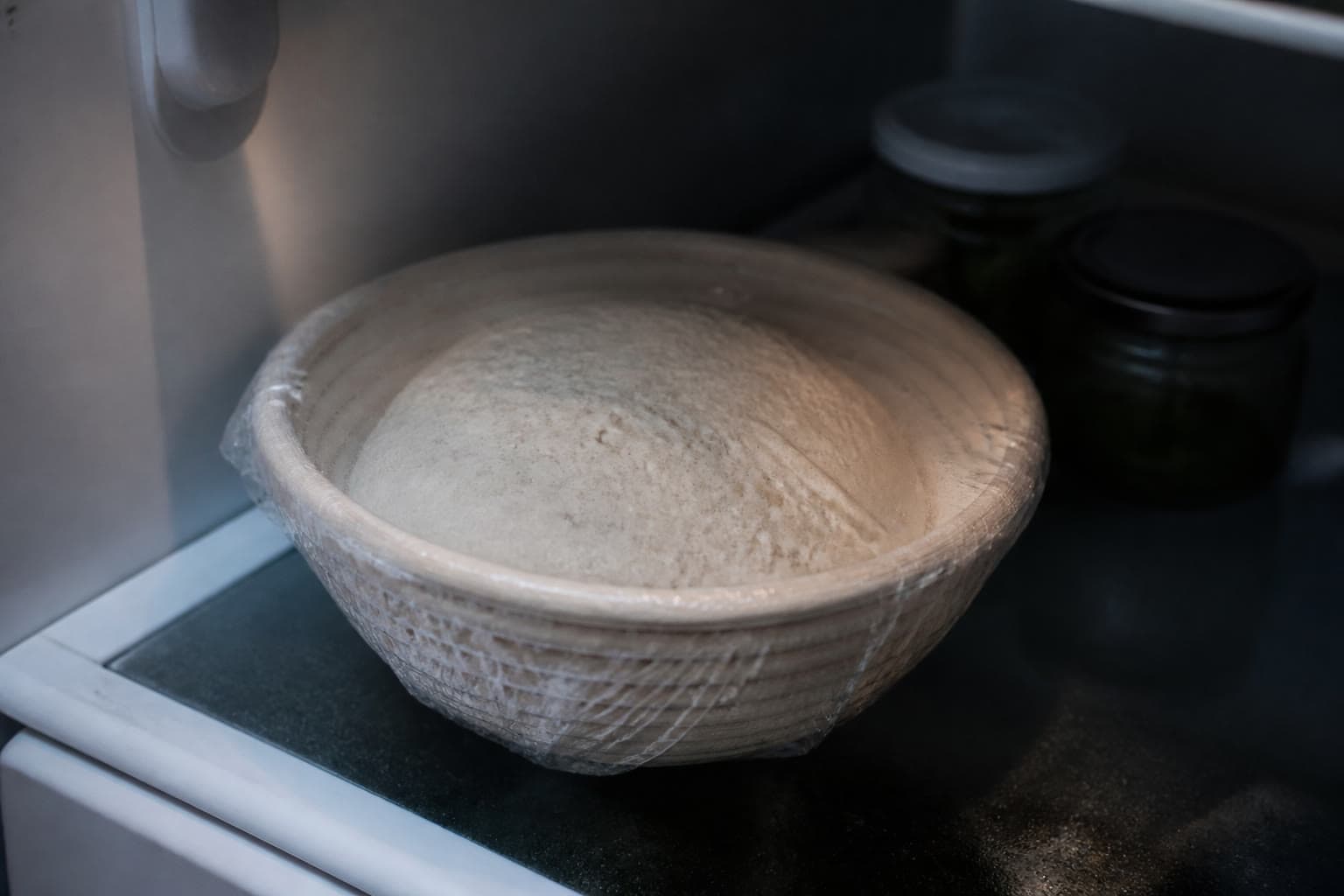
Overnight Cold-Proof Sourdough
Shape, refrigerate 8–18 hours, then bake from a cold proof for deeper tang and a flexible morning schedule.
Artisan Loaves
BEGINNER
SAME DAY
APR 23, 2026
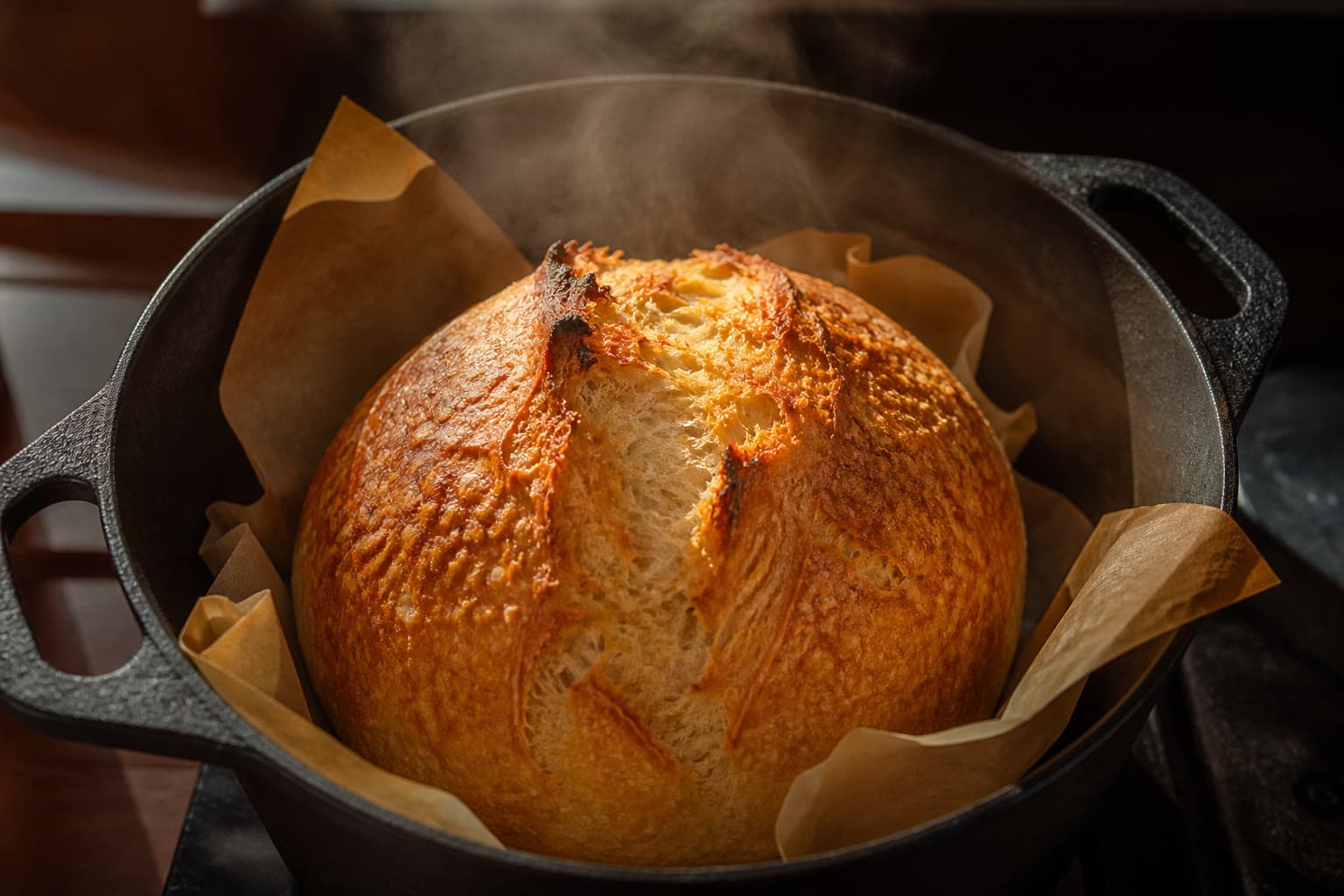
Same-Day Gluten-Free Sourdough
A warmer, 30% starter loaf you can mix after breakfast and bake before dinner — 6–8 hours total.
Technique
Keep the method close
Psyllium, fermentation temperature, and a celiac-safe starter matter as much as the formula.
About Andrew Kittridge
Home baker in Indianapolis documenting gluten-free sourdough: psyllium structure, whole-grain blends, and loaves that actually taste like bread.
More about the kitchen