Artisan Loaves · intermediate
Millet Oat Porridge Loaf
Key takeaway
A millet oat porridge loaf stays celiac-safe only with certified gluten-free oats, 6% whole psyllium, and soaker water counted inside ~104% hydration.
Millet-sorghum dough with a certified gluten-free oat porridge soaker for a moist, breakfast-friendly crumb.
Prep
40m
Porridge cool + dough rest
20 minutes porridge, 15 minutes dough
Bake
55m
Servings
12
Difficulty
intermediate
The short answer
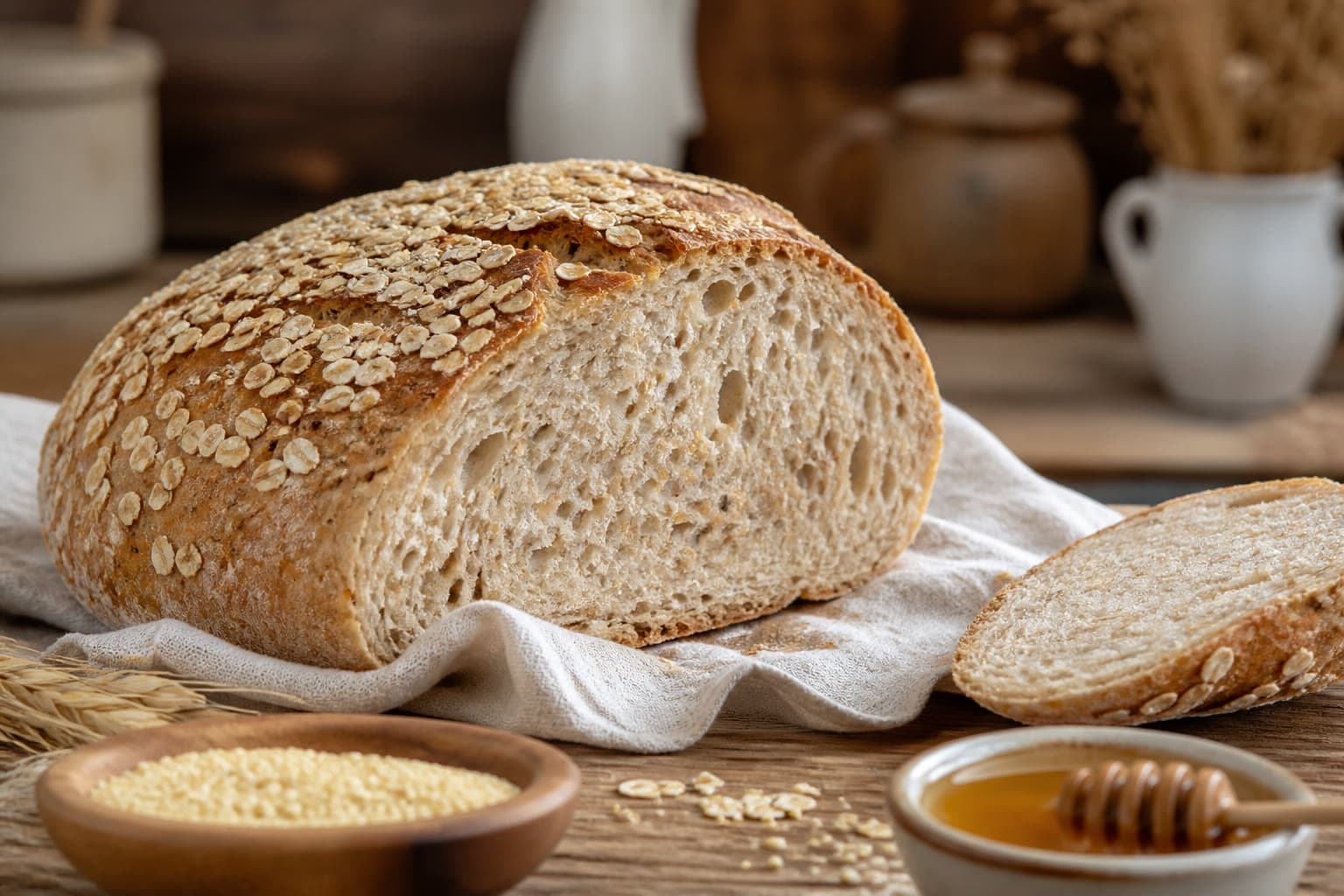
Porridge bread is how we get a custardy slice without dairy or eggs. Certified gluten-free rolled oats are cooked as a thick soaker, cooled, then folded into a millet-sorghum-tapioca dough. The oats count toward flour weight in our baker’s math, and the soaker water counts toward hydration, which lands near 104 percent — still in the lean-loaf window once you remember the oats are holding much of that water. Whole psyllium husk at 6 percent is mixed into the dry flours. Salt is 2 percent. Starter is 20 percent sorghum or brown rice, 100 percent hydration. Regular oats are not safe for celiac baking in this kitchen; if the bag is not certified gluten-free, skip this loaf and bake the classic country bread instead. The dough smells like warm cereal and millet, slightly sweet even before the oven. Bake in a 500F Dutch oven, lid on then off, and cool at least two hours. Toasted with jam, or eaten as a grilled cheese if you use dairy, it is the loaf that disappears first on a Sunday.
For the method behind gluten-free structure, read the gluten-free sourdough guide and keep a lively culture with the starter guide.
Why it works
- A cooked oat soaker gelatinizes starch before mixing, so the crumb eats moist without extra fat.
- Counting oats as flour keeps baker’s percentages honest; the soaker water is real hydration.
- Millet’s sweetness reads as breakfast; sorghum keeps the loaf from tasting only like oatmeal.
- Psyllium still has to build the gel — porridge is not a substitute for husk.
Ingredients
- 180g (1 1/2 cups)millet flour
- 140g (1 cup plus 3 Tbsp)sorghum flour
- 100g (3/4 cup plus 2 Tbsp)tapioca starch
- 40g (1/2 cup)certified gluten-free rolled oatsfor the porridge soaker; not regular oats
- 30g (6 Tbsp)whole psyllium husk6% of 500g total flour (including oats)
- 10g (1 3/4 tsp)fine sea salt2% of flour weight
- 100g (1/3 cup plus 1 Tbsp)active sorghum or brown-rice starter (100% hydration)20% of flour
- 120g (1/2 cup)boiling waterfor the oat porridge soaker
- 400g (1 2/3 cups)lukewarm water (80F)dough water; total water 520g = 104% of 500g flour
Equipment
- Digital kitchen scale
- Large mixing bowl
- Stiff spatula
- Banneton or towel-lined bowl
- Parchment paper sling
- 5–6 quart Dutch oven with lid
- Bread lame or sharp knife
- Wire cooling rack
- Instant-read thermometer
- Heatproof bowl for porridge
Instructions
- 1
Stir 40g certified gluten-free rolled oats with 120g boiling water in a small bowl. The oats should look swollen and the water mostly absorbed, like thick oatmeal, not soup. Cool until just warm to the touch, about 15–20 minutes. If the porridge is piping hot it will shock the starter.
20 minutes
- 2
Whisk millet, sorghum, tapioca, whole psyllium husk, and salt. The mix should smell faintly corn-sweet from the millet. Confirm your oat carton says certified gluten-free before you proceed.
3 minutes
- 3
Stir starter into the 400g lukewarm water. Add that liquid and the cooled porridge to the flours. Beat until the oats are evenly speckled through a thick, scoopable batter. You should see oat flakes, not dry flour lumps.
5 minutes
- 4
Rest 15 minutes. The dough will feel moister than the classic loaf because of the porridge, but it should still mound. If it pours, rest 5 minutes more; the husk is still catching up.
15 minutes
- 5
Fold with wet hands until the surface looks less shaggy. Shape a round. Oat dough is slippery; dust the banneton more generously than usual with rice flour so it releases.
5 minutes
- 6
Proof at 75–78F until risen about 50 percent. It should smell like oatmeal and yogurt, with a soft jiggle. A finger dent should fill slowly. If the surface weeps water, the porridge was too wet; bake it anyway and expect a tighter crumb.
3.5–4.5 hours
- 7
Preheat the Dutch oven at 500F for 45 minutes. Invert onto parchment. The loaf may look slightly freckled with oats; that is correct.
45 minutes
- 8
Score a shallow cross. Porridge loaves can weep at a deep cut, so stay around 1/3 inch. You should see a moist, oat-flecked interior, not a dry paste.
2 minutes
- 9
Bake covered 40 minutes, lid-off 15 minutes, until the crust is golden with darker oat specks and the center reads 208–210F. It should smell like toasted oatmeal, not wet cereal.
55 minutes
- 10
Cool at least 2 hours. Porridge crumb is extra moist; slicing early guarantees gumminess. The slice should look custardy and speckled, and hold together when flexed.
2 hours
Nutrition
Approximate values per serving. Always verify labels if you bake for celiac safety.
| Nutrient | Amount |
|---|---|
| Calories | 176 kcal |
| Protein | 4 g |
| Carbs | 36 g |
| Fat | 2 g |
| Fiber | 4 g |
| Sodium | 323 mg |
Substitutions
- Millet flour (180g)
- 180g additional sorghum flour. Milder, less corn-like flavor.
- Certified GF rolled oats (40g)
- Do not swap regular oats. If avoiding oats, use this hydration on the brown-rice sorghum country loaf instead.
- Whole psyllium husk (30g)
- 26g psyllium powder mixed into the dry flours.
Storage
Because of the porridge, this loaf stales slower but can feel damp in a plastic bag. Store in a towel 2 days or freeze slices. Toast restores the crust.
Notes
- Use certified gluten-free oats only. Regular oats are commonly contaminated with wheat and are not used in this kitchen.
- Cool the porridge until it is just warm. Hot oats will raise the dough temperature and can overferment.
- If you only have certified GF oat flour, skip the soaker and add 40g oat flour plus 80g extra dough water instead of 400g — but the flake texture is the point of this loaf.
- The crumb stays moist; freeze extra slices on day one if you bake for one person.
FAQ
Are oats gluten-free in sourdough bread?
Only if they are certified gluten-free. Oats do not contain gluten protein, but regular oats are often grown or milled with wheat, barley, or rye. This recipe uses certified gluten-free rolled oats as a porridge soaker.
Can I use steel-cut oats in this porridge loaf?
Not without a longer cook. Steel-cut oats stay too firm in a 20-minute soaker and make gritty tunnels. Stick to certified gluten-free rolled oats.
Why include porridge water in the hydration?
The 120g boiling water is part of the dough’s total water. Ignoring it and adding another 400g on top of a wet soaker would push hydration well past 110% and collapse the loaf.
My oat loaf gummier than the classic country loaf. Why?
Porridge crumb is moist by design. If it is gluey, it was sliced before a 2-hour cool, underbaked below 208F, or the porridge was still hot when mixed.
Can I skip oats if I am sensitive even to certified gluten-free oats?
Yes. Bake the classic gluten-free sourdough or the millet-free brown rice sorghum country loaf instead. Some celiac bakers avoid oats entirely, certified or not.
Bake next
Related recipes
Artisan Loaves
BEGINNER
BEGINNER
NOV 14, 2025
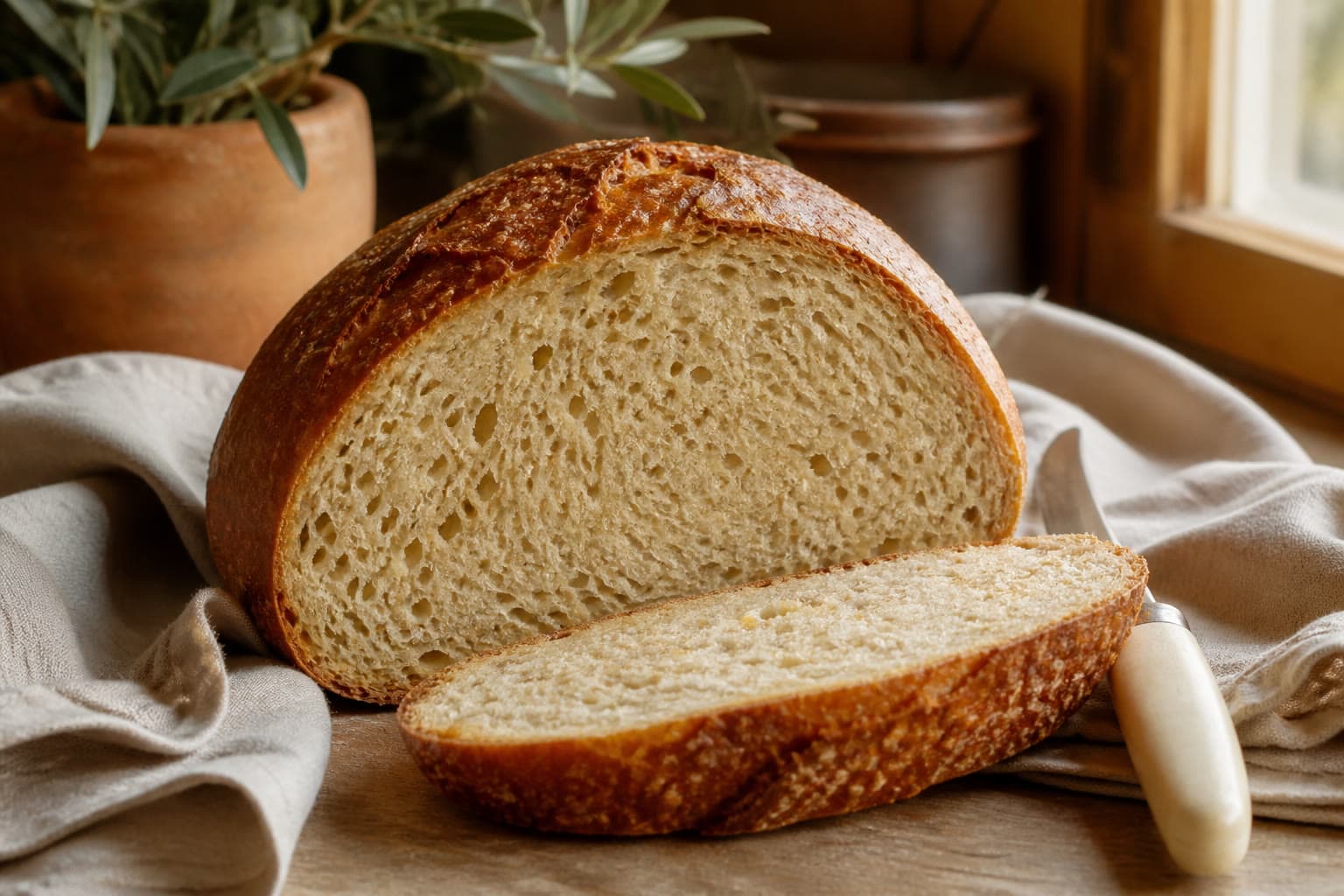
Classic Gluten-Free Sourdough
The beginner country loaf linked from our starter guide: brown rice, sorghum, tapioca, and psyllium powder at 5%.
Artisan Loaves
INTERMEDIATE
WALNUT RAISIN
FEB 19, 2026
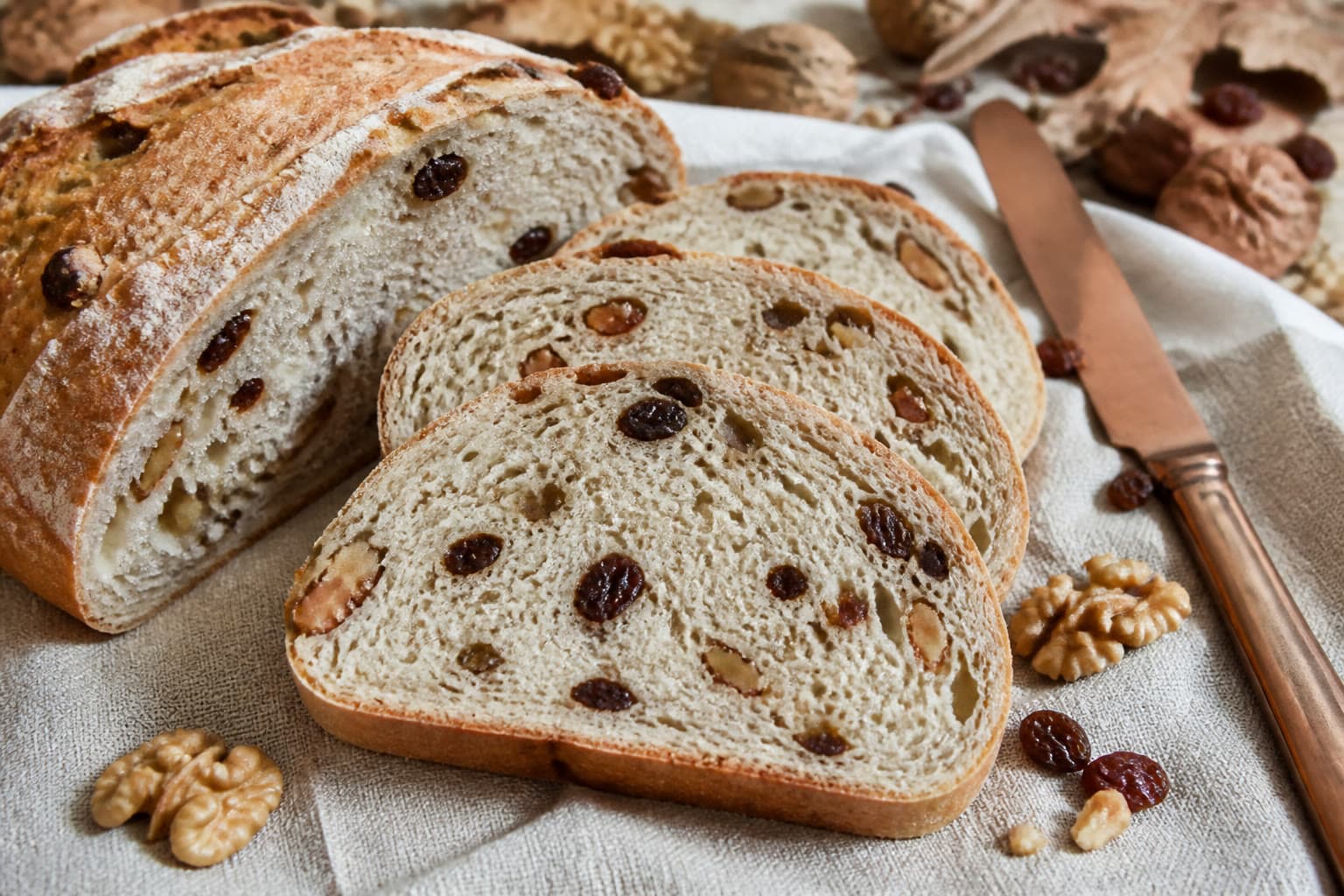
Walnut Raisin Loaf
A lightly cinnamon-scented country loaf with toasted walnuts and raisins soaked so they do not steal dough water.
Discard
BEGINNER
PANCAKES
MAR 1, 2026
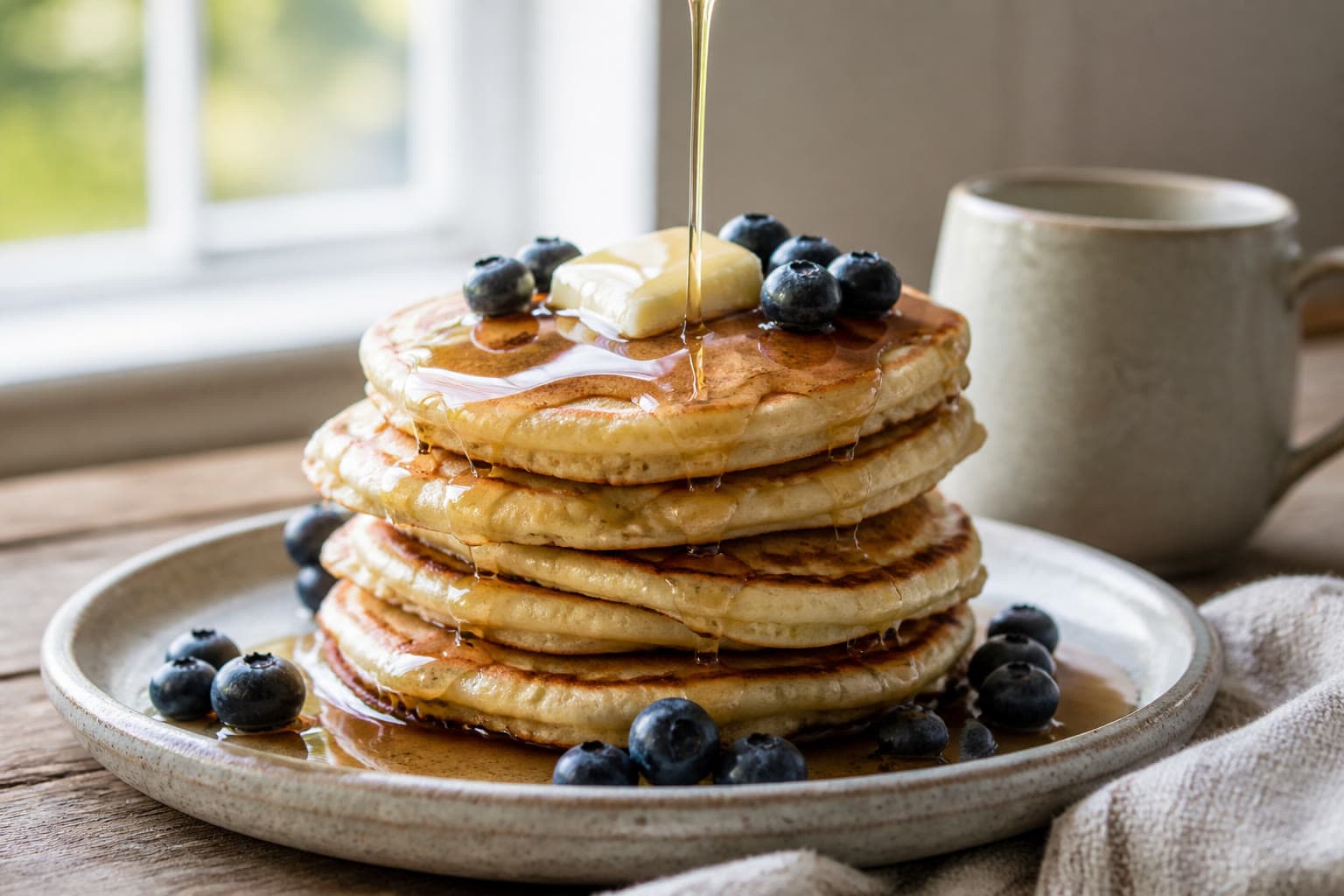
Gluten-Free Sourdough Discard Pancakes
Weekday pancakes that spend 150g of unfed starter. Baking soda reacts with the acid; you get tang and lift without a 4-hour proof.
Technique
Keep the method close
Psyllium, fermentation temperature, and a celiac-safe starter matter as much as the formula.
About Andrew Kittridge
Home baker in Indianapolis documenting gluten-free sourdough: psyllium structure, whole-grain blends, and loaves that actually taste like bread.
More about the kitchen