Discard · beginner
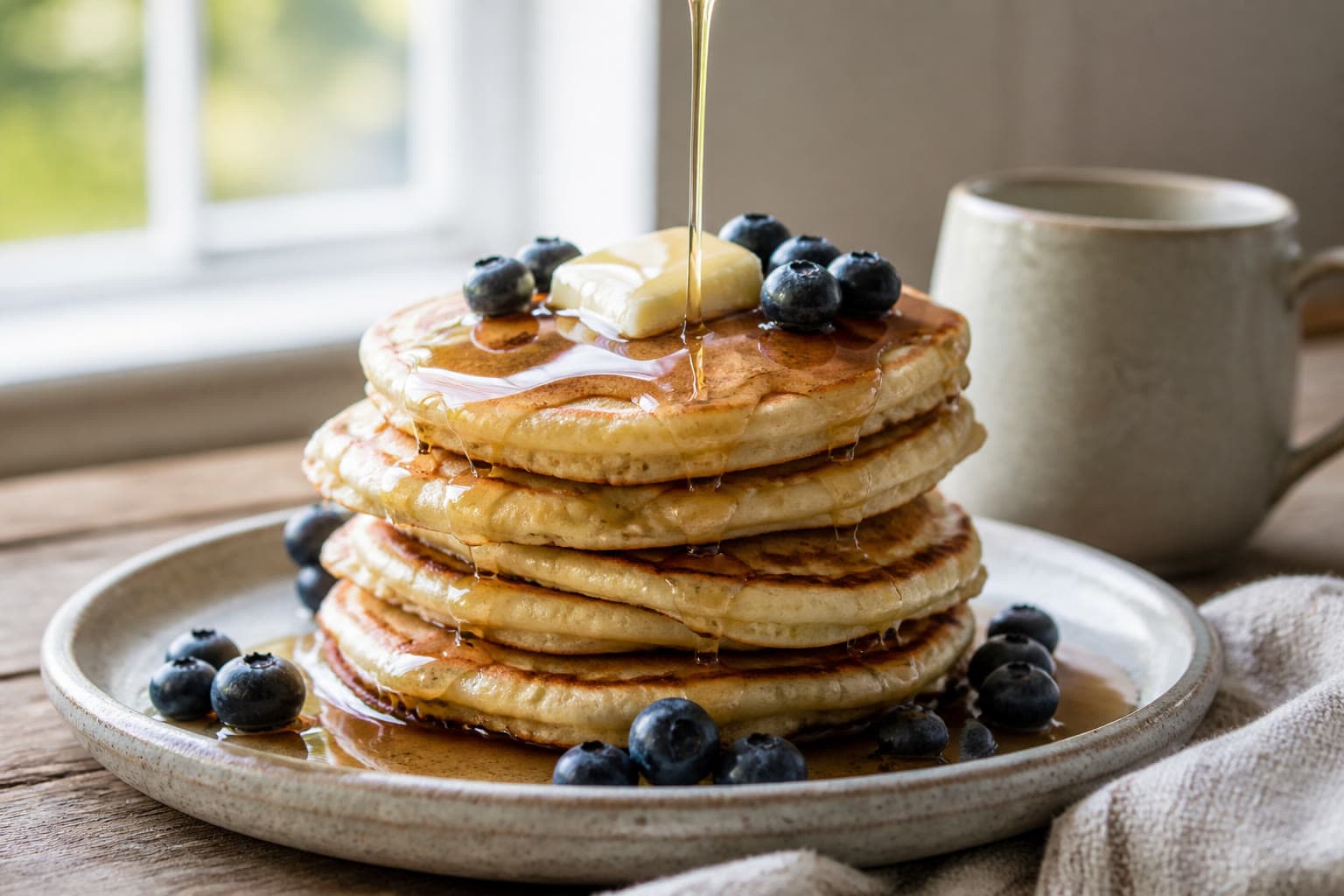
Gluten-Free Sourdough Discard Pancakes
Key takeaway
Count discard as flour plus water, then add baking soda so the starter's acid actually lifts the pancakes.
Weekday pancakes that spend 150g of unfed starter. Baking soda reacts with the acid; you get tang and lift without a 4-hour proof.
Prep
15m
Rest
10m
Bake
15m
Servings
4
Difficulty
beginner
The short answer
Discard pancakes are how we keep the jar honest. One hundred fifty grams of unfed 100% hydration starter already contains about 75g flour and 75g water, so the rest of the batter stays modest: 90g gluten-free 1:1 flour or a sorghum-rice mix, milk, egg or flax egg, a little sugar, baking powder, and baking soda. The soda is not optional—discard is acidic and that acid is lift. Rest 10 minutes so psyllium or xanthan in a blend can hydrate. Cook on a medium griddle. These should be tender, not rubbery. If they are gummy you added the discard on top of a full flour load without subtracting water.
For the method behind gluten-free structure, read the gluten-free sourdough guide and keep a lively culture with the starter guide.
Why it works
- Soda plus discard acid is classic buttermilk chemistry.
- A short rest hydrates GF flour so the first pancake is not grit.
Ingredients
- 150gunfed gluten-free sourdough discard (100% hydration)
- 90ggluten-free 1:1 baking flour or 50g sorghum + 40g brown rice flour
- 8gsugar
- 4gbaking powder
- 2gbaking soda
- 3gfine sea salt
- 160gmilk or plant milk
- 1 largeegg, or 1 flax egg
- 20gmelted butter or oil
- 5gvanilla extract
Equipment
- Griddle or skillet
- Scale
Instructions
- 1
Whisk flour, sugar, baking powder, baking soda, and salt.
- 2
Whisk discard, milk, egg, butter, and vanilla until the discard dissolves.
- 3
Combine. Rest 10 minutes. Batter should mound, then spread slowly.
- 4
Heat a lightly greased griddle to medium. Do not go ripping hot or the soda browns before the center sets.
- 5
Scoop 1/4-cup portions. Flip when bubbles stay open and edges look dry.
- 6
Cook 1 minute more. Keep finished pancakes in a 200F oven.
- 7
If the first pancake sticks, the pan was not ready. Eat it as a cook's tax.
- 8
Serve with maple and salt. The tang wants salt.
Nutrition
Approximate values per serving. Always verify labels if you bake for celiac safety.
| Nutrient | Amount |
|---|---|
| Calories | 280 kcal |
| Protein | 7 g |
| Carbs | 42 g |
| Fat | 9 g |
| Fiber | 3 g |
| Sodium | 430 mg |
Substitutions
- Egg
- Flax egg (1 tbsp flax + 3 tbsp water)
- 1:1 flour
- 90g oat flour, certified gluten-free, for a heartier pancake
Storage
Freeze between parchment. Toast to reheat.
Notes
- Blueberries go on the batter in the pan, not in the bowl, so they do not streak gray.
FAQ
Can I use active starter instead of discard in these pancakes?
Yes. Fed starter is milder and puffier. Reduce any baking soda slightly if the batter already tastes very tangy.
How much flour and water is in 100g of discard?
A 100% hydration starter is about 50g flour and 50g water. Reduce those amounts from the rest of the formula so the bake is not gummy.
Is discard safe to eat uncooked?
Treat it like other raw flour batters. Bake or cook it through. Fridge discard should smell pleasantly sour, not rotten.
My discard is very thin.
Stir it, then weigh. If it is far wetter than 100% hydration, use a little less water in the recipe.
How old can discard be?
We use discard within two weeks in the fridge. If it has mold, pink streaks, or a rotten smell, compost it.
Bake next
Related recipes
Discard
BEGINNER
WAFFLES
MAR 1, 2026
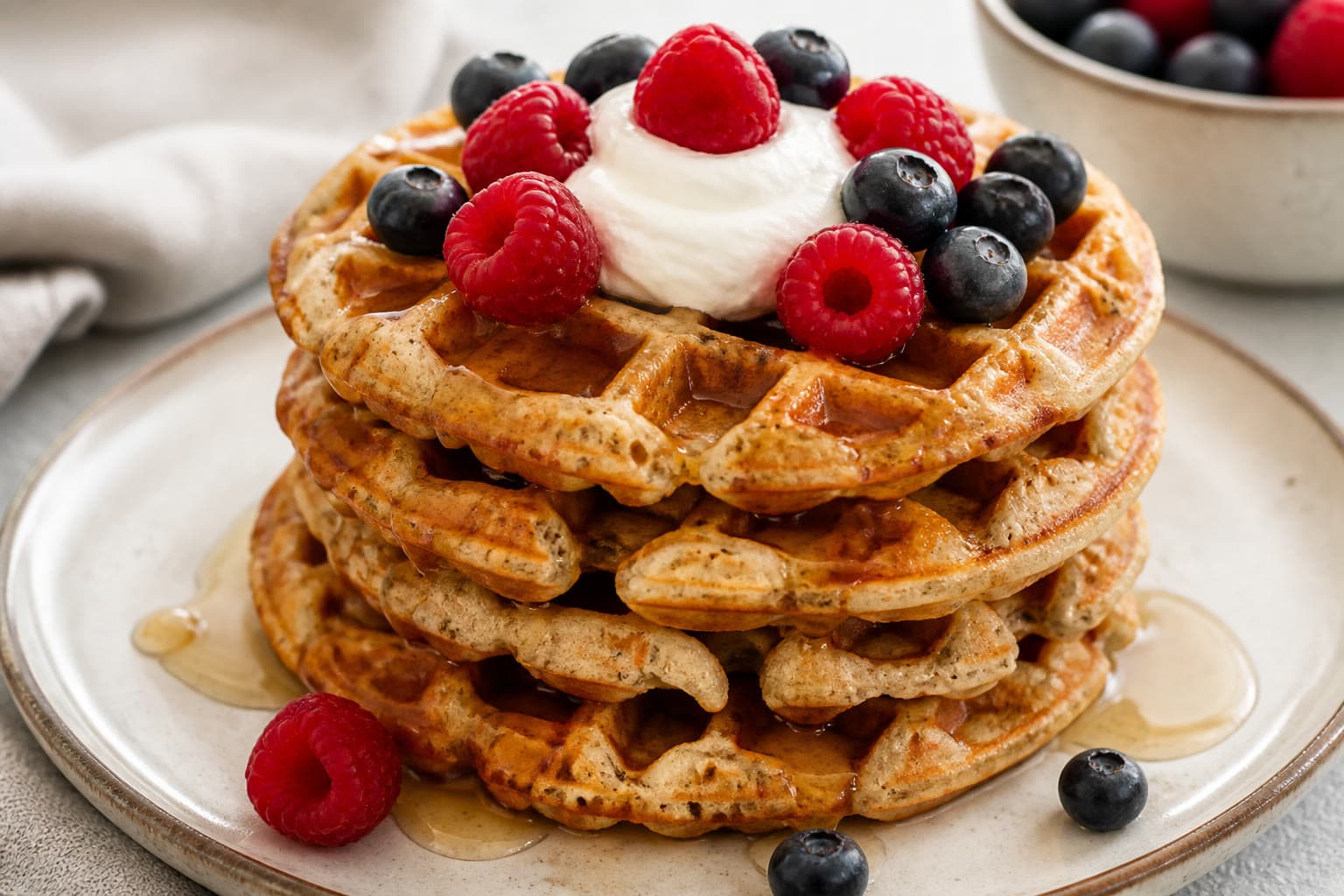
Gluten-Free Sourdough Discard Waffles
Crisper than the pancakes because more fat hits a waffle iron. Same discard math, extra oil, optional overnight rest.
Breakfast
BEGINNER
DUTCH BABY
MAY 28, 2026
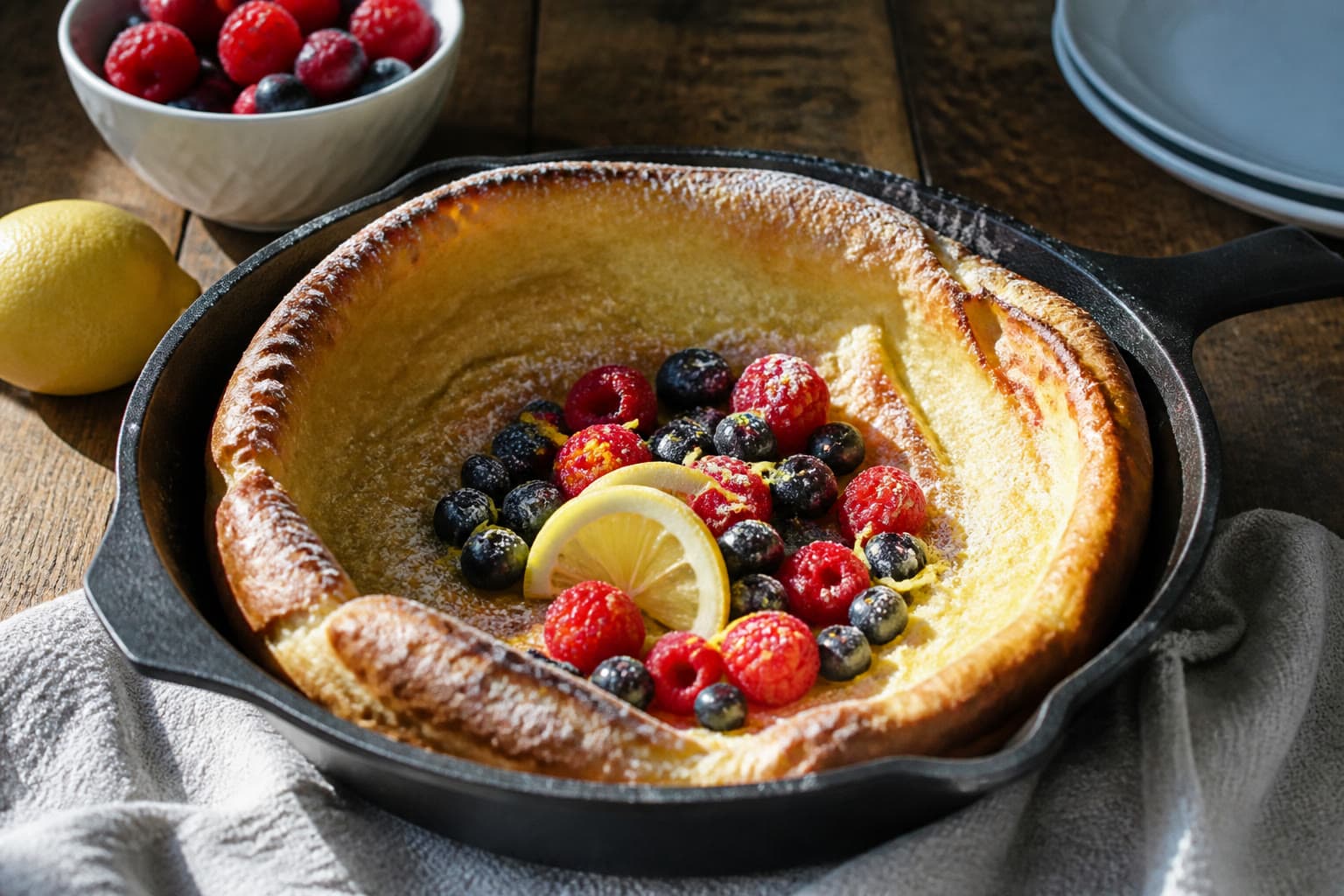
Gluten-Free Sourdough Dutch Baby
A blender Dutch baby that uses discard or a spoon of starter, poured into a ripping-hot buttery skillet.
Artisan Loaves
BEGINNER
BEGINNER
NOV 14, 2025
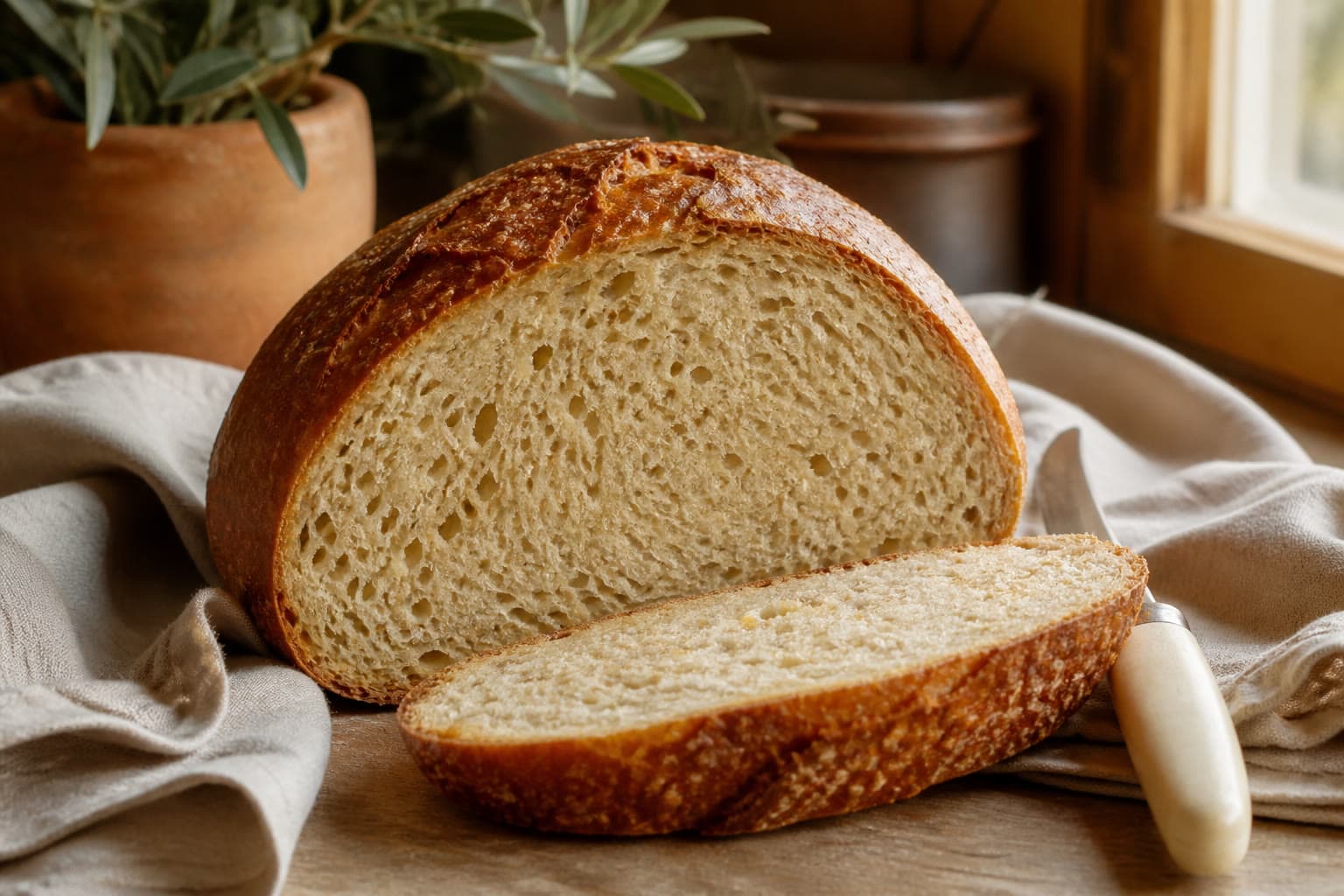
Classic Gluten-Free Sourdough
The beginner country loaf linked from our starter guide: brown rice, sorghum, tapioca, and psyllium powder at 5%.
Technique
Keep the method close
Psyllium, fermentation temperature, and a celiac-safe starter matter as much as the formula.
About Andrew Kittridge
Home baker in Indianapolis documenting gluten-free sourdough: psyllium structure, whole-grain blends, and loaves that actually taste like bread.
More about the kitchen