Technique
How to Read a Gluten-Free Sourdough Crumb
Gummy, dense, tunneled, or collapsed gluten-free crumb is a diagnosis, not a personality. Here is how we read slices in Indianapolis and what to change next bake.
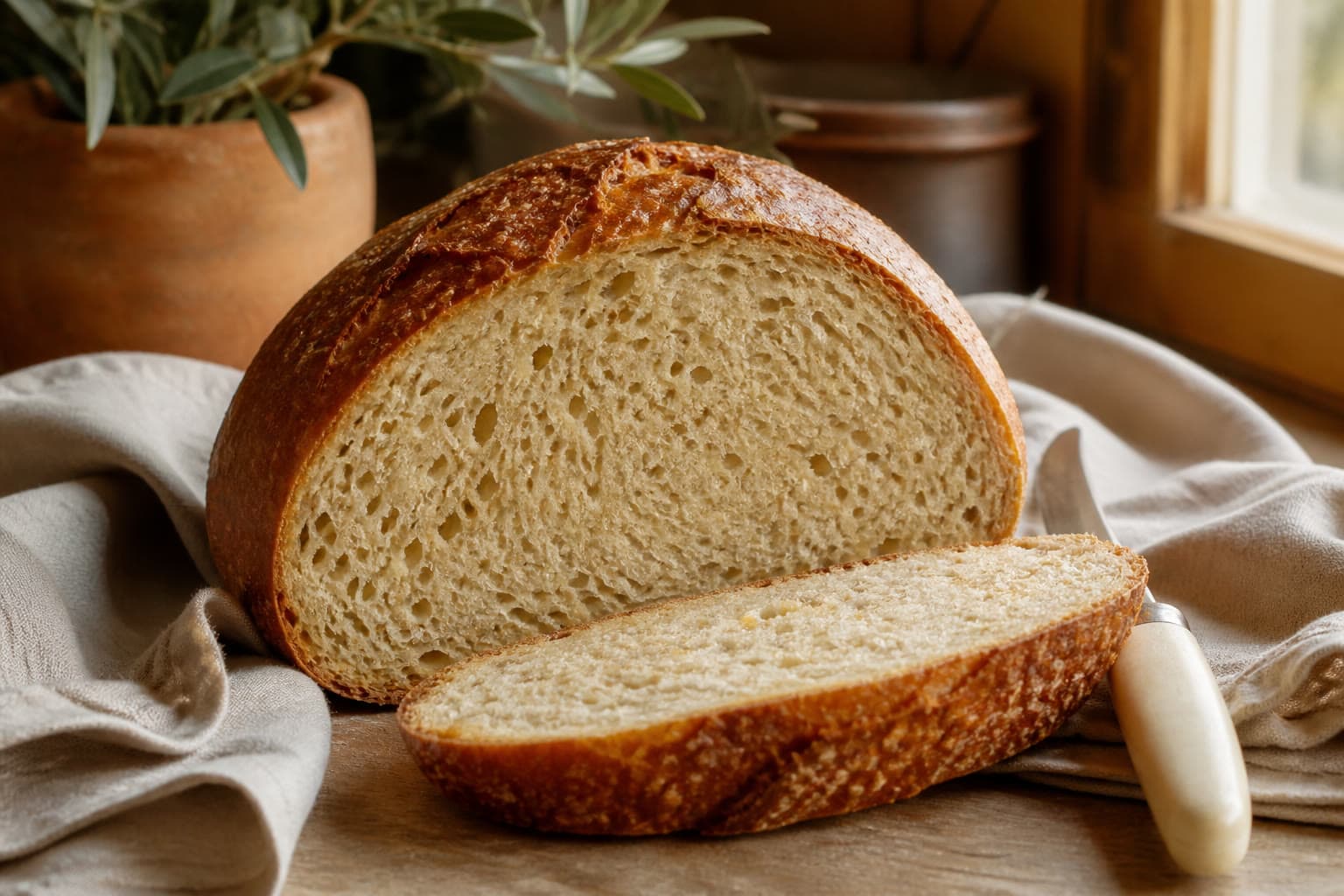
Read the slice before you rewrite the internet
A gluten-free crumb is a record of water, gel, gas, heat, and time. It is not a morality play. When Claire and I cut a loaf, we wait at least two hours, then look at the hole size, the shine inside those holes, the density at the base, and whether the crumb springs back or smears on the knife. Only then do we change baker's percent.
Wheat bakers are trained to chase an open, glossy, irregular crumb. Some gluten-free loaves can do a version of that, especially a high-hydration ciabatta. Most of our country loaves aim for even, moist, small-to-medium holes that toast well. 'More holes' is not always more skill. Sometimes it is overproofed gel tearing into tunnels.
Gummy: wet shine that never becomes bread
Gummy crumb smears. It compresses and stays compressed. Twelve hours later it still feels like undercooked polenta. The usual causes are slicing too soon, an internal temperature under about 205-210F, a starch-heavy blend with too little whole grain, or a hydrocolloid stack (full psyllium plus a xanthan blend). The gel set in the oven and then you cut it while it was still a custard.
Fix the cool and the thermometer before you drain water out of a formula that was otherwise singing. If it is still gummy after a true two-hour cool and a 208F center, then look at psyllium dose and starch percentage in the flour blend guide.
- Steam does not cause gumminess by itself. Underbaking does.
- Microwave reheating brings gumminess back. Use a hot oven to refresh.
- A moist crumb can be shiny and still springy. Gummy is shiny and sticky.
Dense and tight: not enough gas or not enough water
A tight crumb with almost no holes means the yeast never inflated the gel, or the gel was too stiff to inflate. Underproofed dough feels resistant and bakes like a doorstop. A young starter used as if it were peaked does the same. So does a January dough that never got above 68F. So does a mix that sat at 80% hydration with 7% powder.
Give the culture a real peak. Proof until the dough jiggles and a wet fingertip springs back slowly. If the formula is a brick even when fermented, move hydration toward the 90-110% band we use for lean loaves, documented in hydration and crumb. Bake the classic loaf as a control before you invent a fourth flour.
Tunnels and wild caverns
A few irregular holes can be handsome. A single cavern along the top is often a sign the skin dried and then ripped, or that the loaf was scored too deep in a gel that had no gluten to split cleanly. A row of tunnels through the middle often means overproofing: the gel weakened, bubbles coalesced, and the structure could not hold.
Gluten-free overproof is sneakier than wheat overproof because the dough may not double. Watch jiggle and smell. Harsh vinegar and a batter that will not mound are your tells. Shorten the proof, cool the water, or use less starter. Our fermentation temperature post is really a crumb post in disguise.
Collapse, saucers, and sad puck loaves
If the boule went into the Dutch oven looking proud and came out like a frisbee, the gel gave up. Overproof, too little psyllium, too much water after the rest, or a weak whole-grain backbone will all do it. A loaf that spreads in the banneton will not magically stand in the oven.
Shape after the rest, when the dough has thickened. If it still will not hold, you need more gel or a pan. There is no shame in a pan. Sandwich bread is allowed to be architecture with walls.
The wet bottom and the pale crust
A dense, wet base with a decent upper crumb often means the loaf sat in steam too long without enough bottom heat, or water pooled in a slack dough. Preheat longer. Use a Dutch oven you actually get ripping hot. A stone or steel under a loaf pan helps sandwich bread. Do not skip the uncovered finish; pale crusts stall moisture escape.
Pale crust with a dry interior is a different failure: too much starch, not enough sugar from fermentation, or low oven temperature. Sorghum and teff brown. White rice and cornstarch sulk. A seeded ancient-grain boule will color more willingly than a pale blend.
Crust, staling, and the next-day test
Gluten-free crumb stales by starch retrogradation, which is a fancy way to say it goes firm and dry faster than a buttery wheat sandwich loaf. We bake knowing breakfast will want a toaster. A good crumb on hour three that is cardboard on hour thirty may still be a successful bread if it freezes well. Slice, freeze, and re-crisp at 375F.
A crust that went soft overnight is normal in a bread box. A crust that never existed is an uncovered-bake problem or a timid oven. Steam at the start, dry heat at the end. That is the whole Dutch oven steam argument in one sentence.
How we take notes so the next loaf is not a vibe
Write flour weights, psyllium form and grams, total water including starter, dough temperature, proof time, oven schedule, internal temperature, and cool time. Then photograph the crumb in daylight. Memory will lie for you. The slice will not.
If you only change one thing, change the thing the crumb named. Gummy: heat and cool. Dense: fermentation and hydration. Collapse: gel and proof. The hub guide is the map. This post is the legend at the bottom of the map.
- Wait two hours before the autopsy.
- Use an instant-read thermometer in the center.
- Compare against a control loaf, not against a wheat photo from Provence.
What a 'good' Kittridge crumb looks like
Even holes, a moist but springy bite, a crust that shatters a little, and a sour that reads as grain rather than vinegar. It should sandwich turkey without disintegrating and toast without turning to gravel. That is the target for the classic boule. Ciabatta is allowed to be wilder. Sandwich bread is allowed to be tighter.
If your slice already does that, stop hunting a wheat ear. Go bake dinner.
FAQ
Frequently asked questions
Why is my gluten-free sourdough gummy in the middle?
Most often you sliced before a two-hour cool or baked to under about 205-210F internal. Too much psyllium plus xanthan, or a starch-heavy blend, can also leave a sticky gel.
What does overproofed gluten-free bread look like?
It may spread, collapse, or bake with large tunnels and a sour, weak structure. The dough often looks jiggly and will not mound before it goes into the oven.
How open should gluten-free sourdough crumb be?
Even, moist, small-to-medium holes are a success for country loaves. Very wild holes can mean high hydration done well or overproofing done poorly. Read shine versus stickiness.
Should I put gluten-free bread in the refrigerator?
The fridge speeds staling. Keep the loaf cut-side down for a day, then freeze slices. Refresh in a hot oven, not the microwave.
Why is the bottom of my loaf wet and dense?
Insufficient bottom heat, too much trapped steam at the end of the bake, or water pooling in slack dough. Preheat the vessel longer and finish uncovered.
How long should I cool gluten-free sourdough before slicing?
At least two hours for a standard boule. The starch-psyllium gel is still setting as it cools. Cutting early is the fastest way to call a good bake gummy.