Kitchen Notes
Indiana Kitchen Fermentation Temps
How we proof gluten-free sourdough in Indianapolis through dry winter heat and humid summers, using dough temperature instead of a recipe's imaginary 75F studio.
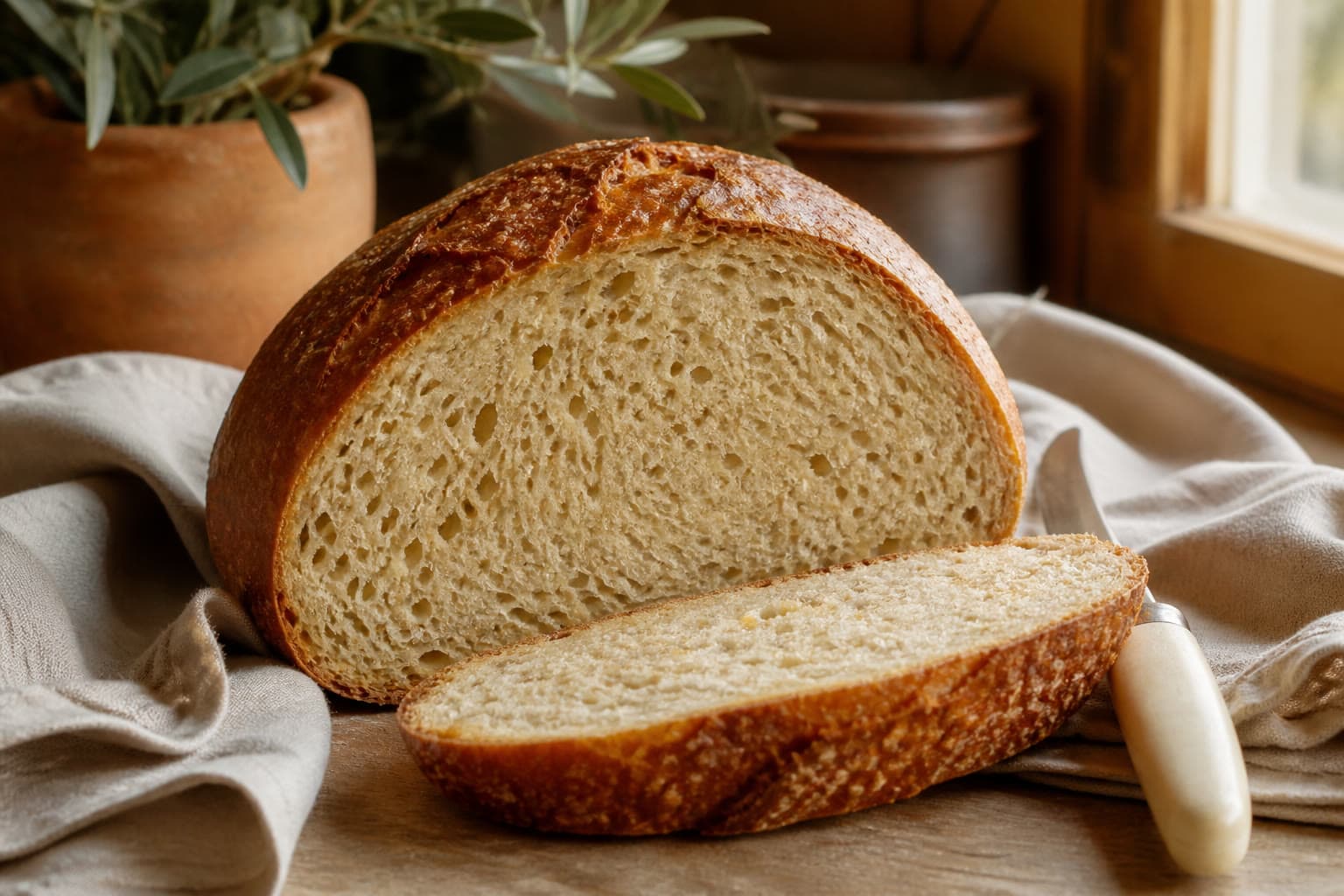
Recipes assume a kitchen we do not live in
Most sourdough timelines were written for a 75F room with polite humidity. Our Indianapolis house is a humid-continental argument. January interiors sit 66-70F with forced-air dryness that skins a dough in twenty minutes. July can put the counter at 78-82F even with the air conditioning winning in the hallway. If you follow a coastal blog's 90-minute proof in those two rooms, you will bake two different breads and blame yourself for both.
We ferment by dough temperature and by the look of the gel, not by the clock printed next to a sunlit marble island. The fermentation schedules guide is the strategy. This post is the local weather report.
Target dough temperature, not vibes
For a predictable same-day gluten-free loaf we like the mixed dough around 75-78F. That is warm enough for yeast to move and cool enough that psyllium dough does not race into collapse. Water temperature is the cheapest control. In a 68F kitchen we mix with 85-90F water. In an 80F kitchen we mix with cool tap or even fridge water. Flour from a cold basement behaves like an ice pack; flour from a hot pantry does the opposite.
Buy a probe thermometer and use it on dough, not just chicken. If you only measure the room, you are measuring the hallway.
- Same-day proof at 75-78F dough: often 60-120 minutes, judged by jiggle.
- Cold retard: 8-18 hours in the refrigerator after shaping, then straight to a hot Dutch oven.
- Starter peak at 72-76F: often 4-6 hours after a 1:1:1 feeding. Faster in August.
Winter: dry air and slow clocks
Indiana winter does two unkind things. It slows fermentation, and it dries the surface of a high-hydration dough so you get a leather skin over a still-dense interior. Cover well. Use a shower cap, a bowl cover, or a very lightly oiled piece of plastic. A damp towel can stick to psyllium gel and tear the top; we prefer a non-contact cover.
The oven-with-the-light-on trick works if you verify the temperature. Some lights make a 95F box, which will overproof a gluten-free loaf while you make coffee. We aim for a proof box of about 78F, checked, not hoped. Same-day gluten-free sourdough in January is often an afternoon project, not a lunch project.
Summer: collapse is the default failure
Warm dough overproofs without doubling. It just... sighs. The bake spreads. The crumb tunnels. The smell goes sharp. Shorten the proof, reduce starter percentage, or move to an overnight cold-proof so the calendar, not the heat wave, owns the schedule.
Air conditioning vents can fool you. The island may be 74F while the corner where you 'always proof' is 81F. Move the bowl. This is not mysticism.
Humidity, skins, and Indianapolis basements
Summer humidity keeps dough surfaces wet, which sounds kind until the loaf sticks to linen. Dust the banneton with rice flour and do not panic-add more water because the dough looks glossy. Winter dryness does the reverse: the dough looks drier than it is. Trust the formula and the rest, then adjust water by a teaspoon, not a half cup.
Basements in older Indiana houses can be a gift: steady 65-68F for a long bulk if you want acidity. They can also be moldy and dusty. Do not proof uncovered next to a wheat storage shelf if you are baking for celiac disease. Temperature is not the only environmental factor in this house.
Starter feedings follow the same season
A 1:1:1 feeding that peaked at dinner in March may peak at lunch in July. In heat, feed a higher ratio (1:2:2) so the microbes have more food and a longer runway. In cold, keep 1:1:1 and give it time, or use slightly warmer water in the jar, not a heating pad that cooks a ring of culture on the glass.
If you keep the jar in the fridge all week, pull it the day before and give it a room-temperature feeding in the actual kitchen it will bake in. A starter peaked in a 78F office and mixed in a 67F kitchen will gas slowly and you will call it dead.
Choosing a schedule for the week you are in
School nights: mix, shape, refrigerate, bake in the morning. Weekends: classic gluten-free sourdough on the counter if the house is 72-76F. Heat wave: less starter, cooler water, shorter proof, or all of the above. Deep freeze: warmer water, a verified proof nook, and patience.
None of these is more authentic. Authenticity is a loaf that is done when you need sandwiches. The hub will tell you the formula. The weather will tell you the clock.
What we write on the formula card
Room temp, dough temp after mix, starter peak time, proof start and end, and what the HVAC was doing. After a year of cards you will stop being surprised by March. You will still be surprised by that one 84F weekend when the air conditioning died. Bake focaccia that day. A pan is a kindness.
If the crumb was dense in January, do not permanently cut water. Permanently change how you warm the dough. Hydration and temperature are different dials. Keep hydration and crumb in one hand and this post in the other.
Indiana is a stand-in for every un-photogenic kitchen
You do not need to live here for this to apply. You need a house that is not a test kitchen. Measure. Cover. Change water temperature. Stop believing the recipe's 75F like it was a law of physics.
We bake in Indianapolis because that is where the table is. The microbes do not care about the state line. They care about degrees.
FAQ
Frequently asked questions
What temperature should gluten-free sourdough proof at?
We aim for mixed dough around 75-78F for same-day loaves. Cooler rooms need warmer water and more time. Warmer rooms need cooler water, less starter, or a fridge retard.
How does Indiana winter change gluten-free sourdough?
Cooler rooms slow the peak and dry the dough surface. Cover well, verify any oven-light proof box, and expect longer timelines than a 75F recipe.
How does summer humidity affect the dough?
Dough skins less and overproofs faster. Shorten the counter proof or use an overnight cold-proof. Do not add large amounts of extra water just because the dough looks shiny.
Should I proof gluten-free dough in the refrigerator?
Yes, especially for scheduling and flavor. An 8-18 hour cold retard after shaping is our favorite weekday method and protects you from a hot kitchen.
Why did my starter peak so much faster in July?
Yeast and bacteria speed up with heat. Feed a higher ratio, use cooler water, or schedule an earlier mix so you catch the peak.
Is dough temperature more important than room temperature?
Yes. Room temperature is a hint. Dough temperature is the environment the microbes actually live in. Adjust with water temperature and flour storage.