Breakfast · intermediate
Gluten-Free Sourdough English Muffins
Key takeaway
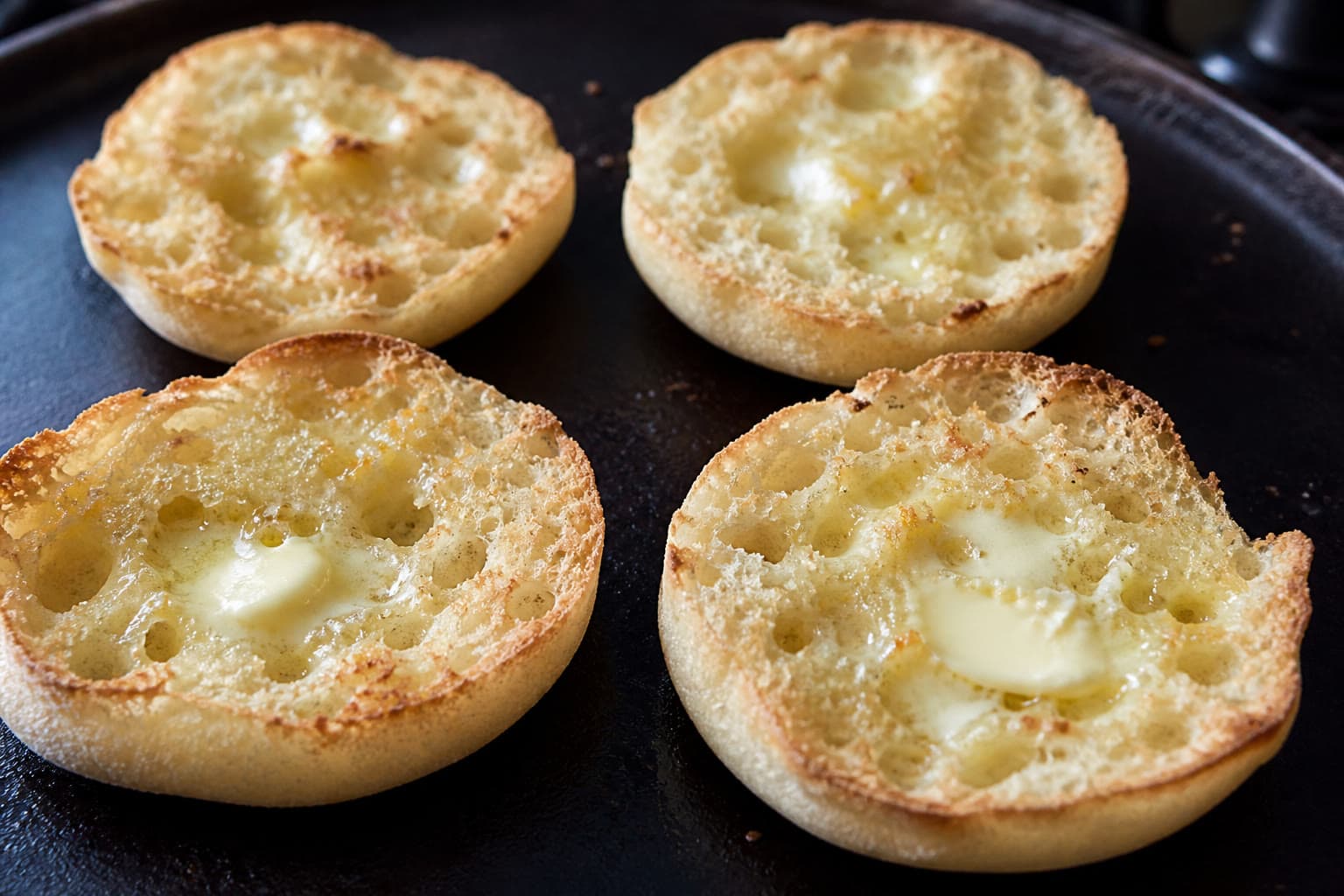
Fork-split gluten-free English muffins after a griddle cook; a knife destroys the nooks.
Griddled, then briefly oven-finished. Fork-split for nooks that hold butter the way an English muffin should.
Prep
25m
Batter rest
20–80m
Bake
20m
Servings
8
Difficulty
intermediate
The short answer
English muffins are a griddle bread. The dough is a thick batter (400g flour, 22g powder, 420g liquid—105%—90g starter, 8g salt, 10g sugar, 20g oil). Rest, then scoop into English muffin rings on a preheated griddle at 325F. Cook until the bottoms set and bubbles puncture the top, flip, finish, then 5 minutes in a 350F oven if the centers are shy. Cool, then fork-split—never knife-split if you want nooks. Cornmeal on the ring prevents sticking. These are the breakfast we make when the starter is peaking and the oven is busy with a loaf.
For the method behind gluten-free structure, read the gluten-free sourdough guide and keep a lively culture with the starter guide.
Why it works
- High hydration plus a dry-hot griddle sets an open-ish crumb.
- Fork-splitting follows weak planes instead of compressing them.
Ingredients
- 160gbrown rice flour
- 100gsorghum flour
- 140gtapioca starch
- 22gpsyllium husk powder
- 10gsugar
- 8gfine sea salt
- 90gactive gluten-free starter
- 300gwarm milk or plant milk
- 120gwarm water
- 20goil
- as neededcornmeal or rice flour, for dusting
Equipment
- Griddle or cast-iron skillet
- English muffin rings
- Spatula
Instructions
- 1
Mix everything except cornmeal. Rest 20 minutes. The batter should be scoopable.
- 2
Optional 60-minute ferment at 75F for more tang.
- 3
Heat a griddle to 325F. Grease rings. Dust with cornmeal.
- 4
Scoop batter into rings, 2/3 full. Cook 8–10 minutes until the edges set and bubbles show.
- 5
Flip, rings and all, and cook 8 minutes more.
- 6
If centers feel squishy, bake 5 minutes at 350F on a sheet.
- 7
Cool 20 minutes. Fork-split around the equator.
- 8
Toast until the nooks brown. Butter should melt into craters, not sit on a knife-sliced plane.
Nutrition
Approximate values per serving. Always verify labels if you bake for celiac safety.
| Nutrient | Amount |
|---|---|
| Calories | 175 kcal |
| Protein | 3 g |
| Carbs | 33 g |
| Fat | 4 g |
| Fiber | 3 g |
| Sodium | 240 mg |
Substitutions
- Rings
- Clean tuna cans with both ends removed, or freeform blobs (less pretty)
- Cornmeal
- Rice flour
Storage
Split and freeze. Toast from frozen.
Notes
- Low-and-slow griddle heat is the whole game. 400F scorches before the center sets.
FAQ
Can I make English muffins dairy-free?
Yes. Use unsweetened plant milk and oil or vegan butter. Enriched gluten-free doughs do not rely on dairy proteins for structure—psyllium and starch do that work.
Why didn't these rise like wheat rolls?
Gluten-free enriched dough proofs until puffy and jiggly, not until doubled. Overproofing collapses the gel. Bake when a wet fingertip springs back slowly.
Do I still need psyllium if I use a 1:1 blend with xanthan?
Use a lighter psyllium dose (about 4% of flour) and do not add extra xanthan. Two full gums stacked make a bouncy, gummy crumb.
How do I keep sandwich bread from drying out?
Cool fully, then bag once the crust is dry to the touch. Freeze slices by day two. Toast from frozen.
Can I use discard instead of active starter?
Not for these yeasted-style enriched breads. Unfed discard belongs in pancakes and crackers. You need a peaked starter for lift.
Bake next
Related recipes
Breakfast
BEGINNER
CRUMPETS
MAY 14, 2026
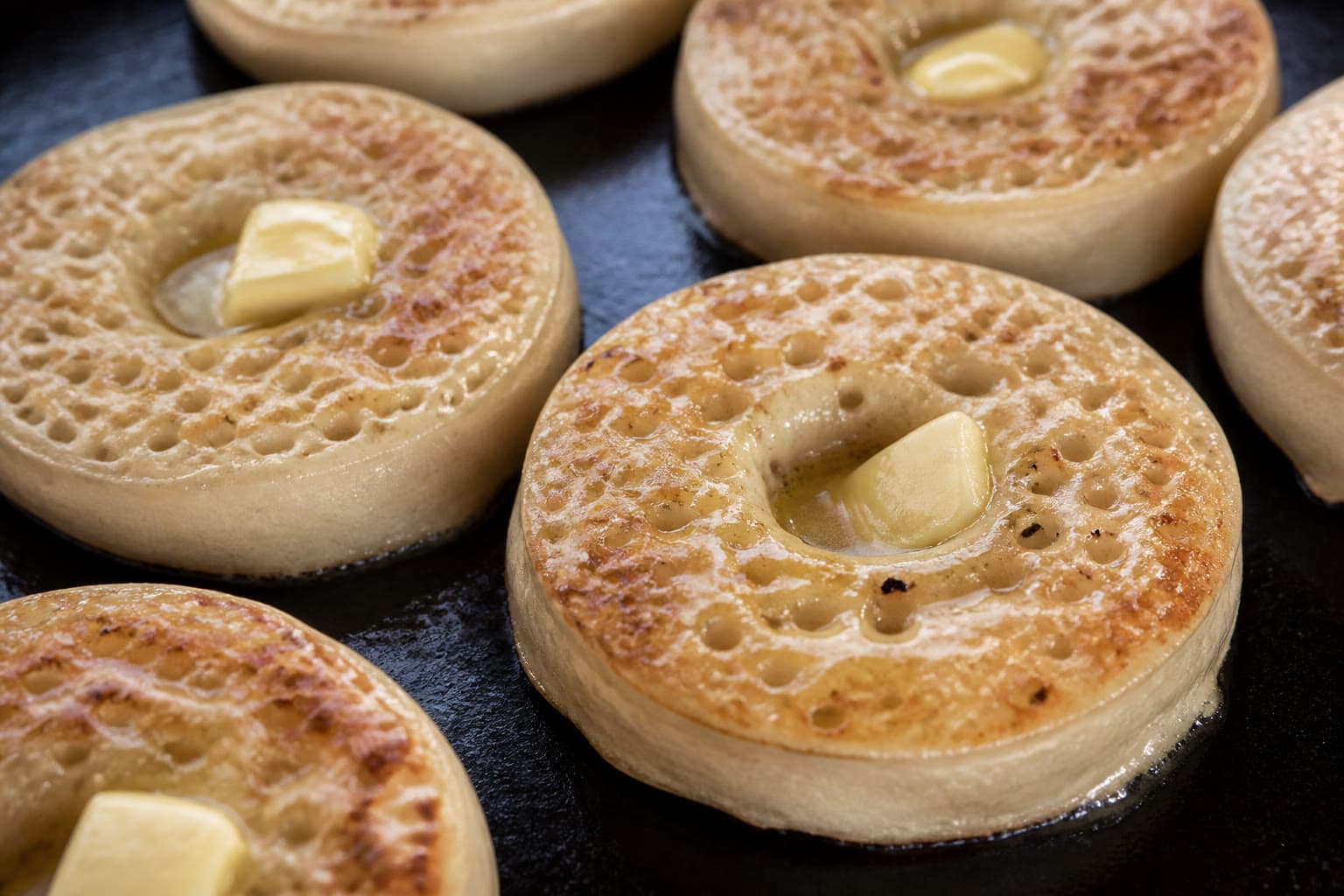
Gluten-Free Sourdough Crumpets
Griddle crumpets with a sour batter and a late baking-soda burst. Rings, lots of bubbles, toasted and buttered.
Discard
BEGINNER
PANCAKES
MAR 1, 2026
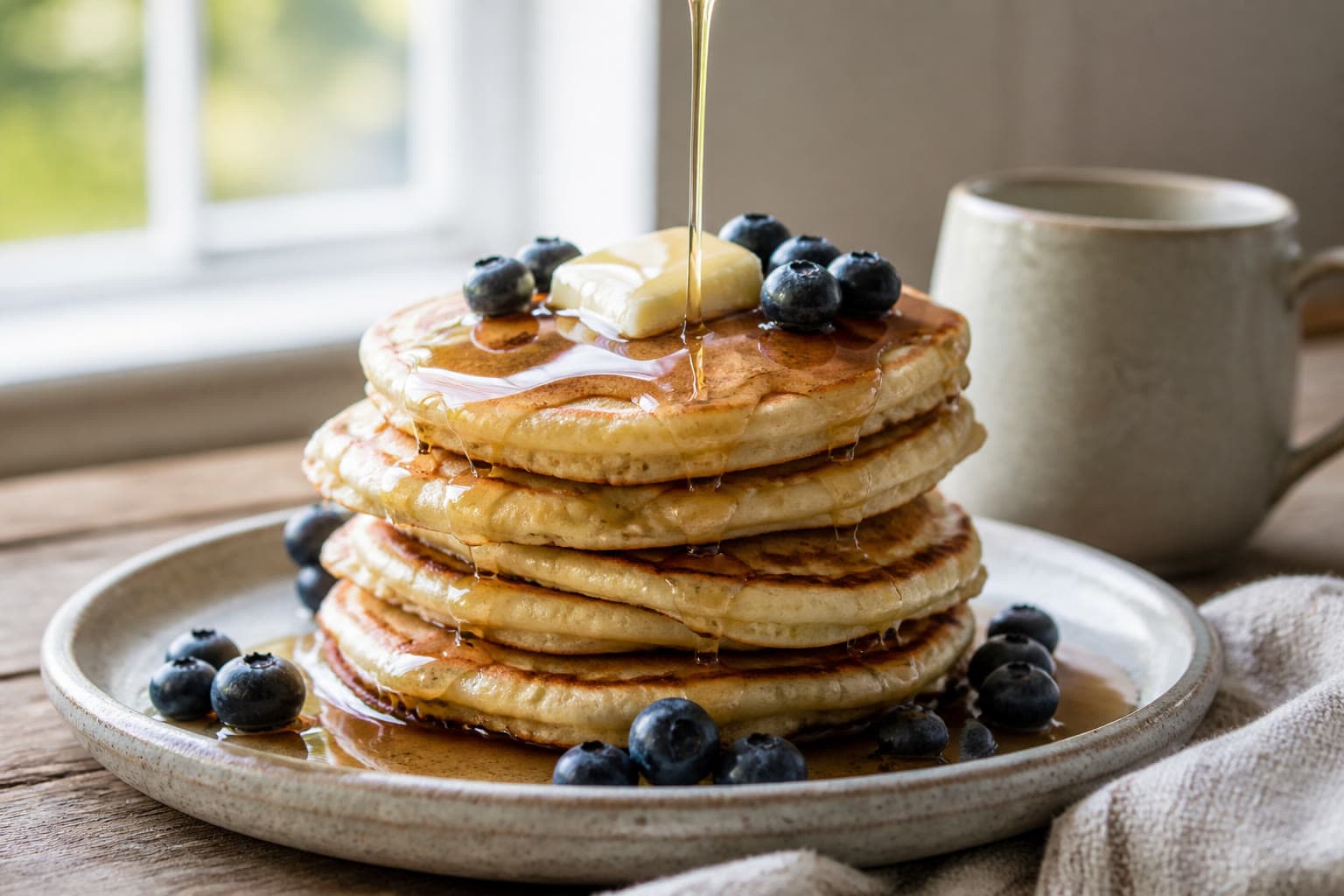
Gluten-Free Sourdough Discard Pancakes
Weekday pancakes that spend 150g of unfed starter. Baking soda reacts with the acid; you get tang and lift without a 4-hour proof.
Breakfast
BEGINNER
BANANA BREAD
MAR 1, 2026
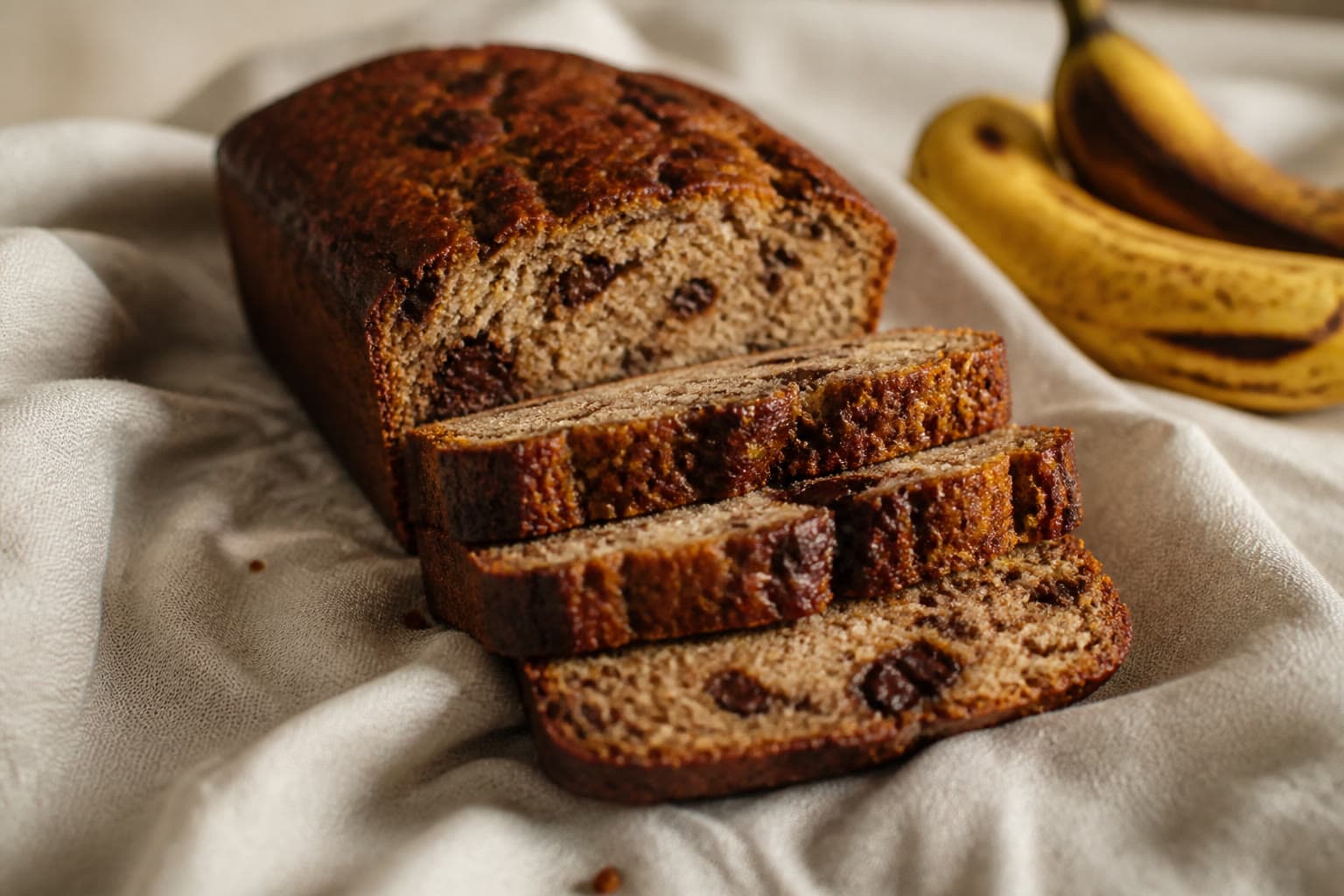
Gluten-Free Sourdough Discard Banana Bread
Very ripe bananas plus 150g discard. Moist, sliceable, and less cloying than typical banana bread because the starter adds acid.
Technique
Keep the method close
Psyllium, fermentation temperature, and a celiac-safe starter matter as much as the formula.
About Andrew Kittridge
Home baker in Indianapolis documenting gluten-free sourdough: psyllium structure, whole-grain blends, and loaves that actually taste like bread.
More about the kitchen