Discard · beginner
Gluten-Free Sourdough Discard Biscuits
Key takeaway
Discard biscuits stay tall when you subtract buttermilk for the water already in the jar, keep the butter cold, and skip a loaf-level psyllium gel.
Cold-butter biscuits that fold unfed starter into the dough instead of extra buttermilk. Tall, tangy, and weeknight-fast.
Prep
25m
Chill
20 min
Bake
18m
Servings
8
Difficulty
beginner
The short answer
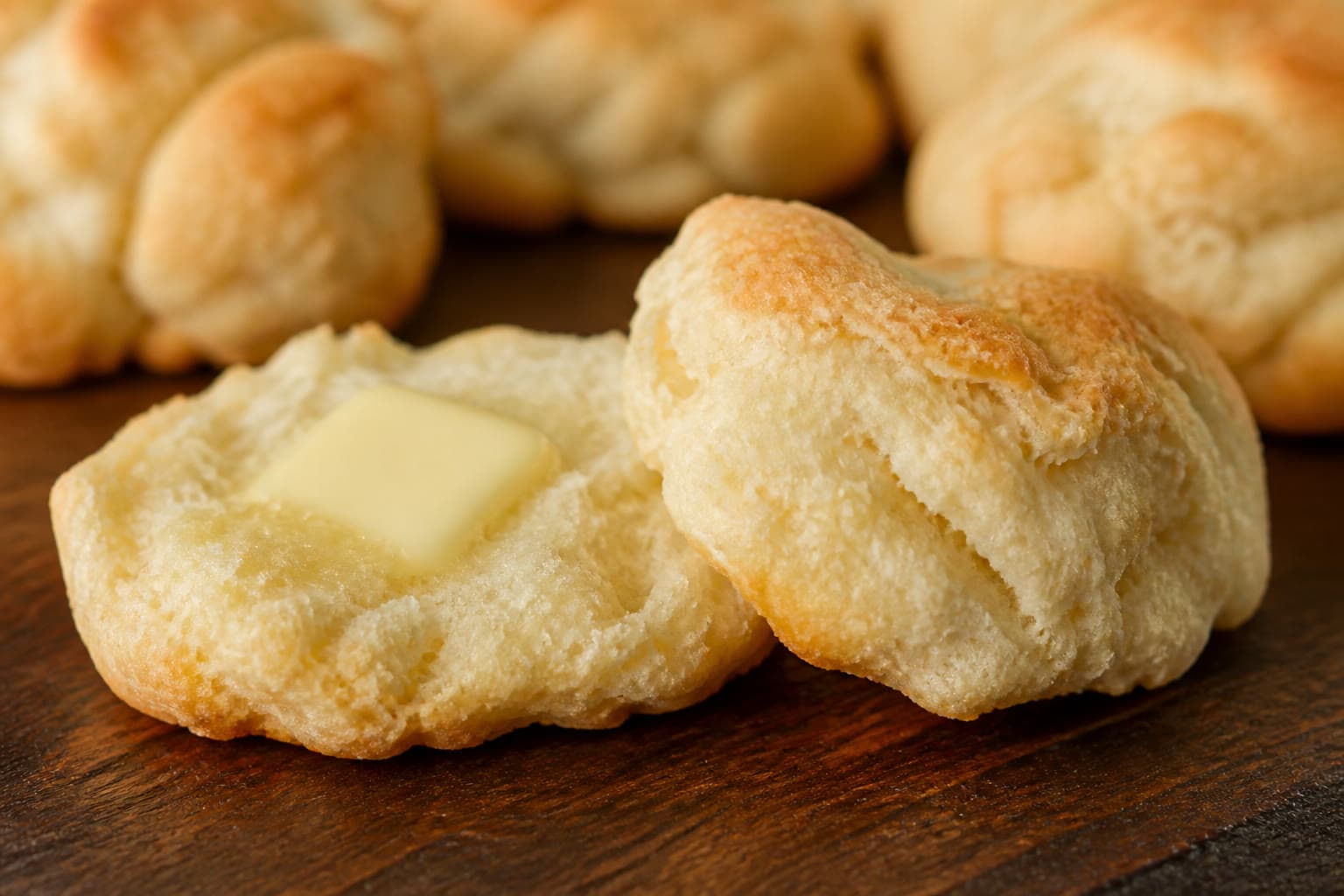
These are the biscuits I mix when the discard jar is sulking in the Indianapolis fridge and Claire wants something warm before the coffee is done. Unfed gluten-free starter is flour plus water plus acid, so you cannot pour a full cup of buttermilk on top of 160g discard and expect layers. This formula cuts the liquid, keeps the butter cold, and uses baking powder plus a pinch of soda so the acid in the jar actually does work. Sorghum, certified gluten-free oat flour, and starch give a tender crumb without wheat, rye, or barley. These are not sandwich loaves, so I do not push psyllium to 5%; a little powder just helps the rounds hold when you cut them. Pat, fold, cut, chill, bake hot. They should smell like butter and yogurt and split with your thumbs, not a saw.
For the method behind gluten-free structure, read the gluten-free sourdough guide and keep a lively culture with the starter guide.
Why it works
- Accounting for the water already in discard keeps the dough shaggy enough to layer.
- Baking soda reacts with discard acid for extra lift and browning; baking powder supplies the rest.
- Letter folds stack butter without gluten. You are laminating fat, not developing a network.
- A short chill sets the butter so 425F can blast the biscuits upward before the starch sets.
Ingredients
- 180gsorghum flour
- 70gtapioca starch
- 50gpotato starch
- 50gcertified gluten-free oat flourCertified GF oats only
- 8gpsyllium husk powder2.3% of 350g flour; just enough to hold a cut round, not a loaf gel
- 12gbaking powder
- 3gbaking soda
- 7gfine sea salt2.0% of 350g
- 12gsugar
- 110gcold unsalted butter, cubed
- 160gunfed gluten-free sourdough discard (100% hydration), coldAbout 80g flour + 80g water
- 90gcold buttermilkKeep cold; discard already brought water
- 15gbuttermilk or milkFor brushing
Equipment
- Digital scale
- Pastry cutter or fork
- 2.5-inch biscuit cutter
- Baking sheet
- Parchment
Instructions
- 1
Heat the oven to 425F (220C). Line a sheet with parchment. Cube the butter and return it to the fridge so it stays cold enough to flake, not smear.
5 min
- 2
Whisk sorghum, tapioca, potato starch, certified GF oat flour, psyllium, baking powder, baking soda, salt, and sugar until the oat flour's cream color disappears into the blend.
2 min
- 3
Cut in the cold butter with a pastry cutter or fingertips until you have pea-sized bits and a few flattened flakes. The bowl should feel cool. If the butter looks greasy, chill 5 minutes.
4 min
- 4
Stir cold discard and 90g buttermilk together until the discard loosens. Pour over the flour and fold with a spatula just until a shaggy dough forms. Dry pockets of flour are better than a wet paste.
2 min
- 5
Tip onto a rice-floured board. Pat into a 1-inch-thick rectangle. Fold in thirds like a letter, pat to 1 inch again, and fold once more. You should see butter streaks. That is steam later.
3 min
- 6
Pat to 3/4-inch thick. Cut 8 rounds with a 2.5-inch cutter, pressing straight down without twisting so the sides can rise. Gather scraps once, gently.
4 min
- 7
Set the rounds on the sheet, barely touching for softer sides or spaced for crust. Brush tops with 15g buttermilk. Chill 20 minutes so the butter firms and the oat flour hydrates.
20 min
- 8
Bake 16-18 minutes until the tops are deep gold, the kitchen smells like butter and tang, and the sides look set. A biscuit should feel light when you lift it.
18 min
- 9
Cool on the sheet 10 minutes. Split with thumbs, not a knife, so the crumb stays ragged. Eat with jam, honey, or leftover apricot glaze from hot cross buns.
10 min
Nutrition
Approximate values per serving. Always verify labels if you bake for celiac safety.
| Nutrient | Amount |
|---|---|
| Calories | 268 kcal |
| Protein | 5 g |
| Carbs | 34 g |
| Fat | 12 g |
| Fiber | 3 g |
| Sodium | 430 mg |
Substitutions
- Buttermilk
- 90g certified GF oat milk plus 5g lemon juice, rested 5 minutes.
- Butter
- Very cold plant butter sticks, 110g.
- Certified GF oat flour
- 50g sorghum. Slightly drier crumb.
Storage
Best the hour they are baked. Airtight at room temperature 1 day. Freeze baked biscuits 1 month; reheat 8 minutes at 350F (175C). Raw cut rounds freeze well; bake from frozen, adding 3 minutes.
Notes
- Discard is half water. Extra buttermilk on top of 160g discard is how biscuits spread into cookies.
- Certified gluten-free oat flour only. Regular oats are not safe in this kitchen.
- Twisting the cutter seals the edges and you get hockey pucks. Press straight down.
- Dairy-free: plant butter sticks, very cold, and certified GF oat milk plus 5g lemon juice in place of buttermilk.
FAQ
Why don't these use 5% psyllium like your loaves?
Biscuits are not lean sourdough boules. At 4-7% psyllium they bake gummy instead of flaky. A little powder helps the round hold; baking powder and cold butter do the lift.
Can I use active starter?
You can, same weight, still cold. Flavor will be milder. Peak starter is wasted here; save it for beer bread or focaccia.
Why chill before baking?
Cold butter makes steam pockets. Gluten-free flour also needs a short rest to hydrate so the interior is not sandy. Twenty minutes covers both.
Can I make drop biscuits instead?
Add 20g more buttermilk, skip the folds, and scoop 8 mounds. They will be more craggy and a little less tall.
Are oats required?
They tenderize. Replace the 50g certified GF oat flour with 50g more sorghum if you avoid oats. Do not use uncertified oats.
Bake next
Related recipes
Discard
INTERMEDIATE
SCONES
MAR 1, 2026
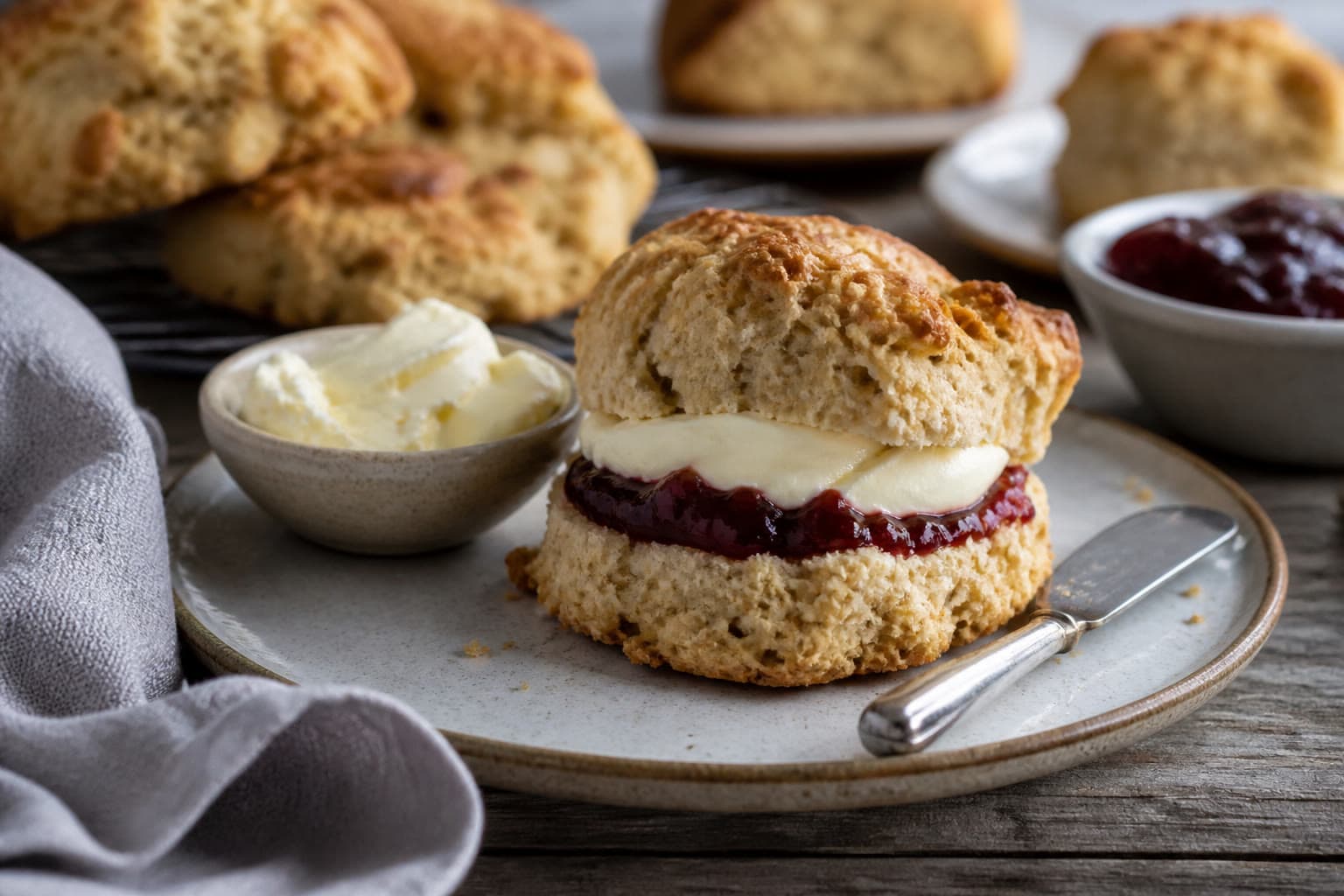
Gluten-Free Sourdough Discard Scones
Cold butter, 100g discard, a quick mix, and a hot oven. Tender wedges with a sour-cream personality.
Holiday
INTERMEDIATE
HOLIDAY
MAY 7, 2026
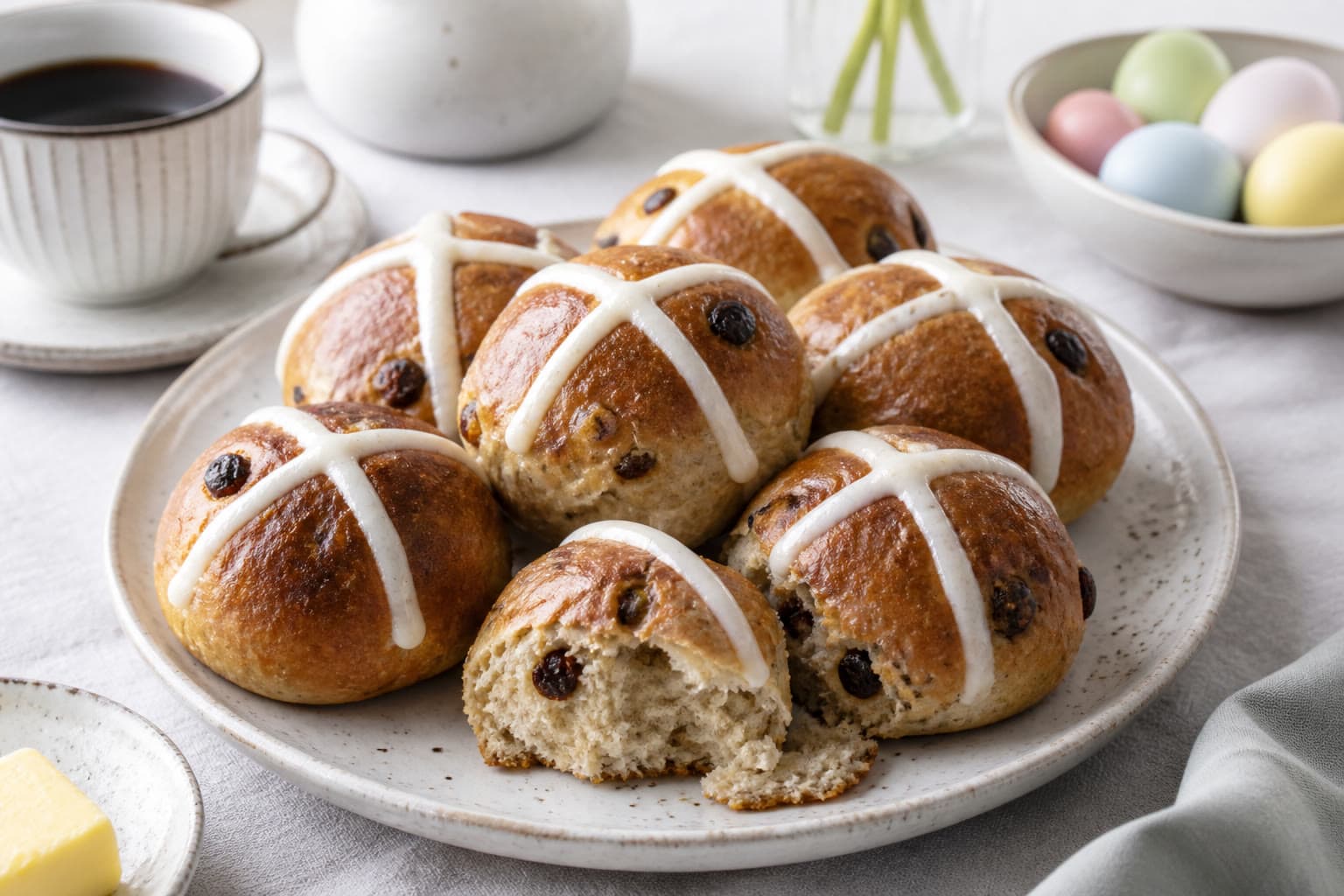
Gluten-Free Sourdough Hot Cross Buns
Spiced Easter buns with currants, orange zest, and a rice-flour cross. The paste is not wheat flour, and the oats in the blend are certified gluten-free.
Discard
BEGINNER
PANCAKES
MAR 1, 2026
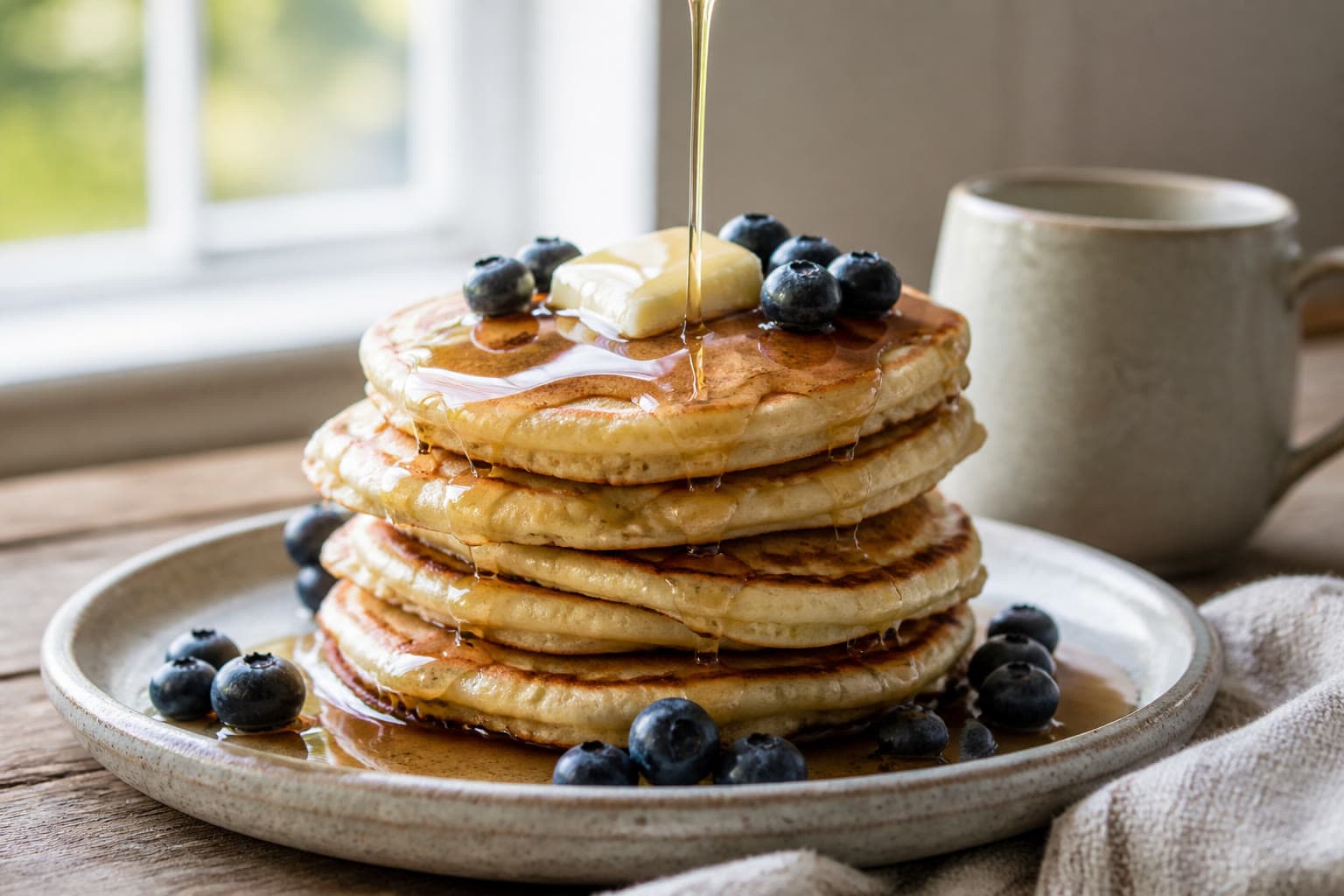
Gluten-Free Sourdough Discard Pancakes
Weekday pancakes that spend 150g of unfed starter. Baking soda reacts with the acid; you get tang and lift without a 4-hour proof.
Technique
Keep the method close
Psyllium, fermentation temperature, and a celiac-safe starter matter as much as the formula.
About Andrew Kittridge
Home baker in Indianapolis documenting gluten-free sourdough: psyllium structure, whole-grain blends, and loaves that actually taste like bread.
More about the kitchen