The Clock
Gluten-Free Sourdough Fermentation Schedules: Same-Day, Overnight, and Indiana Seasons
Feed a gluten-free starter so it peaks in 4-6 hours at about 75F, then mix. Same-day loaves proof until jiggly, often 1-2 hours. For overnight baking, refrigerate shaped dough 8-18 hours. Indiana winters need more time and warmth; summers need cooler water and shorter proofs so the loaf does not collapse.
What this guide covers
How to time a gluten-free loaf around a workday: starter peak windows, same-day proofs, overnight fridge retards, and the way Indianapolis heat and furnace air change the schedule.
Key takeaways
- Mix bread dough when the gluten-free starter is at or just before peak, often 4-6 hours after a 1:1:1 feeding at 75F.
- Same-day loaves usually proof 60-120 minutes in a warm kitchen until jiggly, not necessarily doubled.
- Overnight fridge retards of 8-18 hours improve flavor and weekday logistics.
- A 68F Indianapolis winter house slows everything; a 78F August kitchen races it.
- Overproofed gluten-free dough collapses because there is no gluten net to catch a second wind.
- Cold dough looks inactive; give it time to warm before you panic-add yeast.
- Water temperature is a lever: cooler water in summer, slightly warmer in winter, never hot.
- Log room temperature next to proof time or you will fight the same battle every season.
- You can shape first and retard, or retard in the bowl; gluten-free dough does not need wheat-style folds to survive the wait.
- Peak starter plus a sane schedule beats an exotic timeline copied from a wheat bakery.
The direct answer: time the peak, then choose a lane
Gluten-free sourdough scheduling is two clocks. Clock one is the starter: feed it so it peaks when you want to mix. Clock two is the dough: same-day warm proof, or overnight cold retard. The formula (90-110% hydration, 4-7% psyllium) stays put. The clocks move with the weather in Indiana.
A typical weekday: feed at 8 a.m., mix at noon, proof until 2 p.m., bake, cool 2 hours, slice at dinner. A typical weekend: feed at 8 p.m., mix Saturday morning at peak, shape, refrigerate, bake Sunday morning. Both are correct.
If you remember one sensory cue, remember jiggle plus dome, not 'doubled in size' from a wheat tutorial. Gluten-free dough often gains less volume and still bakes with a good crumb.
The starter peak window
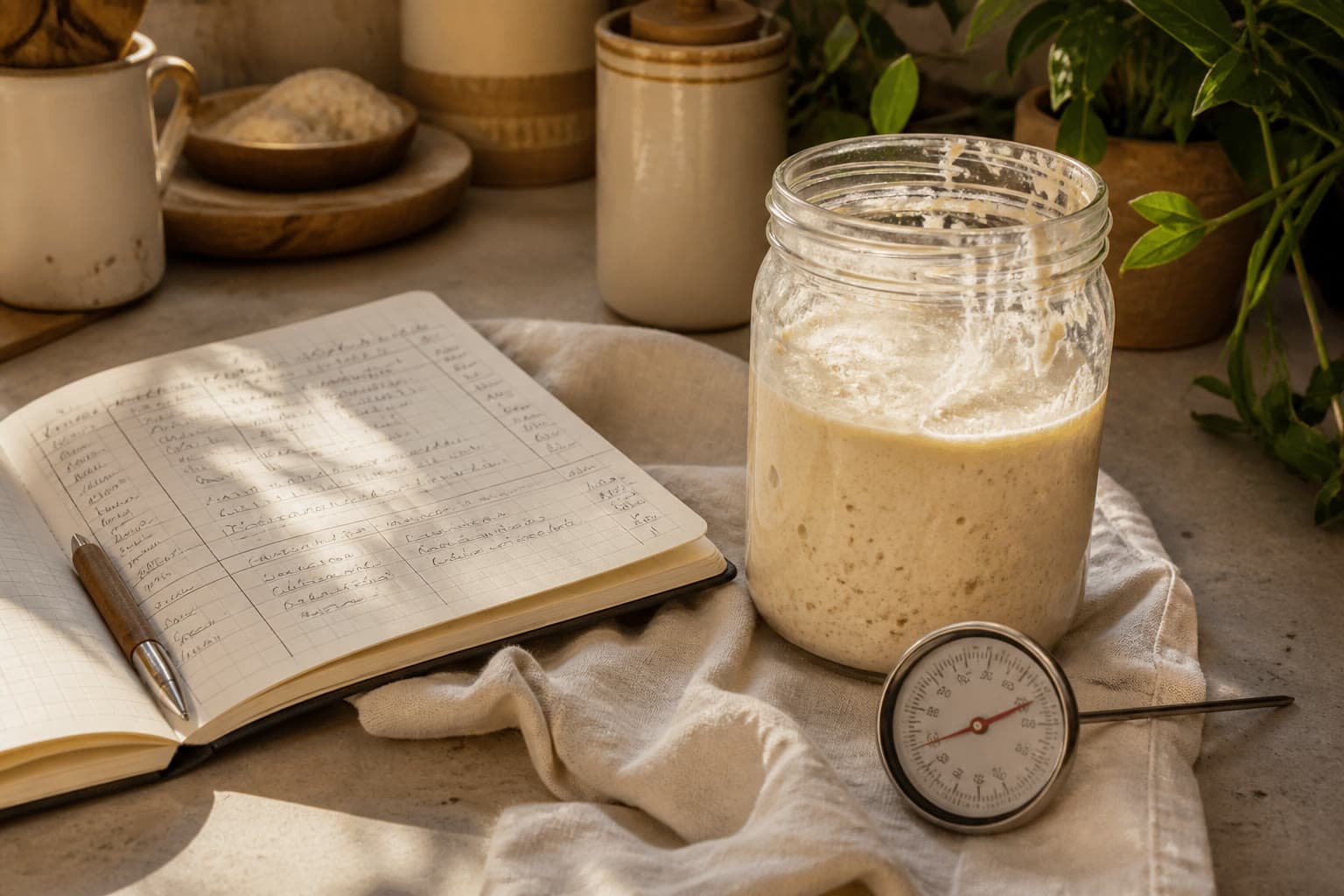
After a 1:1:1 feeding (equal starter, flour, and water) at about 75F, our brown-rice/sorghum jar usually peaks in 4-6 hours. Signs: volume up, bubbles throughout, a mousse texture, yogurt-and-green-apple smell. After peak it sinks, gets sharper, and behaves like discard.
A 1:2:2 feeding stretches the window toward 8 hours, useful if you feed before work and mix after. A 1:3:3 feeding in summer can keep a jar from exploding while you are at the farmers market. In winter, 1:1:1 in a warm spot is kinder than a huge feeding that never quite takes off.
Mark the jar with a rubber band. Take a photo if you are the kind of person who forgets whether it rose. We are those people.
Same-day schedule
Mix peak starter, water, psyllium gel, flours, and salt. Rest 10-20 minutes. Shape. Proof 60-120 minutes at 75-78F until the dough is puffy and a wet finger leaves a slow dent. Preheat the Dutch oven during the last 45 minutes of proof so you are not waiting on steel while the dough overshoots.
Pizza dough can proof in the pan or as a ball, then bake hotter and faster. Focaccia can proof in its oiled pan until bubbly, then dimple. Sandwich bread proofs in the tin until it crowns just below the rim; it will still rise in the oven, but over-crowning before the bake leads to mushroom caps and collapse.
Same-day bread tastes milder. That is a feature for school sandwiches. If you want more twang, use a portion of ripe starter at the upper inoculation (20-25%) or give a short bulk before shaping.
Overnight on the counter (use with caution)
A true room-temperature overnight only works when the house is cool, the inoculation is small, and you like more acid. In a 68F winter kitchen, an 8-10 hour overnight proof can be lovely. In a 76F summer kitchen, it is how you wake up to soup.
If you want overnight without the fridge, feed a stiff-ish starter, inoculate the dough lightly (10-15%), use cooler water, and set an early alarm. We still prefer the fridge for anything we cannot watch.
Never 'just leave it' in August because a wheat baker on the internet ferments 12 hours. Wheat dough has a net. You have a gel.
Fridge retard: the weekday superpower
Shape, cover so a skin does not form (a shower cap, a bowl, or a bag), and refrigerate 8-18 hours. The psyllium gel firms. Scoring a shallow pattern becomes slightly less pointless. Flavor gets rounder. Morning you preheats the Dutch oven while the dough sits in the fridge, then loads cold dough into a hot pot. That contrast helps oven spring.
Some bakers retard in the mixing bowl and shape cold. Gluten-free dough can be clumsy cold; we usually shape at room temp after the rest, then chill. Either works if the gel is in the 4-7% band.
Past 24 hours, acid climbs and the gel can slacken. Bake within a day for the best loaf. Pizza dough is a little more patient in the fridge than a free-standing boule.
Seasonal Indianapolis temperatures
Our house in January often sits at 66-69F with dry furnace air. Starters peek rather than peak unless they live near a gentle heat source. Doughs need longer proofs or a warm-proof box made of an oven light. Flour in the bin can feel thirstier; we are more likely to use the top of the 90-110% hydration window.
April and October are the easy months: 70-74F, windows open, dough behaves like the recipe card. July and August can sit 76-80F inside even with fans. Starters peak before lunch. Proofs finish while you unload groceries. We use cooler water, 1:2:2 feedings, 40-70 minute proofs, or an immediate retard.
Humidity along a stormy week does not replace baker's percent, but it changes how the dough looks at mix. Hold back a splash of water, rest, then decide. That habit is in the hydration guide and it belongs on the schedule too: weather is a step.
| Season | House temp | Starter 1:1:1 peak | Same-day proof | Notes |
|---|---|---|---|---|
| Winter | 66-69F | 6-9 hours (warm corner) | 2-3 hours or warm box | Warmer water, patience |
| Spring/Fall | 70-74F | 5-7 hours | 90-120 minutes | Recipe-card default |
| Summer | 76-80F | 3-5 hours | 45-90 minutes | Cooler water, fridge ready |
Dough temperature versus starter temperature
A warm starter mixed with cold water lands at a moderate dough temperature. A warm starter mixed with warm water in August is a rocket. We aim for a mixed dough around 74-78F when we can, measured with the same instant-read we later stick in the loaf.
You do not need to become a professional baker with desired dough temperature formulas, but you should notice when the bowl feels like a fever. Chill the water. You should notice when the bowl feels like the garage. Warm the water slightly, never to baby-bottle hot that kills yeast.
Bannetons in a cold room keep dough cold. Proof inside a larger bowl or in the oven-with-light so the gel actually ferments.
Overproof versus underproof without gluten cues
Underproof: tight, barely risen, dense bake, maybe a split in a random place as gas finally moves in the oven. Overproof: fragile, possibly wrinkled, sharp smell, collapse or flat bake. Correct: jiggly, slightly domed, slow fingerprint spring-back, still able to move to the pot without dissolving.
Because there is no gluten skin, you will not get the same 'ear' tell. Trust the jiggle. When unsure, bake a little earlier rather than later. Slightly underproofed gluten-free bread is still bread. Overproofed gluten-free bread is focaccia whether you planned it or not.
If you keep nailing overproof, your starter is stronger than you think or your room is warmer than the wall thermostat. Shorten. If you keep nailing bricks, the starter is not peaking or the room is a cave.
Sample schedules we actually run
Weeknight Dutch oven: 7:00 feed 1:1:1. 12:00 mix and rest. 12:20 shape. 12:20-1:45 proof while the pot preheats at 1:00. 1:45 load, bake, 4:00 earliest slice (2-hour cool). Dinner at 6:00 if you can wait. We often slice the next day.
Morning bake: 8:00 p.m. feed 1:2:2. 7:00 a.m. mix, rest, shape. 7:30 dough into fridge. Next morning 7:00 preheat, 7:45 bake from cold, cool while you work.
Pizza Friday: mix at lunch, retard balls, stretch at 6:00, steel as hot as the home oven allows. Focaccia: mix, pan, retard, dimple and bake after work.
- Always include the 2-hour cool in the schedule so you do not 'test' gummy bread at minute twenty.
- Preheat is part of fermentation planning; a late pot is how proofs overshoot.
- Write the plan on a sticky note. Future you is tired.
Logging without becoming a laboratory
A notebook line is enough: date, room temp, feeding ratio, peak time, mix time, proof time, bake, crumb note. After ten loaves you will stop copying strangers on the internet and start copying yourself.
We log more in January and July than in May. The shoulder seasons forgive. The extremes teach.
If you skip logs, skip them. If you keep failing, start them. The dough is not mysterious. The weather in central Indiana is just not the weather in the recipe you screenshot from another climate.
FAQ
How long should gluten-free sourdough proof?
Same-day, often 60-120 minutes at 75-78F until the dough is aerated and jiggly. Overnight, 8-18 hours in the refrigerator. Always start from a peak starter, not from the clock alone.
When is a gluten-free sourdough starter at peak?
When it has risen, the surface is domed and bubbly, it smells pleasantly sour, and it has not yet collapsed. At 75F after a 1:1:1 feeding this is commonly 4-6 hours.
Can I refrigerate gluten-free sourdough dough overnight?
Yes. A cold retard firms the psyllium gel, deepens flavor, and lets you bake in the morning. Cover well so the surface does not dry.
Why does my starter peak faster in summer?
Yeast and bacteria speed up with warmth. An August Indianapolis kitchen can peak a jar in 3 hours. Feed a higher ratio (1:2:2 or 1:3:3) or use cooler water to stretch the window.
Why is my dough not doing anything in winter?
68F rooms are sleepy. Use a slightly warmer water, a warmer corner, a longer proof, or an oven with only the light on. Do not assume the starter died until you try warmth.
Should I bulk ferment gluten-free dough like wheat?
A short bulk of 30-60 minutes can help flavor, but many gluten-free formulas mix, shape, and proof in one rise because you are not building gluten with folds.
How do I know gluten-free dough is overproofed?
It looks fragile, may weep, smells sharply acidic, and slumps when moved. It will not recover in the oven the way some wheat doughs do. Bake in a pan or shorten the next proof.
Can I hold a peaked starter in the fridge until I mix?
A few hours, yes. Overnight, it will slide past peak and become more like discard. For a morning mix, feed before bed at a larger ratio or feed in the morning.
What temperature should gluten-free sourdough ferment at?
Starter and dough are happiest around 74-78F. Below 70F, plan more time. Above 80F, shorten time and consider a fridge after a short warm proof.
Do I need a proofing box?
No. A turned-off oven with the light on, a microwave with a mug of hot water, or a warm shelf is enough. A thermometer in the bowl is more useful than a gadget.
Bake from this
Related recipes
Artisan Loaves
INTERMEDIATE
GLUTEN FREE SOURDOUGH
NOV 7, 2025
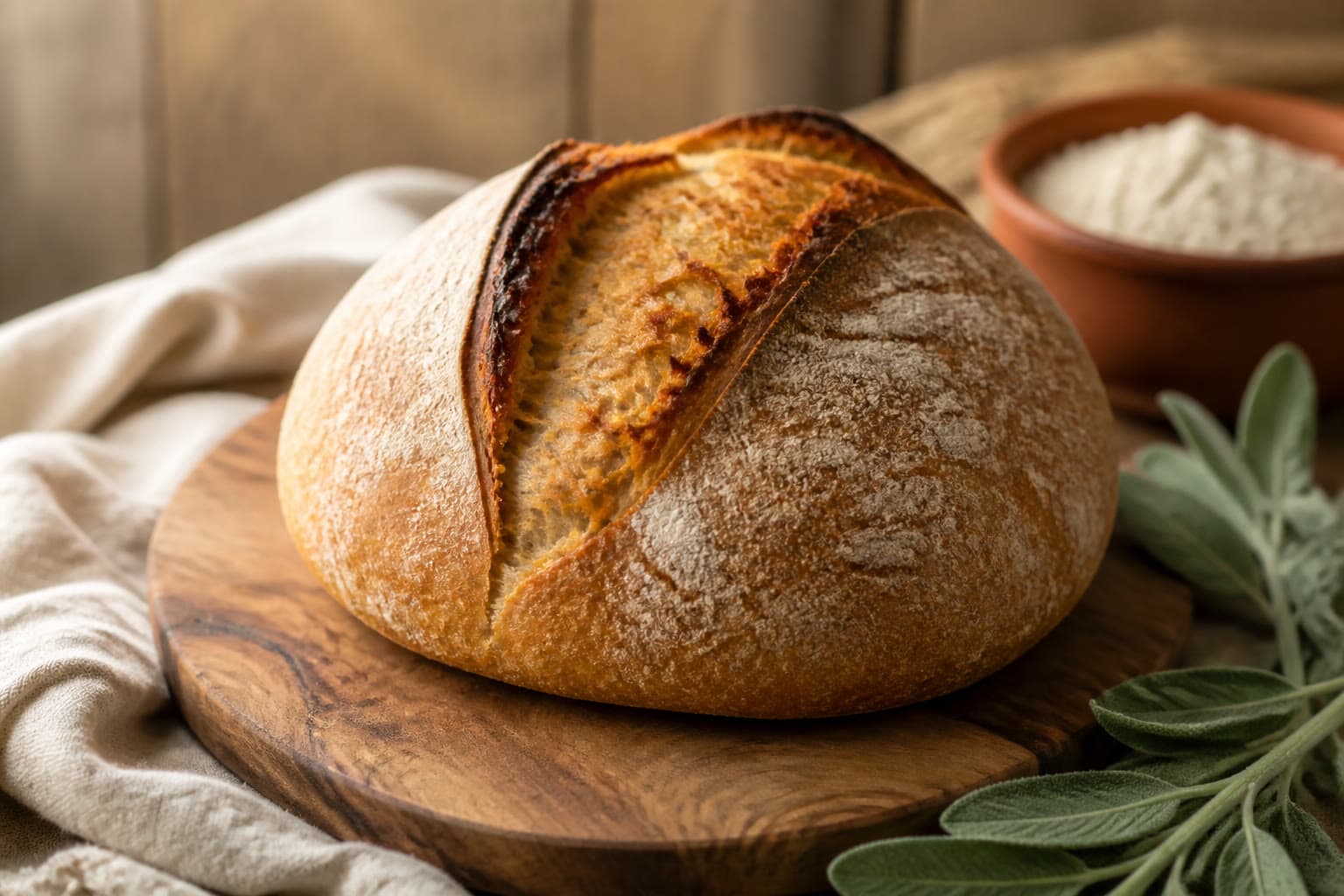
Artisan Gluten-Free Sourdough Bread
Our upgraded house boule: King Arthur gluten-free bread flour, whole psyllium husk, and a 500F Dutch oven for a blistered crust.
Artisan Loaves
BEGINNER
BEGINNER
NOV 14, 2025
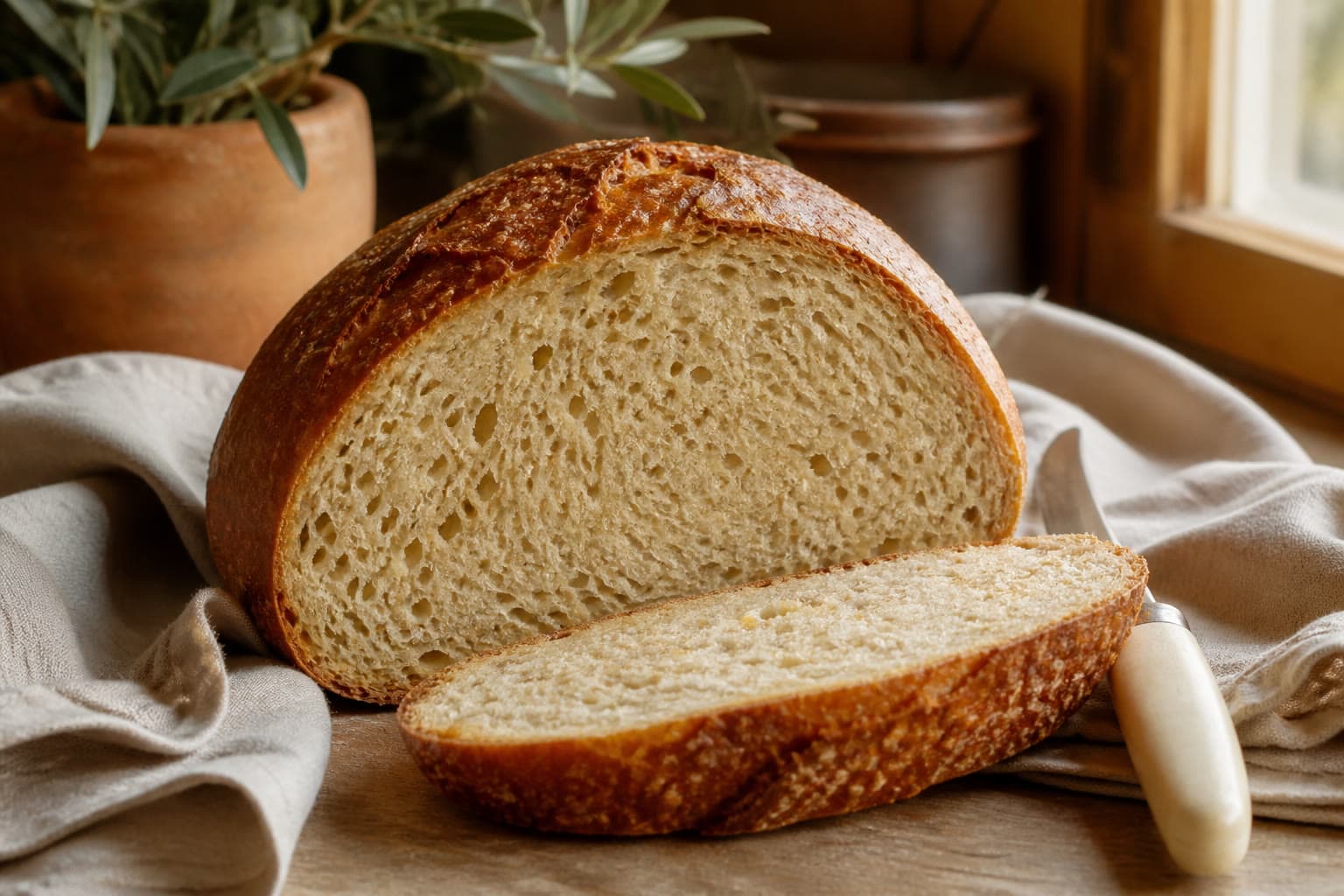
Classic Gluten-Free Sourdough
The beginner country loaf linked from our starter guide: brown rice, sorghum, tapioca, and psyllium powder at 5%.
Pizza
INTERMEDIATE
PIZZA
MAR 1, 2026
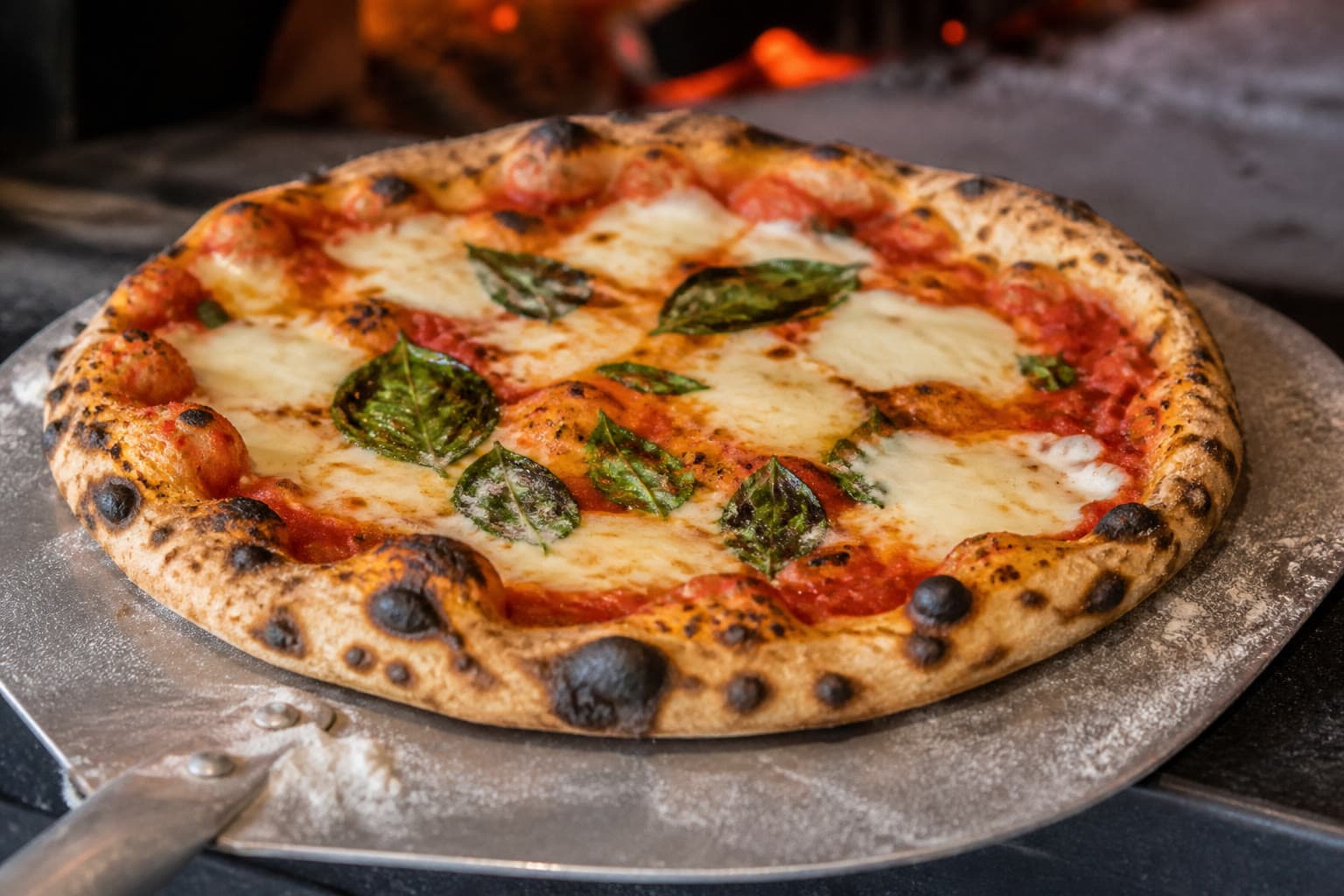
Gluten-Free Sourdough Pizza Crust
A steel-baked sourdough pizza dough with 4% psyllium, olive oil, and a parbake option so the center does not stay pale and gummy.
Flatbreads
BEGINNER
FOCACCIA
MAR 1, 2026
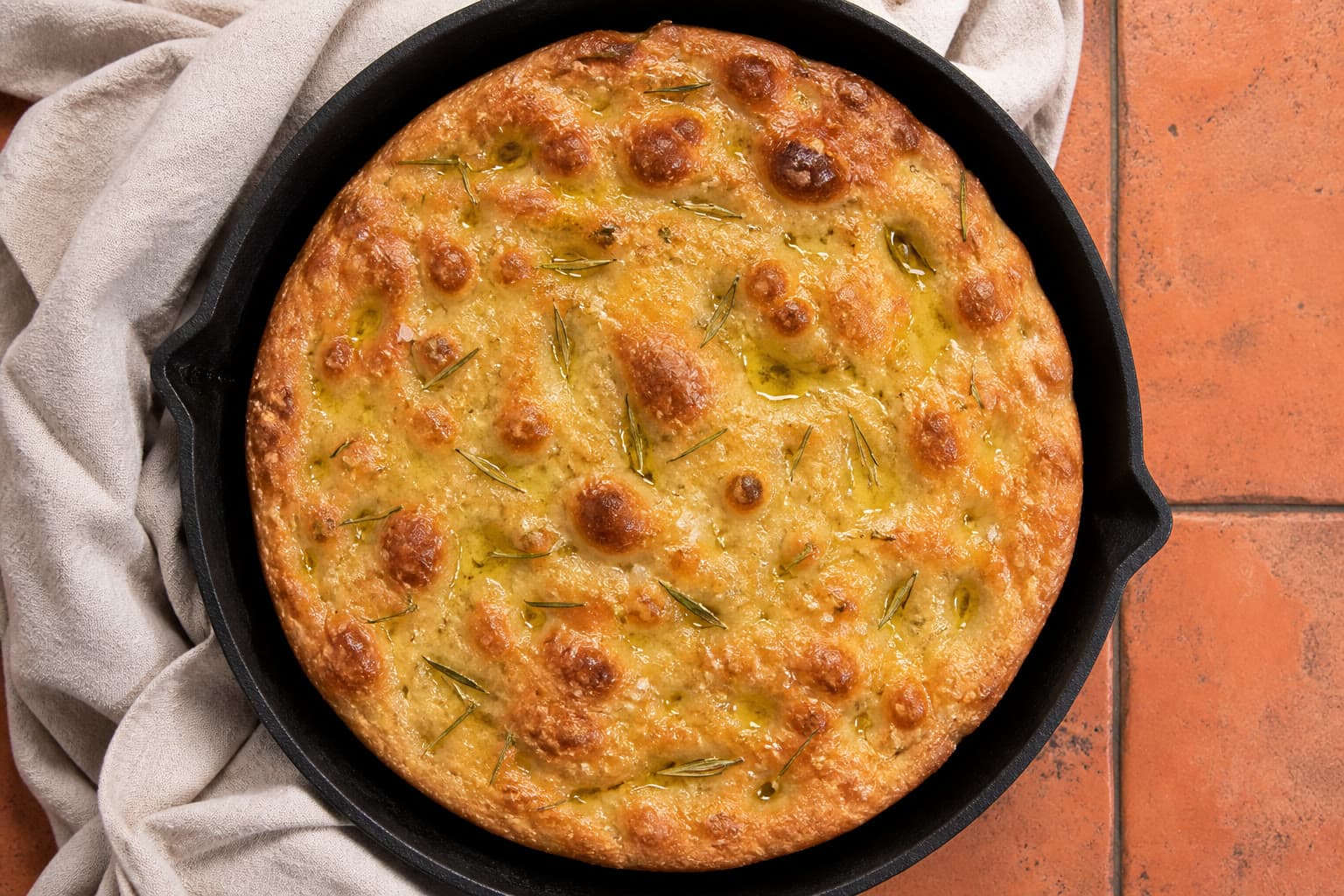
Gluten-Free Sourdough Focaccia
A pan of 105% hydration dough, dimpled in olive oil, with a crisp bottom and a plush, salty top.