Philosophy
Why Gluten-Free Sourdough?
Gluten-free sourdough is not fermented wheat. It is a different structure, a longer flavor window, and a celiac-safe path only when every flour and tool is gluten-free.
The short answer
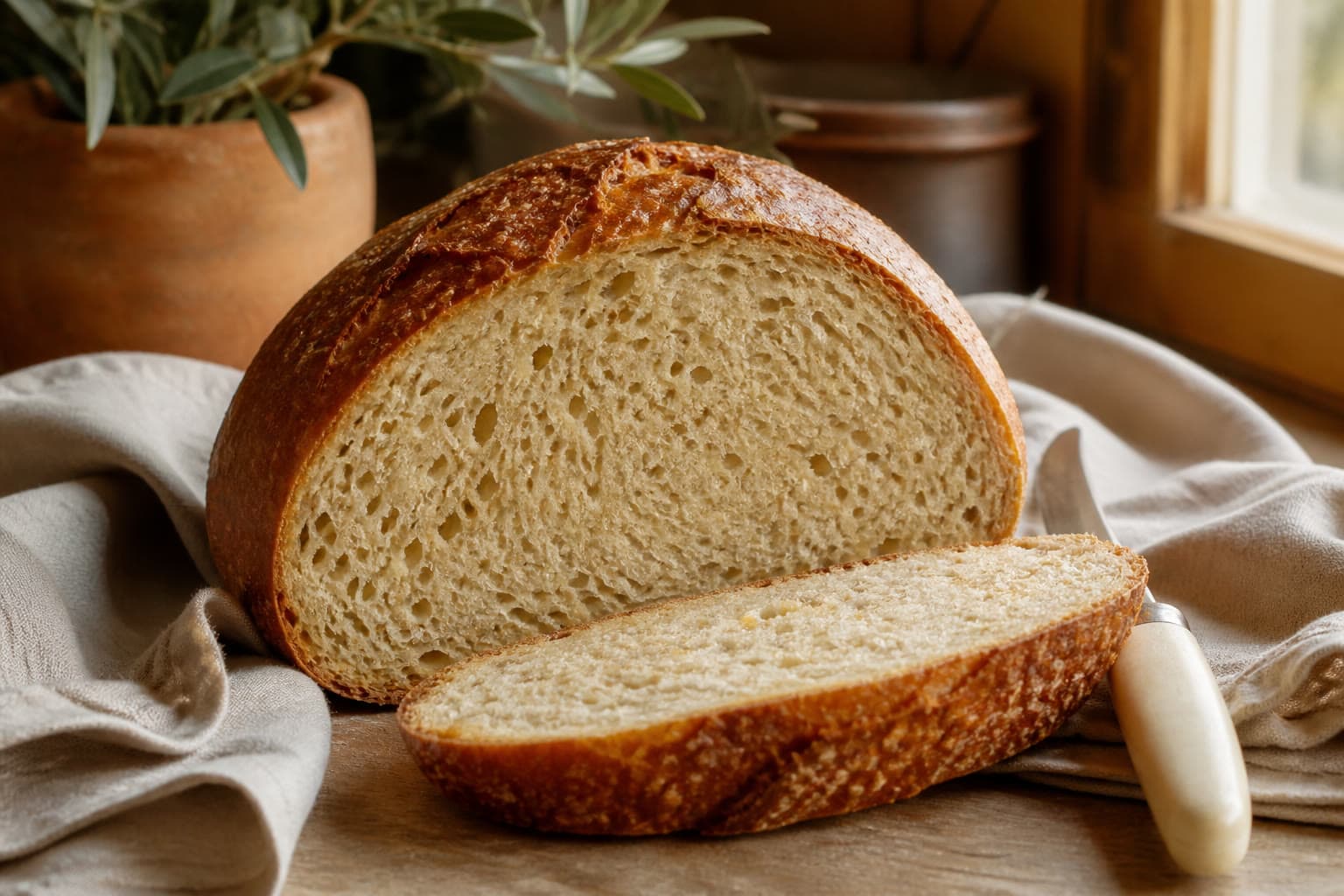
We bake gluten-free sourdough because it is the only way we have found to get wild-ferment flavor and a sliceable loaf without wheat gluten. The rewards are real: organic acids, a crust that shatters a little, a crumb that can be toasted on Monday. The caveat is equally real. This only works if the culture, the blend, and the kitchen are gluten-free. Time in a crock does not grant celiac safety to bread flour.
When we first asked whether gluten-free sourdough could rival a wheat country loaf, we were asking the wrong comparison. Wheat bread is a protein network. Our bread is a hydrated gel. Judge it as bread, not as a costume.
The challenge wheat bakers feel in their hands
Gluten is an engineering gift. It stretches, recoils, and traps gas in a way you can feel during a fold. Take it away and the dough will not windowpane, will not hold a dramatic ear from a deep lame cut, and will not forgive a slapdash hydration. That is not a failure of will. It is the absence of a continuous protein sheet.
The replacement is not 'more xanthan until it feels like pizza dough.' The replacement is a flour blend with enough protein-bearing whole grains to feed fermentation and enough starch to stay tender, plus psyllium at 5-7% of flour weight so the mass can be shaped. Read the mechanism in our psyllium versus xanthan post if you want the chemistry without a textbook hangover.
- No gluten development step. Mix until glossy, rest so the gel hydrates, then shape.
- Hydration looks high because it is high: often 90-110% for lean loaves.
- Scoring is decoration and crack control, not a spring valve like wheat.
Flavor is the honest reason to ferment
Commercial yeast gluten-free bread can be fine. It is rarely interesting. A long, cool ferment on sorghum and brown rice produces lactic and acetic notes that make millet taste like food instead of birdseed. Teff and buckwheat, which can be bitter when rushed, round into molasses and cocoa-adjacent depths if you give the bacteria time. That is why we bother with a jar.
You can taste the difference between a same-day loaf and an overnight cold-proof without being a sommelier. The cold loaf is more aromatic, slightly more acid, and often easier to score because the gel is firmer. Neither is morally superior. Tuesday wants same-day gluten-free sourdough. Saturday wants the slow one.
Digestion, said carefully
Some people who feel better on fermented foods also feel better on gluten-free sourdough than on a starch-and-gum supermarket loaf. Possible reasons include organic acids, partial starch breakdown, and simply eating whole grains instead of a candy-like slice. That is not the same as celiac treatment, and it is not a reason to eat wheat sourdough if you have celiac disease.
We do not run clinical trials in this kitchen. We do notice that a loaf cooled two hours and baked to 205-210F internal is easier to like, and 'easier to like' is often what people describe as easier to digest. Gumminess is a structural defect. It is also miserable to eat. Fix the bake and the cool before you invent a gut story.
Structure without folklore
Protein in sorghum and teff is not gluten, but it still browns, still tastes like grain, and still gives the crumb a backbone that tapioca alone cannot. Starches lighten. Psyllium stitches. Salt tightens flavor and slightly slows fermentation. Water is the solvent everything else swims in, which is why hydration and crumb is not optional reading if your loaves keep collapsing.
Hydrocolloids are not a dirty word. They are how gluten-free bakers hold gas. The question is which one, how much, and in what dough. Artisan boules here are psyllium-forward. Soft sandwich bread may use a whisper of xanthan on top of a lower psyllium dose. Cookies are a different sport, which is why our snickerdoodles still mention xanthan on the bag blend.
What we learned the expensive way
Commercial 1:1 blends are built for muffins. They often already contain xanthan. Adding a full 6% psyllium on top can make a rubber loaf. If you start with a blend, drop psyllium toward 4-5% and watch the gel after the rest, not the influencer screenshot.
We also learned that 'more starter' is not a flavor knob you can crank forever. Too much ripe starter in a warm kitchen overproofs gluten-free dough into a puddle. Prefer a moderate inoculation and a temperature you can name. Our Indiana fermentation notes exist because national recipes assume a 75F studio that we do not live in.
- Count starter water as hydration.
- Peak the starter; do not scrape a collapsed, paint-thinner jar into a loaf and hope.
- Cool before slicing. This is structure, not patience theater.
The science in one countertop paragraph
Wild yeast (mostly Saccharomyces and friends that show up in flour and air) produce carbon dioxide. Lactic-acid bacteria produce acids that flavor the loaf and gently inhibit some spoilage. In wheat dough, gluten keeps the bubbles. In our dough, a psyllium mucilage plus gelatinized starch keeps the bubbles. Oven spring is steam plus residual yeast plus a gel that has not yet set hard. That is why a preheated Dutch oven matters, and why we wrote about steam for gluten-free bread.
If you want a dark, mineral loaf that makes the science taste like dinner, bake the teff-buckwheat dark loaf. If you want the teaching loaf, stay with brown rice and sorghum.
Why not just buy a loaf?
Sometimes you should. Frozen gluten-free bread has gotten better. We still bake because we can control the starter's diet, the salt, the whole-grain ratio, and the crumb. We can also control the toaster, which in a shared house is not a small thing.
Sourdough at home is a rhythm. It is also a way to stop paying bakery prices for a pale slice that was never fermented. If you only wanted convenience, you would not be reading this far.
What we are arguing for
We are arguing for gluten-free bread that has a point of view. Ferment it. Hydrate it. Gel it on purpose. Bake it hot. Cool it. Do not launder wheat through a crock and call it hospitality.
If that sounds like a philosophy, it is a kitchen philosophy. The recipes are how we practice it. Start with the hub guide and a classic loaf, then come back when the crumb disagrees with you. It will. That is the job.
FAQ
Frequently asked questions
Why make gluten-free sourdough instead of yeasted gluten-free bread?
Fermentation builds organic acids and grain flavor that a short yeasted mix usually lacks. You still need psyllium, a sensible blend, and a full bake. Sourdough is not a magic texture machine.
Does sourdough fermentation remove gluten?
No. Fermentation does not make wheat, rye, or barley safe for celiac disease. Gluten-free sourdough must be made from gluten-free ingredients and a gluten-free starter.
Why is gluten-free sourdough wetter than wheat dough?
Psyllium and gluten-free flours absorb more water, and there is no gluten network to organize a drier dough. Lean hearth formulas here often sit at 90-110% hydration.
Is gluten-free sourdough easier to digest?
Some people prefer it to starch-and-gum sandwich bread because of fermentation and whole grains. That is not medical advice and it does not apply to eating wheat sourdough with celiac disease.
Can I use a wheat starter if I only feed it rice flour afterward?
Do not, if you are baking for celiac disease. Residual gluten and a contaminated jar are not worth the romance. Start a new culture on gluten-free flour.
What should I bake first if I believe the philosophy?
A classic gluten-free sourdough boule with 5-7% psyllium, a peaked starter, Dutch-oven steam, and a two-hour cool. Then adjust hydration before you adjust the internet.